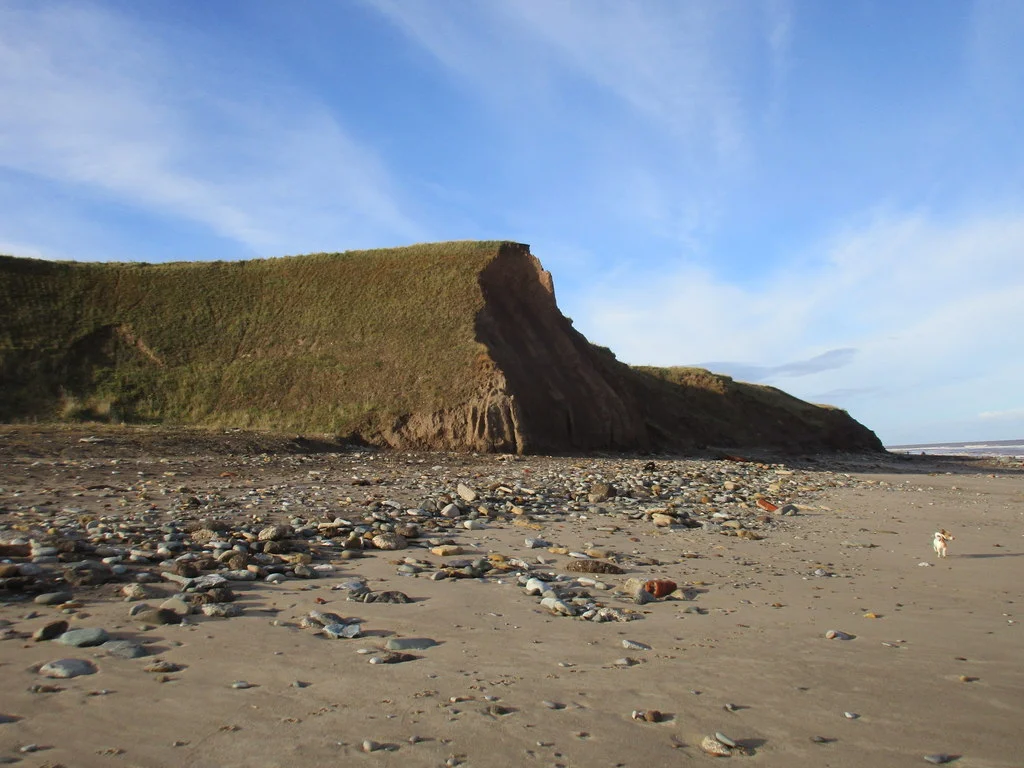

Easington Lifeboat Station
It only lasted twenty years. Easington Lifeboat Station opened in 1913 and closed in 1933, and in that brief span it produced one of the more remarkable rescues in the long history of the Royal National Lifeboat Institution on this coast. The crew of a Yorkshire steam trawler called Mansfield owed their lives to the volunteers who launched from Seaside Road one February morning - and the other half of the crew owed their lives to a brigade of men with ropes and rockets standing on the cliffs above them. The boathouse is gone. The lifeboat went to other stations. But the records survive, and so does the place name on the map.
Why Easington Got a Boat
In 1892, work began on a 127-foot lighthouse at Withernsea to warn ships off this dangerous stretch of the Yorkshire coast. Trinity House designed it. Strattens of Edinburgh built it. It opened in 1894. By the early 1910s the RNLI was reviewing its station coverage along the Yorkshire shore and noticed something inconvenient: most of the rescue calls that came to the Withernsea station were actually for vessels in trouble seven or eight miles further south, closer to the busy mouth of the Humber. On 8 May 1913 the RNLI committee decided to relocate. The Withernsea station closed on 29 May 1913. The Docea Chapman, a 34-foot self-righting pulling and sailing lifeboat funded from the legacy of Joseph Chapman of Reigate, was towed south to a new station near Easington.
Under a Tarpaulin
There was no boathouse waiting. For the first months at Easington, the Docea Chapman was kept under a tarpaulin on top of the cliffs at the end of Seaside Road, while the RNLI committee decided whether the temporary move would become permanent. It did. Construction of a proper boathouse went ahead at a cost of £1,047 - real money in 1914 - and was finished in spring 1915. The boat had a crew drawn from the local fishing and farming community. They launched into a North Sea that took ships and lives every winter with relentless regularity, and they did it for the same payment as every other RNLI volunteer in Britain: none.
The Mansfield
On 13 February 1921 the steam trawler Mansfield got into trouble off this coast. The Easington lifeboat launched and rescued four of the nine crew. The other five were brought ashore by the Volunteer Life Brigade - rocket men, working from the cliffs - who fired lines out to the wreck and hauled the rest of the crew across. It was the kind of rescue that made the difference between newspaper headline and quiet maritime statistic. Five men plus four men plus a boat lost in February water: all of them survived. By 1933, with motor lifeboats elsewhere covering the same waters more efficiently and call volumes here dropping, the RNLI closed Easington station. The site fell quiet. Only the records and the place name now mark the twenty years when fishermen at the end of Seaside Road ran toward the sea in foul weather instead of away from it.
From the Air
Easington Lifeboat Station was located at approximately 53.65N, 0.13E at the end of Seaside Road, on the cliff edge south-east of Easington village. The station building itself is gone. Recommended viewing altitude is 1,500 to 2,500 feet AGL. The Easington Gas Terminal sprawls just inland and the black-and-white Spurn lighthouse is visible 4 nm south-east. Nearest airport is Humberside (EGNJ) approximately 13 nm west. Coastal weather and sea mist are common here where the Humber meets the North Sea.
Nearby Stories
- Humber Bridge 6.5 km away
- MS Piłsudski 7.8 km away
- SM UC-47 17 km away
- Sledmere House 19 km away
- Alford Windmill 19 km away
- RAF Scampton 20 km away
- HMS Cobra 26 km away
- Alexander L. Kielland (Platform) 317 km away