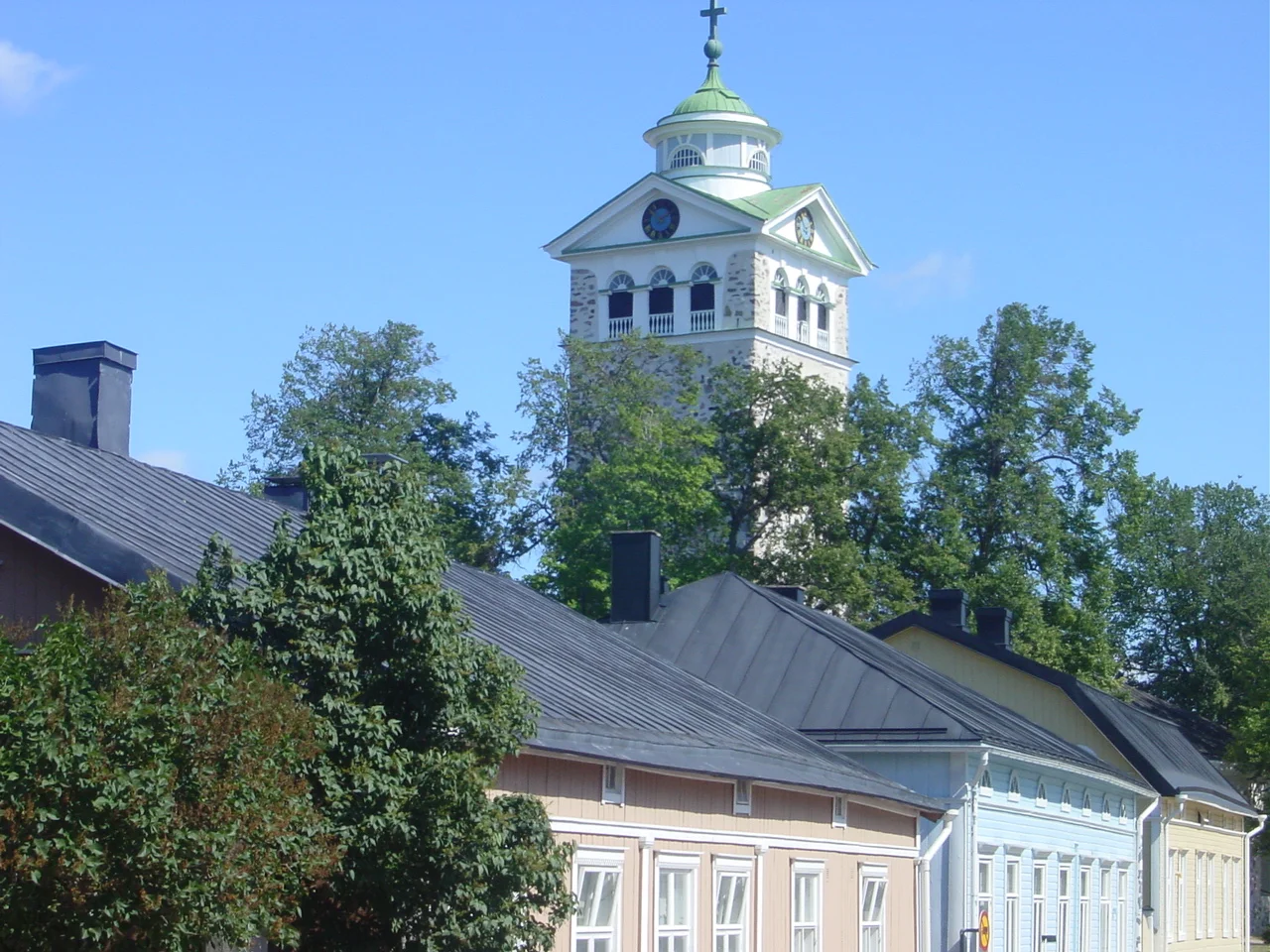

Ekenäs, Finland
Gustav Vasa granted Ekenäs its town rights in 1546 and then spent the following years trying to get everyone to leave. Within a year of the founding, the crown was pressing the new burghers to relocate to Viipuri, which war had wrecked and which needed people. Four years later the king founded Helsinki, and the inhabitants of Ekenäs, Porvoo and Rauma were ordered to move there instead. It is a strange origin for a town — chartered and then repeatedly asked to dissolve itself — and it set the pattern for four centuries of Ekenäs being overlooked. That neglect is now the town's greatest asset. What a place never gets rich enough to rebuild, it keeps.
Chartered, Then Told to Go
The site made obvious sense: a sheltered harbour where an ancient inland waterway ran up towards Häme, a good fishing ground, and a position on the coast that mattered to a Swedish crown watching the Hanseatic traders across the gulf. What followed made less sense to the people living there. Having survived the royal attempts to empty it, Ekenäs then ran into the 17th-century trade regime, which was designed for the benefit of larger ports. Foreign vessels were barred from the harbour in 1614, and foreign trade was prohibited outright in 1636. A town whose entire logic was maritime was legislated into a village that could only look at the sea. Recovery took until the 1770s, when craftsmen began settling here in numbers and the place slowly became a working town again.
The Wooden Quarter at Barckens Udde
Walk south from the market square and the streets narrow, straighten, and shed a century or two. Barckens udde is the oldest surviving district of Ekenäs, a grid of low wooden houses in ochre, cream and deep red, built between the 17th and 19th centuries and now protected as a cultural-historical environment. The protection is not decorative. Renovation of even ordinary residential buildings is strictly controlled here, which is why the quarter has none of the aluminium windows and enlarged dormers that have quietly modernized comparable Nordic towns. The history of the old town reaches back to the 16th century, but almost everything standing dates from the 18th and 19th, when Ekenäs finally had money to build in and not enough to tear down.
Rails, Growth, and a Last Census
The railway reached Ekenäs in 1873, and the town grew the way railway towns did — industry, jobs, a population climbing to roughly 3,000 by 1910 and about 5,200 by 1957. In its final form the municipality took in the former parishes of Snappertuna and Tenala alongside the town itself, and at the last count before it disappeared, on the final day of 2008, 14,754 people lived there. On 1 January 2009 Ekenäs merged with Karis and Pojo to form Raseborg, and a name that had been on Finnish maps since Gustav Vasa's day stopped being an administrative unit. It remains, stubbornly, what everyone still calls the town.
The Cinema That Never Closed
On a street in the old town stands a small Jugend building — Art Nouveau, in the local vocabulary — housing Bio Forum, the oldest still-functioning cinema in Finland. It opened in 1912 under the name Ekenäs Nya Biograf Teater, when moving pictures were a novelty act and the Grand Duchy was still under the Russian tsar. It has outlasted two world wars, the arrival of sound, television, video, streaming, and the near-total extinction of the small-town Finnish cinema, and it is still showing films. Every year the wooden-house quarter and the pedestrian street Kungsgatan fill up for the Christmas market and the Christmas opening, which is the other thing this town does with genuine conviction.
Schjerfbeck's Light, Aalto's Last House
Helene Schjerfbeck came here for the summers of 1918 to 1920 and then settled permanently in 1925, staying until the war years drove her inland — the decades in which one of Finland's greatest modernist painters reduced her portraits to the pale, scraped, unforgiving essentials that made her reputation, working through her sixties and seventies in a small coastal town. The Ekta museum centre keeps a permanent exhibition of her work. Others came from here rather than to it: the Swedish-language novelist Marianne Alopaeus, born in Ekenäs in 1918; Emma Engdahl-Jägerskiöld, among the first Finnish opera singers to build an international career, who grew up here and never let go of the connection; the violinist Kaija Saarikettu, later a professor at the Sibelius Academy. Alvar Aalto left two buildings in the town: the savings bank of 1964, and Villa Skeppet, designed in 1969 and completed in 1970 for his friends Christine and Göran Schildt. Schildt became Aalto's biographer. The house was the last and the smallest Aalto ever designed, and since December 2020 anyone can walk into it.
From the Air
Ekenäs sits at 59.975 N, 23.436 E on Finland's south coast, about 80 km west of Helsinki and 115 km southeast of Turku, at the head of the archipelago that fans out south of it. From the air the town is a compact grid on a low peninsula with water on three sides, the wooden old town visible as a tight block of small pitched roofs near the shore and the church tower the tallest feature. South and southwest the Ekenäs archipelago breaks into hundreds of islands and skerries. Nearest airports: Hanko-Täktom (EFHN) 30 km southwest, Nummela (EFNU) 45 km northeast, Helsinki-Vantaa (EFHK) 80 km northeast, Turku (EFTU) 100 km northwest. Recommended viewing altitude 1,500-3,000 ft. Long summer twilight gives the best light on the painted wooden facades; in hard winters the bay freezes and the whole coastline reads as one white surface.
Nearby Stories
- Sauvo Church 10 km away
- Kimitoön 17 km away
- Salo 17 km away
- Russian cruiser Pallada (1906) 18 km away
- Finnish minelayer Louhi 20 km away
- Peter the Great's Naval Fortress 44 km away
- National Museum of Finland 59 km away
- Hakoinen Castle 75 km away