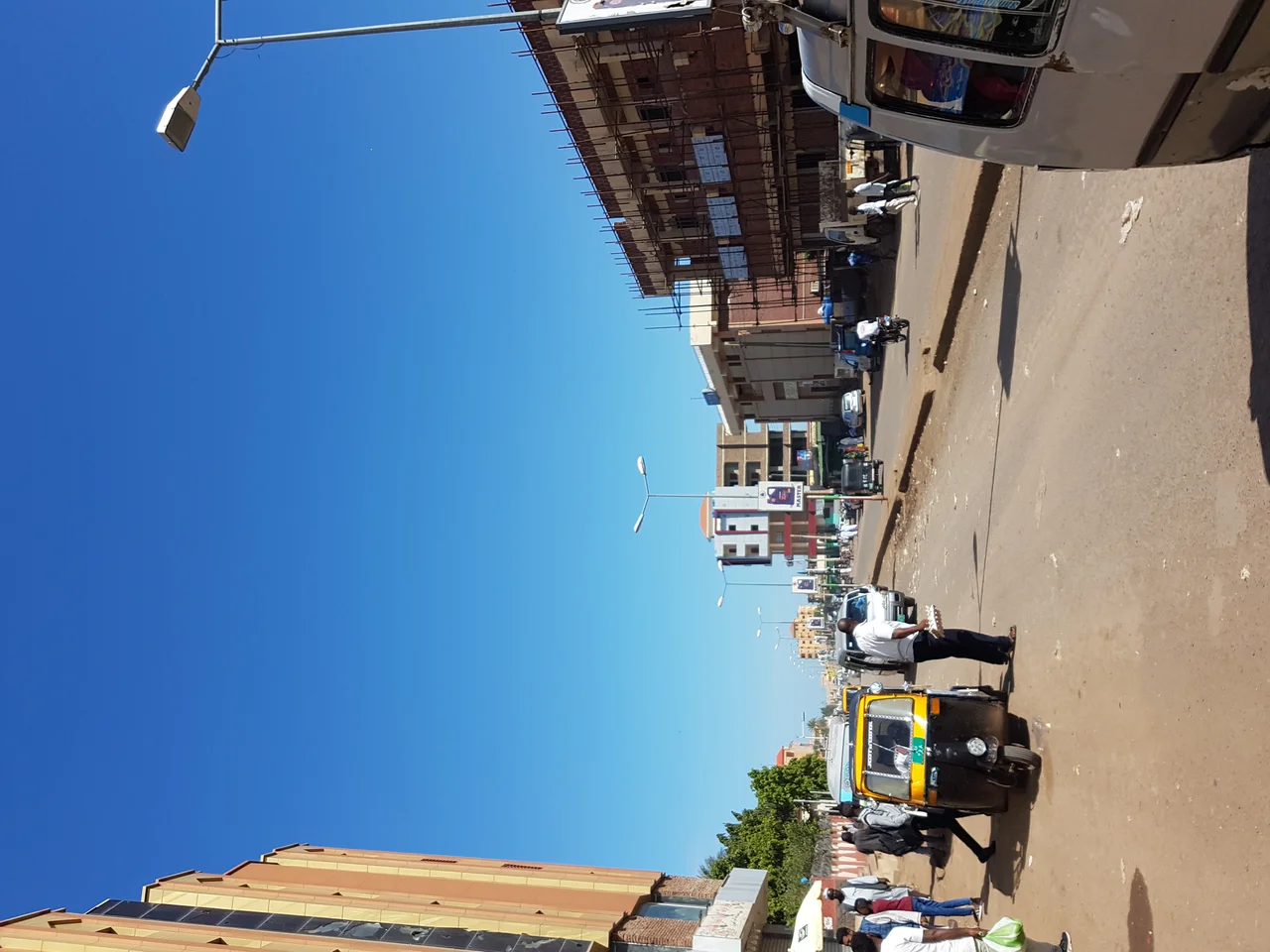

El-Gadarif
If you cannot feed a country, you cannot keep it. That simple arithmetic has made Gedaref - El-Gadarif on the maps - one of the most strategically important cities in Sudan. Spread across the rolling black-cotton plains of the southeast, about 200 kilometers from the Ethiopian border, Gedaref is where roughly 70 percent of all mechanized farming in Sudan happens. When the sorghum comes in, the granaries here determine whether Khartoum eats. The city calls itself the breadbasket of Sudan. The grain trucks rumble through day and night.
Soil That Changed Everything
The ground around Gedaref is black cotton soil - vertisol, technically - the kind that cracks into deep fissures in the dry season and turns into thick adhesive mud when the rains come. Between 700 and 900 millimeters of rain fall here each year, most of it in a concentrated summer burst, and the soil holds moisture long after the clouds have gone. In 1954, Sudan's government made a bet: it would mechanize farming on these plains and see whether the country could feed itself. It worked. Fields spread across the horizon - Um-seinat, Al-Ghadambliya - endless stretches where tractors replaced oxen. Sorghum was king, but sesame, cotton, sunflower, peanuts, and cereals all flourished. Gedaref became not just a city but a supply chain, a logistics hub, the place where a truckload of grain could move from field to port.
A Mosaic Along the Rails
The railway station tells you what kind of city this is. Tracks run west to Khartoum via Wad Medani, east to Port Sudan via Kassala 200 kilometers away, and south toward Gallabat on the Ethiopian border. Every tribe in Sudan seems to have someone living in Gedaref. Shaigiya, Baggara, Dinka, Fur, Nuba, Masalit, Shukriya, Beja, Hausa, Songhay - all represented among the 269,395 residents counted in 2008. So are the foreigners who came and stayed: Kurds, Armenians, Greeks, Egyptian Copts, Ethiopians, Eritreans, Somalis, Chadians, Yemenis, Italians. Most have been here for generations now. Only Khartoum and Port Sudan have more diverse populations. The city is organized into dozens of neighborhoods called Diems - Deim Bakr, Deim El Nur, Deim Abbas, Deim Sa'ad - each with its own character, its own mosque, its own loyalties.
The Digital Experiment
In 2005, something unusual began. A Dutch pediatrician named Agnes Ovington, working from Eindhoven Municipality, partnered with local Sudanese officials to create the Gedaref Digital City Organization. The GDCO is a nonprofit that uses information and communications technology for community development - an e-agriculture platform for farmers, disability inclusion programs, internet access in rural telecenters. It has won international awards: the i4d Award in 2007 for inclusion of people with disabilities, again in 2008 for grassroots telecenter innovation, and a third time in 2009 for civil society initiatives. In a country often cut off from the outside world by sanctions and conflict, a small city in the eastern farmlands has quietly built one of Africa's more respected digital-development programs. Eindhoven and Gedaref remain sister cities. So do Gedaref and Konya, Turkey.
Schools, a University, and the Beja
Gedaref has 73 schools now and its own university. Al-Qadarif University, opened in the 1990s, graduates doctors, engineers, and agronomists who keep the farms producing. Boarding schools established as early as the 1960s gave rural youth their first path into education. The indigenous Beja people, whose ancestors have lived in this region for thousands of years, share the city now with Arab and Nuba Sudanese and all the tribes the sorghum harvest pulled in. Famous sons include Rashid Bakr, who served as Sudan's Vice President in 1983, and the singer Ahmed Al Jabri, whose voice carries across weddings and radio stations. Seven hotels accommodate the travelers - traders, researchers, NGO workers - who come for the farms.
The Border Refuge
When conflict rolls across the Horn of Africa, people run to Gedaref. During the 2020-2022 Tigray War, refugees from Ethiopia poured across the border into Al-Qadarif State. The UN High Commissioner for Refugees reported thousands arriving each day at camps near the border - disabled people, children separated from their families, women carrying all they could save. The city that had been built to feed Sudan was suddenly feeding something else: the displaced. Gedaref's markets, trucks, and railheads became the infrastructure of refuge. That role has not ended. When civil war engulfed Sudan itself in 2023, the logic reversed again, and Gedaref became both source and destination for people on the move. The sorghum still grows. The trains still run. The soil is still black.
From the Air
Gedaref lies at 14.03°N, 35.38°E on the flat black-cotton plains of eastern Sudan, 400 kilometers east of Khartoum and 160 kilometers west of the Ethiopian border. Azaza Airport (HSGF) serves the city directly; Khartoum International (ICAO: HSSS) is the regional hub. From cruising altitude, look for the vast geometric checkerboard of mechanized sorghum fields extending to the horizon - the Rahad Scheme to the west and the Gash River irrigation works to the northeast. Clear visibility prevails October through May. June through September brings intense thunderstorm cells and the haboob dust storms that drive moisture-laden air ahead of them.
Nearby Stories
- Northern front, East Africa, 1940 54 km away
- Eritrea-Sudan Border 76 km away
- Western Zone, Tigray 126 km away
- Wad Madani 141 km away
- Gezira State 152 km away
- Jebel Moya 161 km away
- Kassala 177 km away
- Ethiopian Empire 213 km away