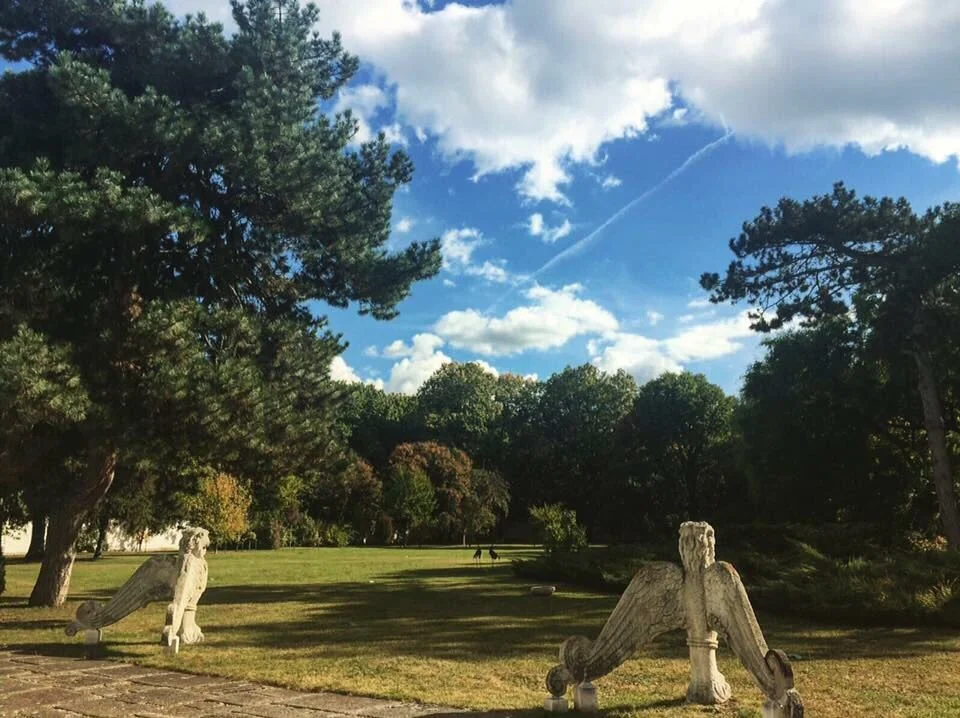

Elisabeta Palace
On the evening of 30 December 1947, troops from the Tudor Vladimirescu Division - an army unit loyal to Romania's new Communist government - quietly surrounded a palace on Kiseleff Road in Bucharest. Inside, twenty-six-year-old King Michael I was confronted with a document of abdication and, much later, would say he had been forced to sign it at gunpoint. Within hours, a thousand-year tradition of Romanian monarchy ended. The palace fell silent and stayed that way for almost five decades. Today, ninety-five years on from its construction, Elisabeta Palace is once again the residence of Romania's royal family, who live there now not as rulers but as custodians of a crown the country's voters have not formally recalled.
A House of Her Own
Princess Elisabeth of Romania - daughter of King Ferdinand I and Queen Marie - had spent miserable years as Queen Consort of Greece, married to her second cousin King George II. They divorced in July 1935. She came home to Romania, and what she wanted, more than anything, was a place to call her own. She wrote in her memoirs that the longing had been with her since she was seventeen: "My house to create, to improve, to make perfect and love, offering hospitality to and rejoicing with all those who would love it too. I think the possession of a house would really make me happy." The palace on Kiseleff Road, designed in 1935 by architects Constantin Ionescu and Corneliu Marcu and completed in 1937, was that house. She named it nothing fancy - just Elisabeta. After herself.
The King's Refuge
Elisabeth lived in the palace until 1944. Her nephew, the young King Michael I, had executed his coup that August, overthrowing the wartime dictator Ion Antonescu and switching Romania from the Axis to the Allies overnight - a decision that historians estimate shortened the war in Europe by months. The Germans retaliated by bombing the Royal Palace of Bucharest, leaving the king without a working residence. Michael moved into Elisabeta with his mother Queen Helen to be at the center of the capital. Princess Elisabeth quietly relocated to her smaller property at Copăceni. Three years of uneasy coexistence followed - a young king trying to govern with a Communist-dominated government tightening around him - and then, on that December evening in 1947, the troops arrived.
Forty Years of Silence
After Michael's abdication, the palace fell into the long sleep of the Socialist Republic of Romania. The royal family went into exile - Michael to Switzerland, where he worked as a test pilot and stockbroker to support his family - and Elisabeta sat empty or was used for vague official purposes that never quite made the news. The Communist regime had no use for monarchic symbolism. The grand reception rooms hosted no receptions. The dining room set no royal tables. For nearly fifty years the trilingual plaque at the gate, which still tells the building's story in Romanian, English, and French, was less a welcome than a closed door.
The Family Returns
Then in 2001, the Romanian Senate passed a bill awarding Elisabeta to former King Michael for use as a residence during his lifetime. He returned. The palace reopened. Heads of state came to visit, prime ministers attended dinners, and an annual Garden Party was inaugurated each 10 May - Monarchy Day - in the palace grounds. Michael died in 2017. His daughter Margareta, now styled Custodian of the Romanian Crown, lives there with her husband Prince Radu and her sisters Princess Sophie and Princess Marie. Romania remains a republic. But the family that once ruled it is back at home, receiving foreign visitors and Romanian officials in the rooms that once held a deposed king's last hours.
Open Doors
Since 2020, Elisabeta has opened its public rooms to visitors on Fridays, Saturdays, and Sundays from July through September, ten in the morning to five in the afternoon. The tour is unhurried. You see the dining room with its long polished table, the salons hung with family portraits, the garden where Margareta hosts her Monarchy Day reception. The personal flag of the royal household sometimes flies overhead - visible from Herăstrău Park, where Bucharestians come to walk and row on the lake. The story being told here is not nostalgia. It is something stranger - a family that was sent away, came back, and now lives in the house their great-aunt built because she finally wanted somewhere of her own.
From the Air
Elisabeta Palace sits at 44.47°N, 26.08°E in northern Bucharest, on Kiseleff Road near Herăstrău Park. From the air the location is identifiable by the long green strip of Kiseleff Boulevard running south from the lake toward the city center, with the Arc de Triumf nearby. Bucharest's main airport, Henri Coandă International (LROP / Otopeni), is about 12 km north - the palace lies almost directly along the approach path to either runway. Băneasa airport (LRBS) is even closer, just 5 km north. Best viewed from low altitudes; the palace is set back among trees and easier to spot in winter when the leaves are off.
Nearby Stories
- National Transport Museum, Bulgaria 34 km away
- Slanic Mine 68 km away
- Sinaia 79 km away
- Great Basilica, Pliska 87 km away
- Sinaia Monastery 108 km away
- Holy Forty Martyrs Church, Veliko Tarnovo 115 km away
- Shumen Fortress 126 km away
- Danube Delta 227 km away