
English National Opera
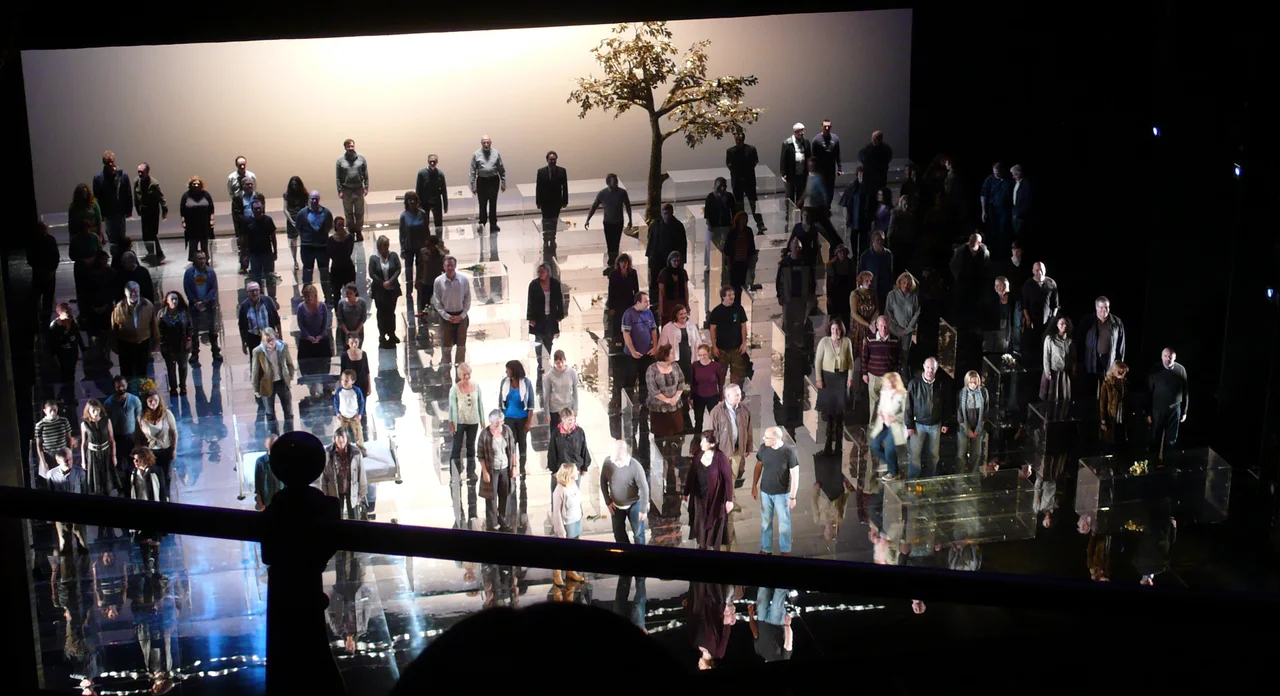
In 1889, in a working-class corner of Lambeth, a Victorian philanthropist named Emma Cons began presenting fortnightly evenings of opera excerpts. The Old Vic theatre she ran was licensed for variety, not full opera, so Cons offered condensed versions, always sung in English. The orchestra was eighteen players. The chorus was amateur. The audience could not afford the West End. Within a decade her niece Lilian Baylis had arrived to help, and within two decades the niece would dream of turning the Old Vic into a "people's opera house." The dream grew, moved, split, and became three things: the Royal National Theatre, The Royal Ballet, and the English National Opera. The opera company moved to the London Coliseum in 1968. Its productions are still sung in English, just as Cons insisted.
The Aunt and the Niece
Emma Cons was a remarkable Victorian: social reformer, suffragist, and theatrical manager who took over the Old Vic to provide affordable culture for the poor. The licensing laws of the day prevented full costumed opera, so she presented edited versions, building a working-class audience that had never heard La Bohème before. In 1898 she recruited her niece Lilian Baylis to help. The two women shared a passionate, almost combative belief that opera should not be the preserve of the rich. Charles Corri, the musical director Cons appointed, rescored entire operas for an eighteen-piece pit because that was all the orchestra she could pay for. When Cons died in 1912, Baylis inherited everything. She also obtained a license to stage full operas the same year. By 1915 she was producing sixteen operas and sixteen plays a season, almost all the plays Shakespeare.
Sadler's Wells in Wartime
Baylis acquired and rebuilt the Sadler's Wells theatre in north London in 1931, a larger house better suited to opera. The opera company grew there into a permanent ensemble. Then came September 1939. The government requisitioned Sadler's Wells as an air-raid refuge for the homeless. The director Tyrone Guthrie decided to keep the opera alive as a small touring company of twenty performers. Between 1942 and the war's end in 1945, the company toured Britain continuously, visiting 87 venues. Joan Cross ran the company and sang leading soprano roles when needed. The numbers grew: from twenty to fifty to eighty by 1945. New voices joined including the tenor Peter Pears and the bass Owen Brannigan, along with the conductor Reginald Goodall. The company that came home to Sadler's Wells in 1945 was bigger and tougher than the one that had left.
Peter Grimes and the Schism
On 7 June 1945 the company reopened Sadler's Wells with Peter Grimes by Benjamin Britten, starring Peter Pears as the haunted fisherman and Joan Cross as Ellen Orford. It was the first major British opera in living memory and a critical triumph. It also tore the company apart. Some singers complained of favouritism toward Britten and called the score "cacophony." By December 1945, Cross, Britten, and Pears severed their ties with Sadler's Wells and founded the English Opera Group. Two months later the ballet company also left, transferring to Covent Garden as the foundation of what would become The Royal Ballet, taking with it the profits that had been subsidising the opera. Sadler's Wells was alone, broke, and demoralised. Clive Carey was brought back from Australia to rebuild it.
Mackerras's Janáček
In 1950, Sadler's Wells was receiving a public subsidy of £40,000 a year. Covent Garden received £145,000. The young Australian conductor Charles Mackerras joined as a deputy and began championing the Czech composer Leoš Janáček, almost unknown in Britain. The company gave the first British staging of Káťa Kabanová. Colin Davis became musical director in 1961 and added Pizzetti, Stravinsky's Oedipus Rex, and Richard Rodney Bennett's The Mines of Sulphur to the repertoire. While Covent Garden engaged international stars like Maria Callas who would not learn their roles in English, Sadler's Wells doubled down on young British and Commonwealth performers singing in their own language. In January 1962, on the day the D'Oyly Carte monopoly on Gilbert and Sullivan ended, the company gave its first Iolanthe with Margaret Gale in the title role. The production ran until 1978.
The Coliseum, 1968
By the late 1960s the Islington theatre was too small. A study showed the company comprised 278 salaried performers and 62 guest singers. In 1968 the opera moved south to the London Coliseum in St Martin's Lane, the largest theatre in the West End, designed by Frank Matcham and opened in 1904. The name changed officially to English National Opera in 1974. Conductors associated with the company since have included Colin Davis, Reginald Goodall, Charles Mackerras, Mark Elder, and Edward Gardner. Directors have included Jonathan Miller, Nicholas Hytner, Phyllida Lloyd, and Calixto Bieito. The repertoire still mixes core operatic works with operetta, Broadway shows, and new commissions. The current artistic director is Annilese Miskimmon. From eighteen players in a Lambeth pit to the Coliseum's gilded auditorium, the company that began with two women's argument about who deserves to hear opera has never lost the principle that started it: always in English.
From the Air
Located at the London Coliseum, 51.5097 degrees N, 0.1264 degrees W on St Martin's Lane in the City of Westminster. The Coliseum is distinguishable from the air by its large rotating ornamental globe atop its dome, the tallest theatre dome in central London. Nearest airport: London City (EGLC) about 6 nm east. Best viewed from 2,000 to 3,000 feet over the West End.
Nearby Stories
- Stevenage 5.7 km away
- Malling Abbey 5.7 km away
- 1952 Farnborough Airshow Crash 7.7 km away
- Ingatestone Hall 8.2 km away
- Hellfire Caves 9.1 km away
- The Carrington Event: The Solar Storm That Could Happen Again 9.8 km away
- Bletchley Park 16 km away
- Castle Hedingham 23 km away