
Equatoria
It was meant to be a model state in the heart of Africa, and it never amounted to more than a handful of adventurers and soldiers manning lonely outposts along a river. In 1870, Egypt sent the British explorer Samuel Baker up the White Nile to plant the flag of a new province called Equatoria, named for the line of latitude it straddled. The territory was vast - reaching from the southern Sudan into what is now northern Uganda - but Egyptian authority over it was always thin, a scatter of garrisons at Gondokoro, Lado, and Dufile, far from anywhere, dependent on a river that turned to swamp. The grand idea faded within twenty years. The name stayed.
A River and a Flag
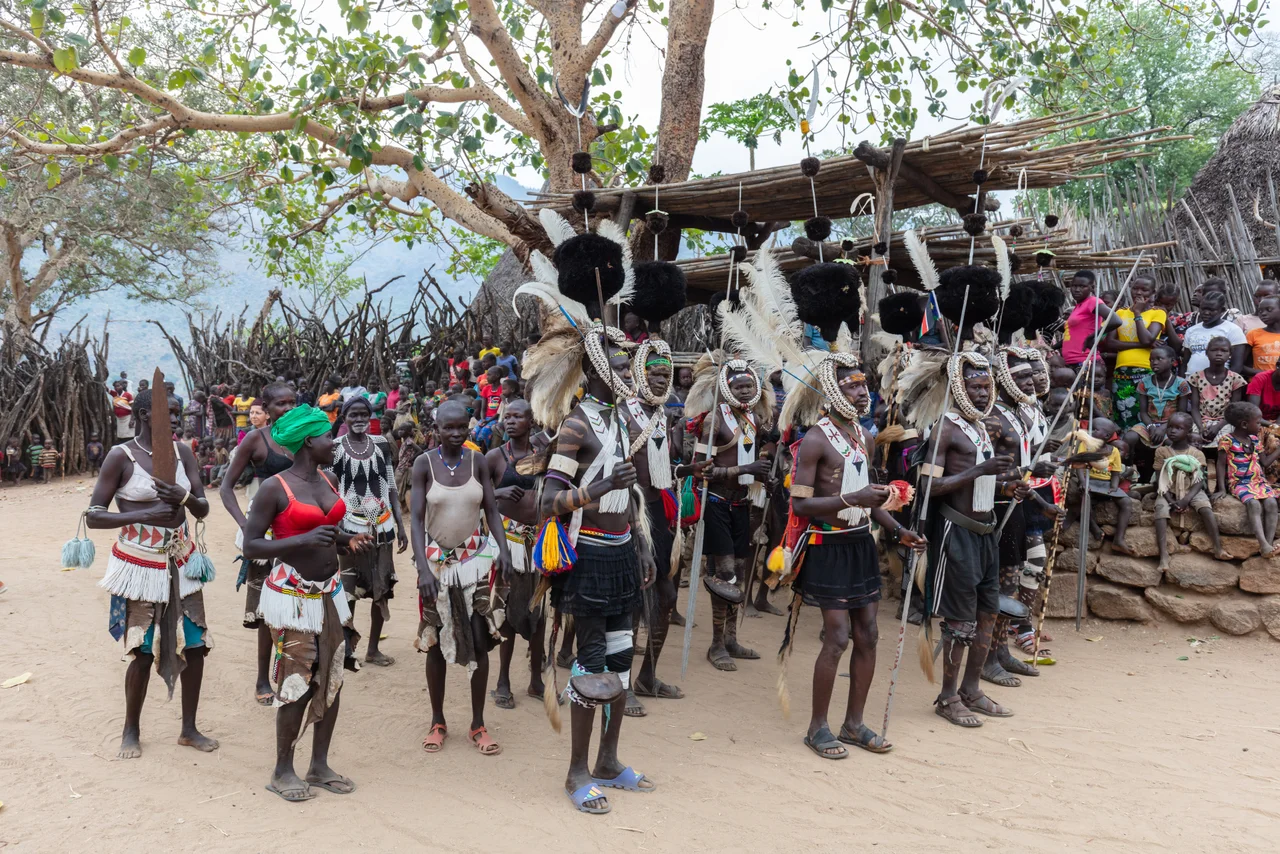
Gondokoro sat on the east bank of the White Nile, just below the point where the river stops being navigable from Khartoum. In Bari, the local language, the name is said to come from words meaning "difficult to dig" - a fitting verdict on the whole enterprise. Baker was supposed to build trading posts and extend Egyptian control, but the villages around Gondokoro had long been raided by slavers and outsiders pushing in from the north, and the people who lived there had little reason to welcome another armed expedition. The Azande, Bari, Lokoya, Otuho, and Pari met the newcomers with resistance rather than submission. In the west, King Gbudwe of the Azande ruled his own kingdom and had no intention of trading it for someone else's empire.
Gordon's Successor
After Baker came Charles Gordon, the famously austere British general, who governed from 1874 and managed to push a few more posts into the interior before quarreling with his superiors in Khartoum and leaving in 1876. His successor was the most unlikely governor of all: a German-born physician, Eduard Schnitzer, who had converted to Islam, taken the name Mehemet Emin, and become known across the region as Emin Pasha. From his headquarters at Lado, Emin governed a province that the world was steadily forgetting. The government in Khartoum had little interest in his proposals, and the money and reinforcements he asked for rarely came. He was a naturalist as much as an administrator, cataloguing birds and plants while his isolated kingdom waited for a war.
Cut Off
The war came from the desert. In 1881 a Sudanese religious leader, Muhammad Ahmad, declared himself the Mahdi, the "expected one," and launched a holy war that swept across Sudan. By 1883 the Mahdists had severed Equatoria's lines of communication, stranding Emin Pasha and his soldiers in the far south. His plight became an international sensation, and in 1887 the explorer Henry Morton Stanley set out to rescue him by the cruelest possible route - up the Congo and through the Ituri rainforest, one of the deadliest marches in the history of African exploration, which cost two-thirds of the expedition their lives. When Stanley finally reached him in early 1888, Emin had already been deposed by his own officers. In April 1889 the survivors evacuated from Wadelai, abandoning the province for good.
The Fight to Be Heard
The colonial chapter closed, but the deeper story of Equatoria was only beginning. When Sudan won independence in 1956, the Khartoum government promised southerners a real share of power and then withheld it. The grievance had already exploded a year earlier: in August 1955, soldiers of the Equatoria Corps mutinied at Torit rather than be shipped north, and the rebellion spread through Juba, Yei, Yambio, and Maridi. That mutiny lit the fuse of a civil war that would burn, with one fragile pause, for decades. Equatorians filled the ranks of the resistance and paid for it. By the late 1960s the war had killed an estimated half a million people, and hundreds of thousands had fled into the forests or across the borders to survive.
Names and Crowns
That experience scattered Equatorians across the world - to Uganda, Kenya, Ethiopia, the Congo, and far beyond - and shaped a culture defined as much by exile and return as by any single homeland. Today the region forms the three southern states of South Sudan, and its identity is still contested. In 2020 one opposition leader even argued the young nation should have been called the "Equatoria Federal Republic." In February 2022, the Azande community crowned a new king at Yambio, restoring a title last held by Gbudwe, who died in 1905 - though neighboring communities were quick to say they would answer to South Sudan, not to a revived kingdom. The model state never took root here. The argument over how this land should govern itself has lasted far longer than the empire that named it.
From the Air
Equatoria spans the far south of South Sudan and into northern Uganda; its historic heart lies around 4.87°N, 31.58°E, where Juba now stands on the White Nile near the old site of Gondokoro. From altitude, follow the silver thread of the White Nile as it descends from the swamps toward the highlands. The nearest major airport is Juba International (HJJJ); regional flights connect through Entebbe (HUEN) in Uganda and Nairobi's Jomo Kenyatta International (HKJK) in Kenya. The region runs hot year-round, with the clearest skies and best long-range visibility during the dry months from November to March.
Nearby Stories
- Juba–Terekeka–Rumbek Road 77 km away
- Imatong Mountains 109 km away
- Bidibidi Refugee Settlement 116 km away
- Lado Enclave 122 km away
- Ramciel 144 km away
- Garamba National Park 198 km away
- Pibor 228 km away
- Nizhnevartovskavia Flight 544 271 km away