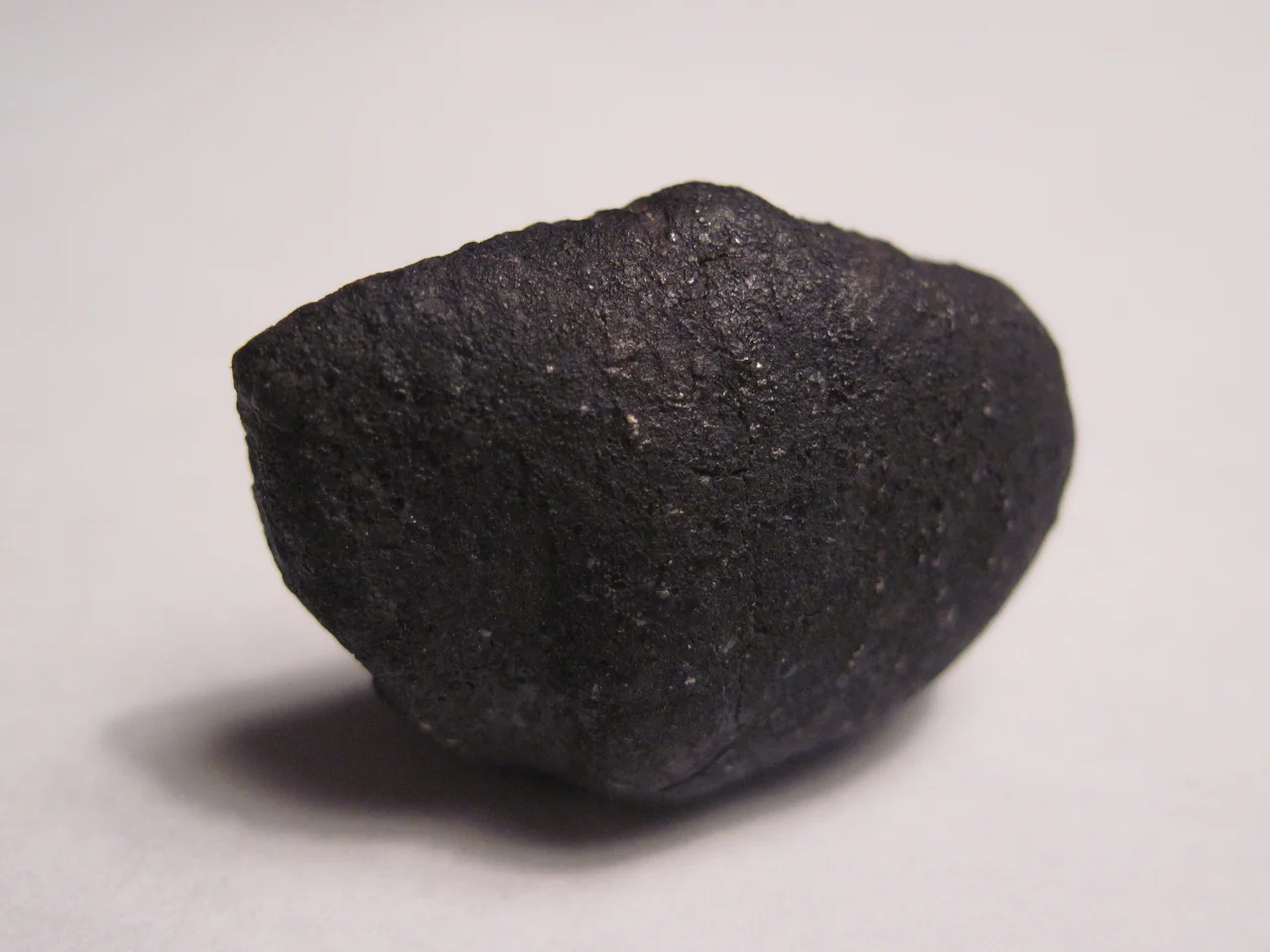

Erg Chech
Spread across the southwestern Algerian Sahara, spilling over the borders into Mali and Mauritania, lies a sea that has no water. The Erg Chech is an ocean of sand - 206,000 square kilometers of it, larger than many nations, the third-biggest sand sea in the entire Sahara. There are no towns to speak of, no roads worth the name, almost no people at all. And yet this near-empty expanse once delivered a rock that rewrote part of the story of how our solar system began.
An Ocean of Sand
An erg is a true sand sea - not the rocky, gravel-strewn desert most of the Sahara actually is, but mile upon mile of dunes. The Erg Chech has them in every form: long linear ridges marching in parallel, complex compounds where ridges collide, and star dunes that radiate arms in several directions at once, sculpted by winds that shift through the year. The whole expanse sits a little above 300 meters in elevation, slightly lower than its neighbor Erg Iguidi to the north, and gives way southeast to the Tanezrouft, a barren rock plain so empty and so brutally hot it earned the nickname 'land of terror.' Summers here are long and extreme; winters are short and merely very warm.
A Rock From the Dawn of Time
In July 2007, a fireball blazed across the sky north of Taoudenni and stones rained down across an elliptical strewn field; over the following months, meteorite hunters collected roughly 100 kilograms of fallen rock from a scatter known as the Chergach strewn field. Then, in 2020, came something extraordinary. Fragments recovered from the Erg Chech turned out to be pieces of a meteorite now called Erg Chech 002 - the oldest piece of volcanic rock ever found, a shard of an ancient protoplanet that formed in the first few million years of the solar system. It predates the Earth itself. To hold it is to hold a fragment of a world that was destroyed before our own had finished forming.
Reading the Early Solar System
Erg Chech 002 did more than break an age record. Because the rock crystallized so early, it preserved a chemical snapshot of the cloud of gas and dust from which the planets condensed. Scientists studying it found evidence that aluminium-26 - a radioactive isotope that acted as one of the main heat sources melting the first small worlds - was not evenly distributed through that early solar nebula. The desert, in other words, handed researchers a tool for testing how the building blocks of planets were assembled. A sea of sand so lifeless that almost nothing happens there turned out to be one of the best windows we have into the most eventful moment in the system's history.
The Beauty of Emptiness
It is tempting to call the Erg Chech featureless, but that misses what it is. This is a landscape stripped to essentials - sand, sun, wind, and silence on a scale almost impossible to grasp from the ground. The same emptiness that makes it nearly uninhabitable is exactly what makes it valuable: with no vegetation, no soil, and no human disturbance, a meteorite that falls here may sit on the surface for years, dark against the pale dunes, waiting to be found. Few people will ever stand in the Erg Chech. But it remains one of those rare places where the planet's deep emptiness becomes a kind of instrument - a clean page on which the sky occasionally writes.
From the Air
The Erg Chech spans southwest Algeria into northern Mali and eastern Mauritania, centered roughly at 24.58°N, 2.58°W. From altitude, look for the vast field of pale dunes - linear ridges and star dunes - giving way to the darker, flatter Tanezrouft plain to the southeast. There are no significant airports within the erg itself; the nearest meaningful references are distant. Expect cloudless skies, extreme surface heat, and superb high-altitude visibility, with blowing sand near the surface the principal hazard over a near-trackless landscape.
Nearby Stories
- Taghaza 175 km away
- Taoudenni 225 km away
- Gerboise Blanche 253 km away
- Gerboise Verte 286 km away
- Gerboise Bleue (nuclear test) 310 km away
- Erg Iguidi 354 km away
- Festival au Désert 474 km away
- Béryl Incident 726 km away