
Gerboise Blanche
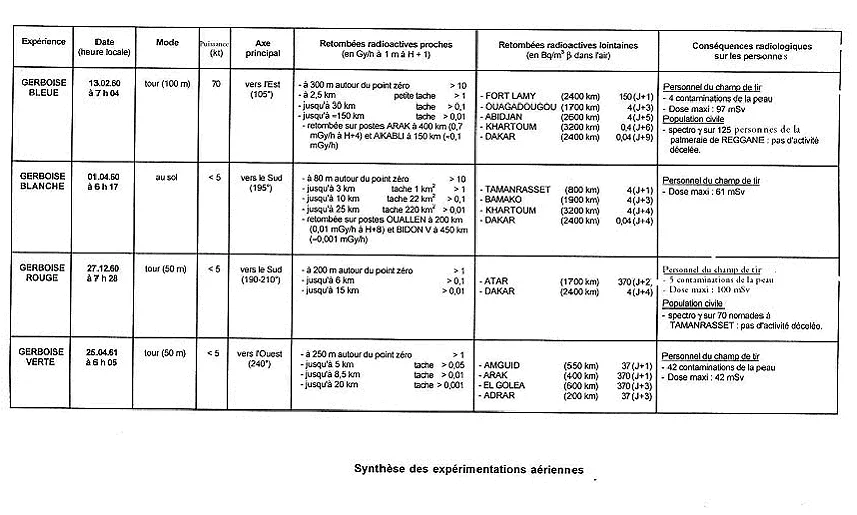
Three months after France stunned the world with its first atomic bomb, the desert near Reggane lit up again. On 1 April 1960, just after dawn, a plutonium device named Gerboise Blanche detonated on a concrete pad in the Tanezrouft. This one was small by design, barely a twentieth as powerful as the bomb that had come before. It was, French officials later admitted, an emergency weapon, the one they would have used had the first test failed. Now it served a different purpose: to prove that a useful warhead could be made small.
The White Jerboa
Like its predecessor, the bomb took its name from the jerboa, the bounding desert rodent the French call gerboise. White was the second color of the tricolor, after blue. The device weighed 1,250 kilograms and was filled with plutonium, and it was fired at 6:17 in the morning with a yield of three kilotons. That number was no accident. France wanted to show its scientists could miniaturize an atomic weapon, shrinking it from an unwieldy first-generation monster toward something that could ride a missile or sit in the belly of a bomber. Smaller was the whole point.
A Bomb Moved Aside
There was a practical reason Gerboise Blanche was set off where it was. Rather than reuse the contaminated ground from the first shot, the authorities placed this bomb a few kilometers from the original ground zero, on a purpose-built concrete pad. They feared that the original site was already too radioactive for the tests still to come. It was a telling decision. The desert that France publicly described as harmlessly empty was, by its own engineers' reckoning, too poisoned to stand on twice.
The Cloud That Drifted
For all its modest yield, Gerboise Blanche left an outsized footprint. A French National Assembly report in 2001 found that while the fallout from the other three Reggane tests stayed within tidy circles less than a kilometer across, the contamination from Gerboise Blanche spread to the southwest for more than six kilometers. The smallest bomb of the series dirtied the largest swath of ground. The numbers in such reports are antiseptic, but the sand they describe was not empty. People herded animals, drew water, and raised children within reach of that drifting plume, most of them never knowing what the wind had laid down around them.
A Step Toward the Arsenal
France hailed the test as a success. The Ministry of the Armed Forces declared that Gerboise Blanche had opened the way to miniaturizing nuclear weapons, a crucial step toward the force de frappe, the independent strike force that would become the backbone of French defense for the rest of the century. The crater the bomb dug was later filled in, the pad abandoned to the wind. What looked from Paris like a clean technical milestone looked very different from the oases downwind, where the costs of France's atomic ambition would surface slowly, in clinics and in cemeteries, for decades to come.
From the Air
Gerboise Blanche was detonated near 26.17°N, 0.10°W, on the Tanezrouft plain a few kilometers from the first test site and southwest of Reggane, Adrar Province, Algeria. The nearest airport is Adrar (Touat-Cheikh Sidi Mohamed Belkebir, ICAO DAUA), about 160 km to the north. The terrain is flat, pale gravel and sand with no surviving structures; the filled-in crater is not visible from the air. Clear skies and long visibility are the norm, broken only by sudden Saharan dust storms.
Nearby Stories
- Reggane 50 km away
- Erg Chech 235 km away
- Taghaza 494 km away
- Béryl Incident 512 km away
- Taoudenni 523 km away
- Tin Hinan Tomb 581 km away
- Sahara International Film Festival 745 km away
- Siege of Laghouat 862 km away