
Estonian Open Air Museum
Imagine a country trying to save itself, one barn at a time. Estonian intellectuals first dreamed of the project in 1913, inspired by Sweden's Skansen and Finland's Seurasaari, but the World War interrupted, then independence absorbed everyone's attention, then the Second World War and Soviet occupation pushed the idea aside for decades. By the time the Estonian Open Air Museum finally opened to visitors in 1964, the rural Estonia it set out to preserve was already disappearing. Threshing barns were being demolished. Net sheds were rotting on emptied coastlines. Whole villages had been collectivized into kolkhoz apartment blocks. The museum's job was no longer to remember the past so much as to outrun the bulldozer, and it has been doing so ever since.
Seventy-Two Hectares West of the City
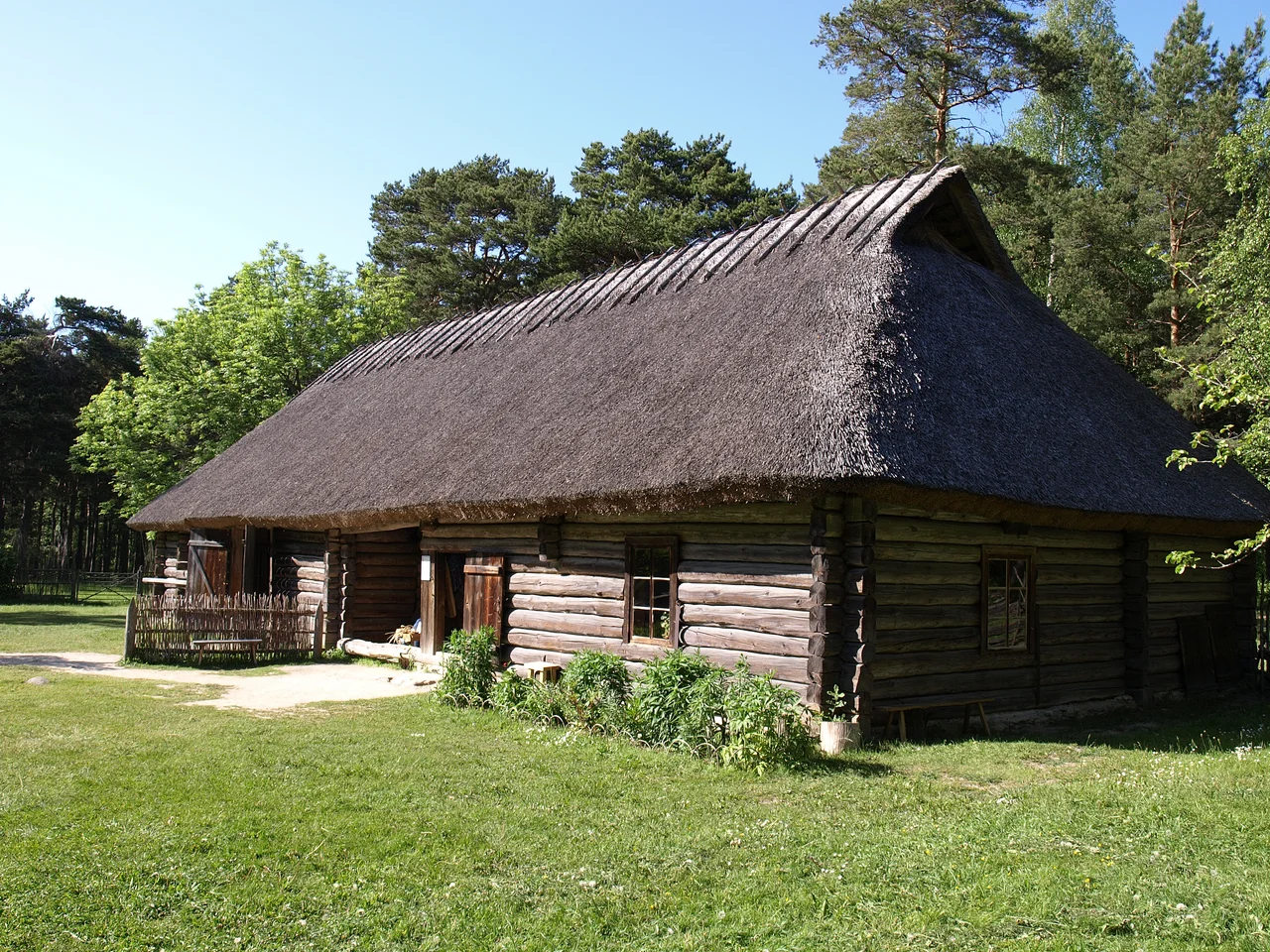
The museum sprawls across 72 hectares at Rocca al Mare, a forested headland west of central Tallinn where pines lean toward the Baltic and the air smells of resin and salt. Inside the gates you walk into reassembled rural Estonia: twelve farmyards from across the country, a tavern, a schoolhouse, several mills, a fire station, a chapel, fishermen's net sheds, and the old church bells tolling on the hour. Buildings stand in groups the way they would have stood in their original villages, so the walk between them feels less like a museum visit and more like a slow stroll through a 19th-century rural parish that somebody has carefully reassembled by the sea.
The Sutlepa Chapel and the Pulga Farm
The oldest exhibit is the Sutlepa Chapel, a small wooden sanctuary belonging to the Noarootsi Swedish parish church, documented in records from 1670. It stands as a reminder that Estonia's coast and islands once held a substantial Estonian Swedish population, families who had fished and farmed these shores for centuries until almost all of them fled to Sweden in 1944. Nearby, the Pulga farm represents a 19th-century rental farm typical of Northern Estonia, brought from Kuusalu parish between 1961 and 1964. The yard is filled with limestone construction, the threshing floor, the smithy, the summer kitchen, all built from the pale local stone that lies just below the topsoil and makes Northern Estonian farms look like they grew from the bedrock itself.
The Lau Village Shop and the Orgmetsa Fire Station
Some of the most quietly powerful exhibits are the smallest. The Lau village shop was built in 1914 by Jaan Meiberg, a distiller from Ingliste manor, in a small parish in Harju County. The display interior is set in 1938, the high-water mark of independent Estonia's economy, when a rural shopkeeper could stock the goods of a confident republic. Visitors can buy candies and soap from that era, briefly inhabiting a moment that the next two years would erase. The Orgmetsa fire station, built in 1928, served the Aravete-Albu volunteer firefighters, with hoses dried in the bell tower and manual fire engines stored below. These were the institutions of a young nation learning to take care of itself.
The Kolkhoz Apartment Building
In 2019 the museum did something rare for a heritage institution: it added a Soviet-era apartment block. The silicate-brick building was constructed in 1964 for workers at the Sookuru dairy barn of the Järvesalu collective farm in Valga district. Transported north and opened in 2021, it now contains four three-room apartments staged for the 1960s, 1970s, 1990s, and 2010s. Visitors walk through the everyday textures of Soviet rural life and its long aftermath, the kitchen wallpaper, the laminated furniture, the radios. In the basement an exhibition traces the collectivization that emptied Estonian villages of their old order, and an activity area called The World of Little Ilmar invites children to explore the lives their grandparents lived. It is honest history, neither nostalgic nor erased.
A Living Museum
The Estonian Open Air Museum is not a static exhibit. The Folklore Society Leigarid performs at the Sassi-Jaani farm every summer Saturday and Sunday. Estonian Bread Day, Midsummer Eve, St. Martin's Day, and Christmas Village fill the calendar with the rhythms of the rural year. The Center of Rural Architecture, founded here in 2007, won the Europa Nostra Grand Prix in 2015 for helping owners of historic Estonian farms repair and maintain their buildings. The mixed choir founded in 2008 has sung at the national laulupidu, the Song Festival that helped sing this country back to independence. The buildings here may have come from elsewhere, but they are not relics. They are still working.
From the Air
59.43 degrees North, 24.64 degrees East. The museum sits at Rocca al Mare on the Kopli peninsula, about 8 km west of central Tallinn along the Baltic shore. From the air it appears as a wooded patch dotted with small clearings and timber buildings between the highway and the water. Best approached low through the western suburbs of Tallinn. Lennart Meri Tallinn Airport (EETN) lies ~12 km southeast. Helsinki Vantaa (EFHK) is 90 km north across the Gulf of Finland.
Nearby Stories
- Padise Abbey 6.8 km away
- SuperShe Island 34 km away
- Battle of Weissenstein 42 km away
- Military Museum of Finland 44 km away
- SMS Schleswig-Holstein 45 km away
- Koluvere Castle 54 km away
- Battle of Wesenberg (1268) 61 km away
- Svartholm fortress 88 km away