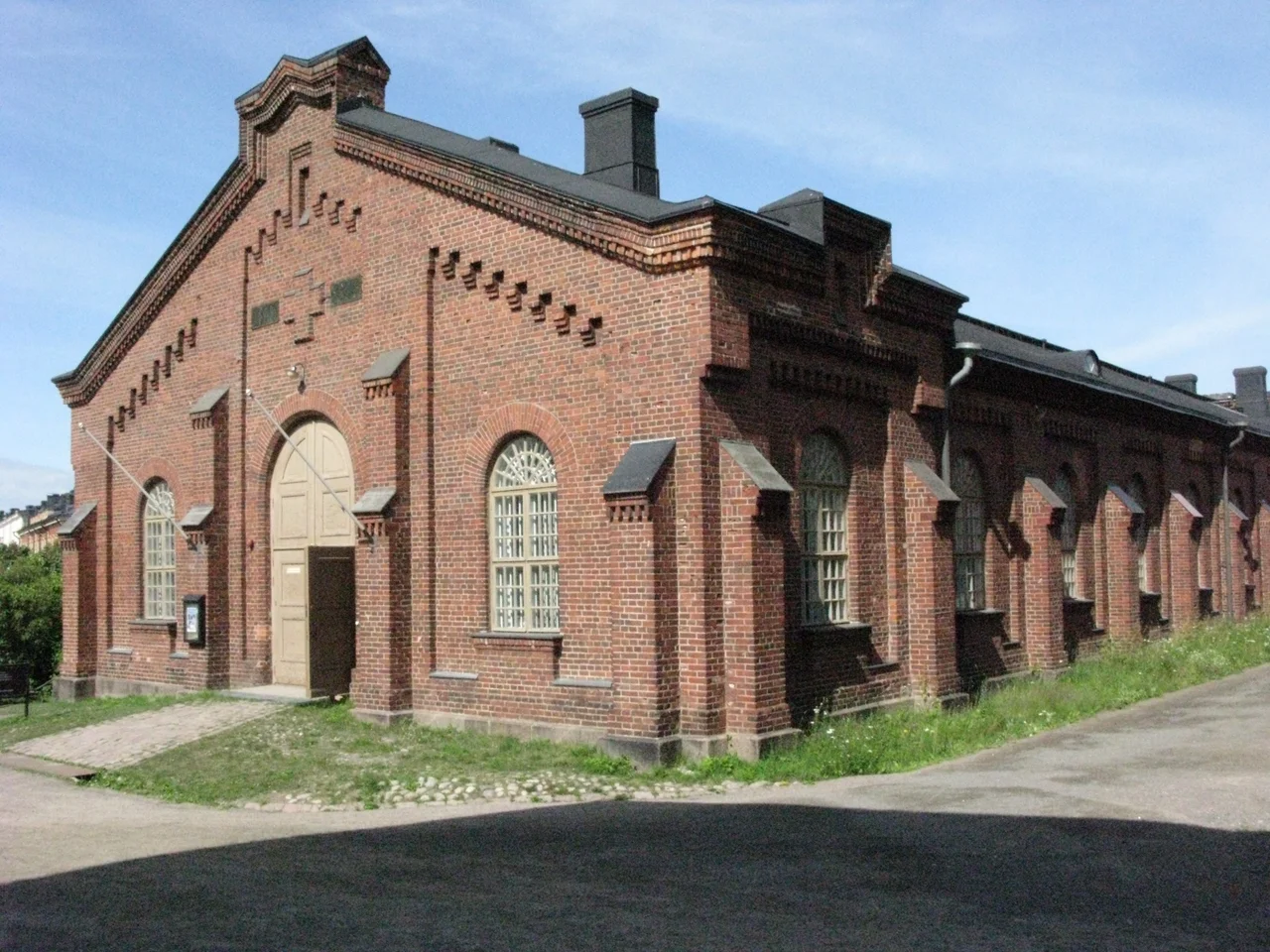

Military Museum of Finland
Vesikko fired one torpedo in anger and hit a Soviet transport. That was July 3, 1941, near the island of Suursaari in the Gulf of Finland, and it was enough to make Vesikko the most-decorated submarine in a fleet of five. The other four were scrapped in 1953 because the Paris Peace Treaty of 1947 forbade Finland from owning submarines. Vesikko was kept for educational purposes that never quite materialized, almost sold off, finally rescued by ex-submariners' lobbying, and dragged across Helsinki harbor to Suomenlinna where she sits today inside the UNESCO sea fortress as the Military Museum of Finland's most popular exhibit, drawing about 50,000 visitors a year into her 250-ton hull.
Three Wars in Twenty-Six Years
The Military Museum was founded on November 25, 1929, ten years after Finland emerged from a brutal civil war that pitted Reds against Whites and killed roughly 36,000 people in a country of three million. The first state exhibits in 1908 had covered the Finnish War of 1808-1809 against Russia; the 1918-1919 displays at the National Museum had treated the civil war while its wounds were still open. By 1939 the museum had set up in Bastion Carpelan on Suomenlinna. Then the Soviet Union attacked. The Winter War of 1939-1940 cost Finland about 25,000 dead. The Continuation War of 1941-1944 cost another 65,000. The Lapland War of 1944-1945, in which Finland turned and drove out its former German co-belligerents, cost another 1,000. The museum was closed and its collections scattered for storage. By 1944 even the Helsinki office had to evacuate during Soviet bombing.
A Russian Arsenal Becomes a Finnish Museum
The Manege building on Suomenlinna, where the Military Museum's main exhibitions live today, was built in 1880-1881 when Finland was still a Grand Duchy of the Russian Empire. The Russians used it as artillery storage. Architect Greifon's brick design has a long central hall where Russian soldiers practiced gymnastics, and where in the 1890s an orchestra stage and dressing rooms were added. After the Military Museum got permission in 1980 to return to Suomenlinna, the Manege was renovated from 1986 to 1989 and opened as exhibition space. The current display, Finnish Defence Forces - 100 years at war and peace, opened in 2018 and walks visitors through the Civil War of 1918, the Winter War, the Continuation War, and the Lapland War, then forward into the postwar Defence Forces. The collections include over 200,000 objects: weapons, uniforms, medals, vehicles, and an exhibit honoring Lauri Törni, holder of the Mannerheim Cross.
Vesikko's Strange Career
Vesikko was built by Crichton-Vulcan in Turku in 1933, originally as a German design prototype that the post-Versailles Reichsmarine could not legally build at home; she was a smaller cousin of the Type II U-boats that Germany would put into mass production. The Finnish Navy bought her in 1936. During the Winter War and Continuation War she patrolled the Gulf of Finland and the Aaland archipelago, conducting safeguard missions and one successful attack. After 1947 she was tied up in Katajanokka and forgotten. The state planned to sell her in 1959. Finnish ex-submariners would not let that happen. In the early 1960s they got her towed to Suomenlinna, and on July 9, 1973 she opened to the public. Visitors crawl through the same hatches the crew used, see the same valves and dials, and feel briefly what it was like to live and fight in 250 tons of steel under the Baltic.
A Torpedo Tube That Sank Twice
One artifact in the Manege has been at the bottom of the Baltic Sea twice. The torpedo tube began life on the Imperial Russian torpedo boat Bditelnyi, which struck a sea mine in November 1917 and went down. The Finnish navy raised the tube and installed it on the Finnish torpedo boat S2. In October 1925, S2 sank in a heavy storm off Reposaari. The Finns raised the tube a second time in 1926 and gave it to the museum in 1930. It has now been on display in three different Helsinki locations and survived two world wars, while the boats it served sank without it. Around it the exhibits assemble a quieter history: a German 88mm Flak 37, a Vickers-Armstrong tank used in the Winter and Continuation Wars, field kitchens horse-drawn into snow, a captured Somali pirate boat from Operation Atalanta. Finnish military history reads as a long argument with neighbors who keep starting things, and a dogged refusal to let the country be erased.
From the Air
The Military Museum's main exhibitions sit on Suomenlinna, a UNESCO World Heritage sea fortress at 60.146 N, 24.989 E spread across six islands at the mouth of Helsinki harbor. The bastioned 18th-century fortifications are the obvious feature from altitude, with the Manege building on the central island. Nearest airport is Helsinki-Vantaa (EFHK), 25 km north. The fortress is reached by ferry from Helsinki city center; recommended viewing altitude 2,000-4,000 ft to see the star fortress geometry.
Nearby Stories
- Svartholm fortress 40 km away
- Karkali Strict Nature Reserve 45 km away
- Hakoinen Castle 46 km away
- SuperShe Island 49 km away
- Tallinn TV Tower 54 km away
- Battle of Lahti 64 km away
- Battle of Wesenberg (1268) 76 km away
- Battle of Fredrikshamn 83 km away