
Eurovision Song Contest 1997
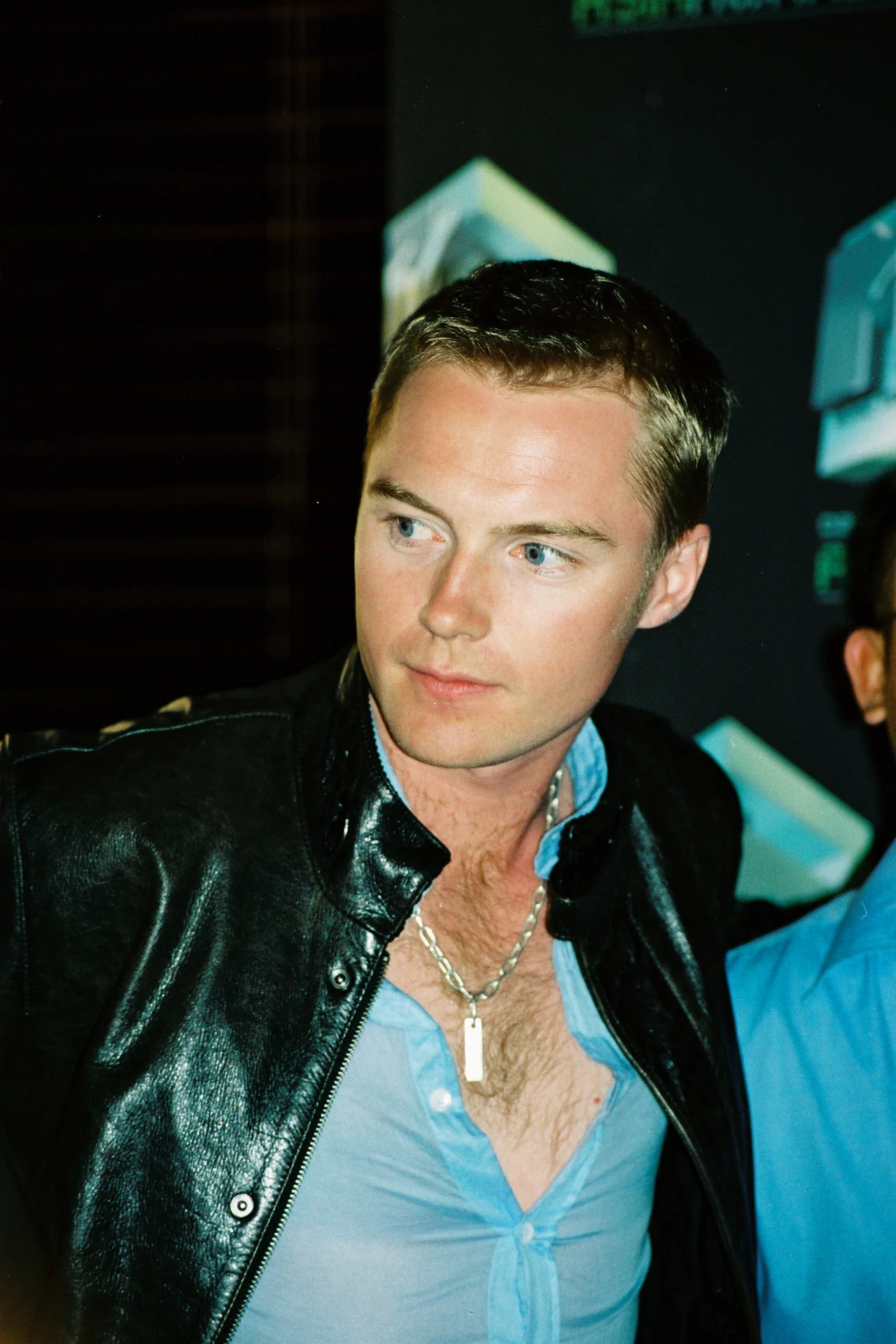
By May 1997, RTE staff joked grimly that they could host Eurovision in their sleep. It was the broadcaster's fourth contest in five years -- 1993 in Millstreet, 1994 and 1995 in Dublin, then 1997 in Dublin again, after Eimear Quinn's ethereal The Voice won in Oslo the year before. The Point Theatre was now hosting its third Eurovision, becoming the only venue in the contest's history to do so. The presenters were Carrie Crowley and a 20-year-old Boyzone singer named Ronan Keating, in his first major presenting role. The orchestra under Frank McNamara was rehearsed to perfection. Twenty-five countries competed. The British entry Love Shine a Light, performed by Katrina and the Waves and written by their guitarist Kimberley Rew, beat Ireland by 70 points to win the contest for the UK for the fifth and so far last time. It was the perfect Eurovision night, marred only by one fact: it was the last time the contest would ever be held in Ireland.
The Last Dublin
Ireland's Eurovision exhaustion was real. Hosting cost RTE the better part of an entire year's entertainment budget; four times in five years had drained the broadcaster's reserves and patience. There was open speculation in early 1997 that RTE might co-produce with BBC Northern Ireland as a way to share the cost. The Irish broadcaster decided against it. They would do one more on their own, and do it properly. The Point Theatre on the Liffey docks was upgraded again. The set was the most ambitious yet. The orchestra played one final Eurovision under conductor Frank McNamara. Then, as Katrina Leskanich and her bandmates stood on stage holding their trophy, RTE made what amounted to a quiet farewell. Ireland has never hosted again. The Point itself was demolished in 2008 and rebuilt as the 3Arena. Many in Ireland still call 1997 the end of a golden age.
The Public Gets a Vote
Until 1997, every Eurovision country's points were decided by a 16-person jury -- balanced for gender, age, and the mix of music professionals to ordinary citizens. In 1997, for the first time, five countries (Austria, Germany, Sweden, Switzerland and the UK) trialled televoting: viewers at home phoned premium-rate numbers to vote for their favourite songs, and the aggregated phone votes were converted into the points allocations. The trial was a triumph. The phone lines lit up across Europe; the engagement was on a scale the contest had never seen. From 1998 onward, all participating countries were strongly encouraged to use televoting, and within a few years it was universal. The democratisation came at a cost: televoting allowed neighbourly bloc voting to flourish (the Balkans tended to vote for each other, the Nordics likewise), and the contest's results became less predictable. But the audience, for the first time, had a direct hand. Eurovision's modern fan culture -- the parties, the costumes, the obsessive prediction markets -- dates from this moment.
Paul Oscar
Iceland's entry that year was a slow, sensual, electronic-tinged song called Minn hinsti dans (My Final Dance), performed by the 27-year-old Paul Oscar. He came on stage flanked by four female dancers in PVC outfits, draped himself across a chaise longue, and turned a Eurovision performance into something nobody had quite tried before -- a piece of pop theatre with explicit sexuality and queer aesthetic intent. Paul Oscar was the first openly gay artist ever to compete as a lead performer in Eurovision. He came 20th. The performance scandalised some delegations and delighted millions of viewers. The European Broadcasting Union, to its credit, did not censure him. The following year, Israel's Dana International -- a trans woman -- won the contest with Diva, in part on the strength of a fan vote that had been impossible before televoting. The Paul Oscar performance in Dublin in 1997 is now widely regarded as the moment Eurovision became, openly, what it had always quietly been: a sanctuary for the kind of European queer culture that had nowhere else to be quite so itself.
The End of the Orchestra
The 1997 contest was the last in which the orchestra was central. Until then, entries had been required to perform with the host orchestra or with their own live instruments; backing tracks were limited to sounds that were also being mimed by visible performers. The 1997 rules permitted, for the first time, fully recorded backing tracks without any live musical accompaniment. The change had been forced by the falling cost of broadcast-quality recording and the rising influence of dance and electronic music, where a live orchestra would have been ridiculous. By 1999, the host orchestra was dropped entirely. For a contest that had begun in 1956 with seven Western European countries singing acoustic chansons accompanied by a chamber ensemble, the 1997 change marked the final break with Eurovision's original conception. Conductor Noel Kelehan, who had led the RTE Concert Orchestra at the 1994, 1995 and 1997 contests, became the most experienced Eurovision conductor in history. He retired from the role with the 1997 contest. The Eurovision baton was, literally, put down.
Love Shine a Light
And the song that won? Katrina and the Waves were not unknowns -- they had reached the global top ten in 1985 with Walking on Sunshine, a song so relentlessly cheerful it has soundtracked half the romantic comedies made since. By 1997 the band were past their commercial peak, looking for a comeback, and persuaded by Rew that Love Shine a Light might do it. The song was originally written for the Samaritans' 40th anniversary fundraising campaign. It was the kind of warm, hopeful, almost gospel-tinged anthem that Eurovision rewards when the political tides are right. The UK was midway through its New Labour moment; Tony Blair had been elected the day before the contest. Katrina Leskanich's powerhouse voice and the song's surging chorus carried it home -- 227 points, ten maximum 12-point scores, the largest winning margin in Eurovision history at the time. Ireland came second with Marc Roberts's Mysterious Woman, narrowly missing what would have been its seventh win in seven years. As the credits rolled, RTE breathed out. They were done.
From the Air
The Point Theatre (now the 3Arena) sits at 53.347N, 6.229W on the north bank of the River Liffey in the Dublin Docklands, immediately west of the East Link Bridge. From altitude the venue is a distinctive curved-roofed modern arena beside the river; the Convention Centre Dublin's tilted glass cylinder stands a short distance up the quay. The original 1997 hosting building was the Victorian train-depot conversion -- the current 3Arena that occupies the spot was rebuilt entirely in 2008. Nearest airport: Dublin (EIDW), 11 km north.
Nearby Stories
- Wicklow Mountains 12 km away
- Mornington 14 km away
- German submarine U-1051 16 km away
- Abbey of Kells 18 km away
- Irish Military Intelligence Service 20 km away
- HMS Manners (K568) 37 km away
- Templemore 42 km away
- Irish Sea Bridge 43 km away