
Fall of Timbuktu
For centuries Timbuktu was a byword for the ends of the earth, a city of scholars and saints at the edge of the Sahara. In the summer of 2012 it became something else: a place where a war over land and faith turned against the dead. Armed groups took the city, and then they came for its tombs. What followed was both a tragedy and, quietly, a triumph, as the people of Timbuktu refused to let the soul of their city be carried off with its conquerors.
The City Changes Hands
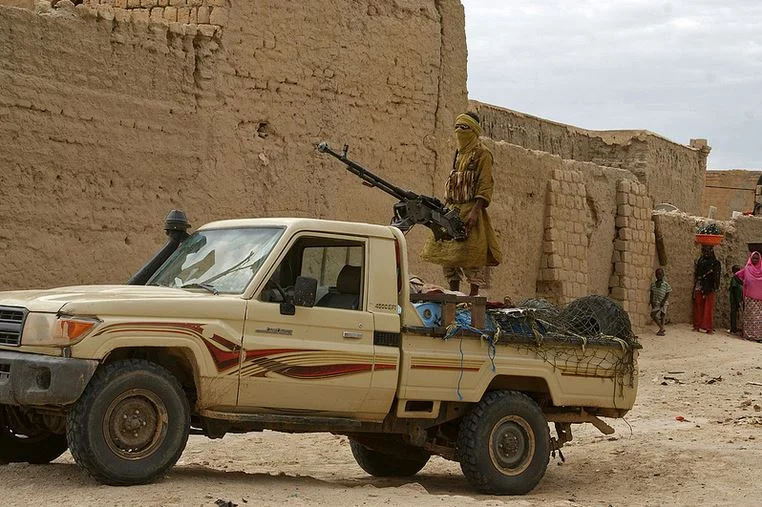
The fall came in stages. On June 13, 2012, fighters of the Tuareg separatist movement, the MNLA, clashed with militants of Ansar Dine at a checkpoint on the city's edge. The two had been uneasy allies against the Malian state; now they turned on each other. Ansar Dine, backed by foreign jihadist fighters and superior firepower, gave the separatists a deadline to leave. By June 29, the MNLA were gone and Ansar Dine controlled Timbuktu and much of northern Mali. For the residents, one armed occupation simply replaced another, and a stricter, more dangerous order settled over the streets.
War Against the Saints
Timbuktu was once called the City of 333 Saints, and its Sufi mausoleums were beloved shrines woven into daily life. The occupiers declared them idolatry. Beginning in late June, militants attacked the tombs with hoes, pick-axes, and chisels, destroying the mausoleum of Sidi Mahmoud Ben Amar and then others, one by one. They broke open a door at the Sidi Yahya Mosque that local belief held should stay shut until the end of days. A spokesman boasted that not a single mausoleum would remain. An imam offered money for repairs refused it, saying what had been done was beyond repair. These were not abstractions. They were the spiritual landmarks of people's grandparents, smashed in front of them.
The Books That Got Away
But the occupiers did not get everything. Timbuktu's other treasure was its libraries, hundreds of thousands of medieval manuscripts on law, science, poetry, and faith. As the danger grew, the city's librarians and families launched a clandestine rescue. Led by the custodian Abdel Kader Haidara, they packed ancient texts into trunks and smuggled them out by night, hidden in mule carts and canoes, carrying more than 350,000 manuscripts to safety hundreds of miles south. When French and Malian forces retook the city in January 2013, retreating fighters set fire to the Ahmed Baba Institute, destroying some 4,000 manuscripts. Even those had already been preserved in digital copies. The great archive of Timbuktu survived because its people would not let it burn.
A Reckoning and a Rebuilding
The world did not look away. UNESCO, governments, and Islamic organizations condemned the destruction, many comparing it to the Taliban's dynamiting of the Buddhas of Bamiyan. The reckoning came at The Hague. In 2016 the International Criminal Court convicted Ahmad al-Faqi al-Mahdi, an Ansar Dine member, of the war crime of deliberately attacking historic and religious buildings, the first such conviction in the court's history. He was sentenced to nine years and ordered to pay millions in reparations to the people of Timbuktu. Then the masons went to work. Using the same earthen techniques that had built the city, they rebuilt the shattered mausoleums. The tombs stand again, and so does the city that mourned them.
From the Air
Timbuktu sits at roughly 16.77°N, 3.00°W in northern Mali, on the southern edge of the Sahara just north of the Niger River floodplain. The nearest airport is Timbuktu (ICAO: GATB), about 7 km north; its capture by French-Malian forces in January 2013 marked the end of the occupation. From the air the old city appears as a tan grid punctuated by the pyramidal minarets of its three great earthen mosques. Dry-season skies offer the best visibility; harmattan dust can heavily obscure the region from late autumn through spring.
Nearby Stories
- Essakane 13 km away
- Liptako 18 km away
- Tondidarou 86 km away
- Hand of Fatima (rock formation) 159 km away
- Lake Débo 184 km away
- Hombori 187 km away
- Festival au Désert 332 km away
- Oualata 374 km away