
Fortingall Yew
In 2015 the Fortingall Yew did something it had not done in living memory: a single branch on the outer crown began to bear berries. The yew is male, has always been male, and ought to have remained male. Berries come from female yews. The Royal Botanic Garden Edinburgh, asked to investigate, reported that one part of the tree had simply changed sex. The cause was probably environmental stress. The seeds have been preserved. This is the kind of news that ordinary trees do not generate. But the Fortingall Yew has never been an ordinary tree. Forestry and Land Scotland consider it about five thousand years old, which would make it older than the pyramids and one of the oldest non-clonal trees in Europe.
How Old Is It Really
Estimating the age of an ancient yew is hard because the heartwood decays, and with it go the growth rings that would settle the question. The Fortingall Yew lost its centre by 1770. In 1769 the trunk was recorded as 52 feet in girth, an extraordinary measurement; now the tree is split into several separate stems that look almost like a small grove of trees, with the old trunk reduced to fragments. Estimates of the age range from a relatively modest 2,000 to 3,000 years up to as much as 9,000 years. Forestry and Land Scotland settle on 5,000. Whichever figure is closest, the tree was already ancient when Christianity arrived in Scotland.
Souvenir Hunters
By 1833 it was noted that large arms had been removed from the yew, and even masses of the trunk had been carried off, to be made into drinking cups and other curiosities. A souvenir-cup made from the wood of the world's oldest tree was, evidently, the kind of thing a Victorian gentleman wanted on his sideboard. In 1785 a low wall was built around the tree to protect it. The wall is still there. The tree is still visible. In 2019 the Tree Warden for Fortingall and the Tayside Biodiversity Community Partnership warned that modern tourists, ripping off branches for souvenirs of their own, were posing a renewed threat to the tree's survival.
Cuttings and Conservation
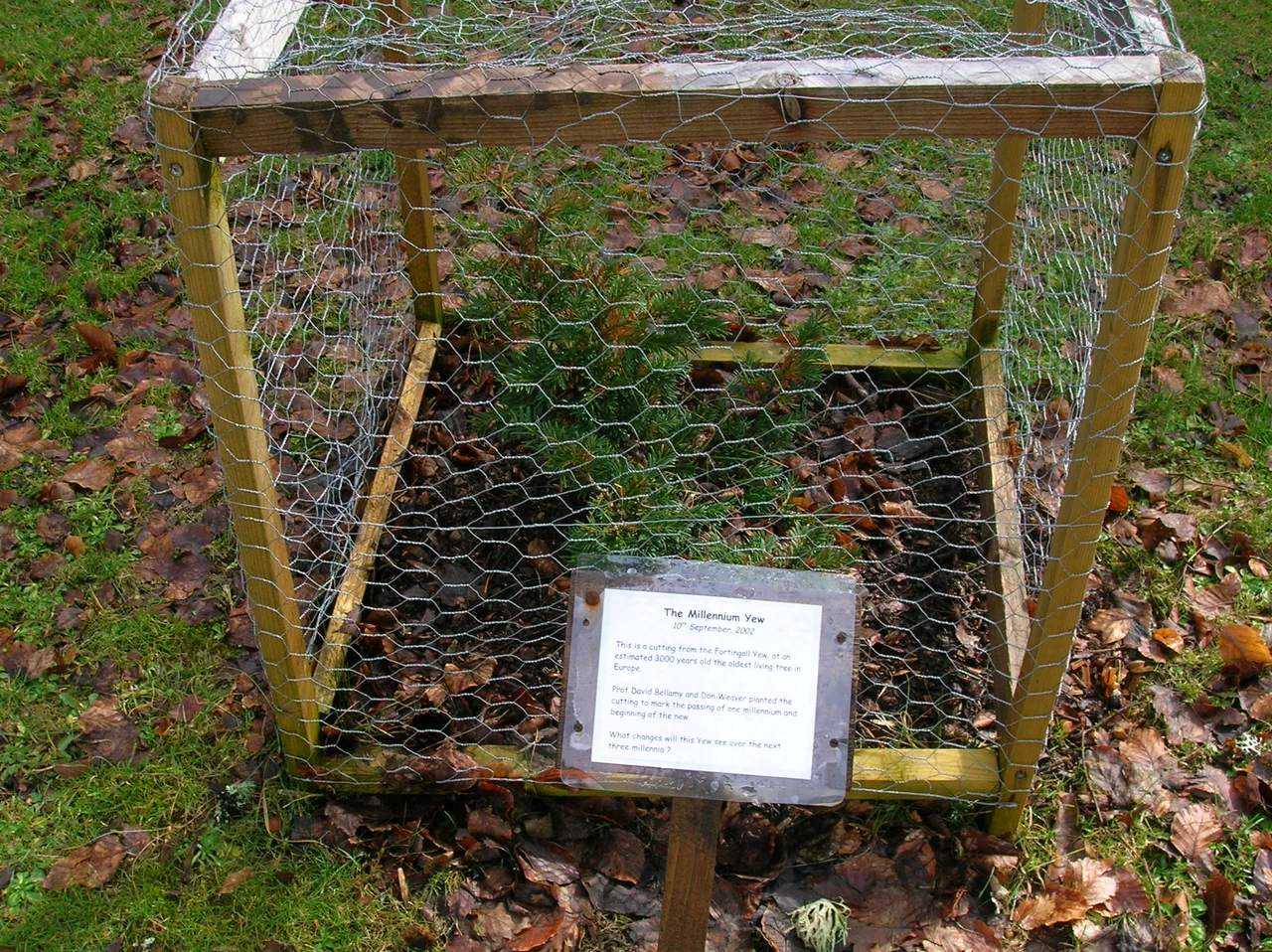
The Royal Botanic Gardens in Edinburgh have taken cuttings from the Fortingall Yew to form part of a mile-long hedge in the Yew Conservation Hedge Project. The aim is to preserve the DNA of Taxus baccata from the UK's most ancient specimens, because yew populations worldwide are threatened by felling and disease. So pieces of the Fortingall Yew now grow in Edinburgh, and the DNA of something that may predate the Bronze Age has been pulled, scientifically, into the 21st century. Genetic insurance against a future in which the original is lost.
Pilate and Other Legends
Local legend insists that Pontius Pilate was born in the yew's shade and played beneath it as a child. Dr Paul Philippou, an honorary research fellow at the University of Dundee, has politely pointed out that this is historically impossible: Pilate was born before the Romans had reached this part of Scotland. But the legend persists, perhaps because legends accumulate around very old trees in the way that lichen does. Reverend James MacGregor, who wrote the Book of the Dean of Lismore, served at the church here in the 16th century. The Iron Age cult centre that almost certainly preceded the church may itself have been built around the tree. Yews have always been sacred in northern Europe. This one has had the longest time to gather meaning.
From the Air
Located at 56.5980 N, 4.0507 W in the churchyard at Fortingall, eastern Glen Lyon, Perthshire. The yew sits in its own walled enclosure beside the parish church. From the air the tree itself is hard to spot; navigate to the white-harled church in the centre of the small village. Best viewed at low altitude in clear weather, 1,500-3,000 feet AGL. Loch Tay lies south-east. Nearest major airports: Glasgow (EGPF) about 50 miles south-west, EGPN (Dundee) about 40 miles east.
Nearby Stories
- Doune 6.7 km away
- Ben Lomond 7.7 km away
- Lochleven Castle 9.4 km away
- Lochaber Narrow Gauge Railway 10 km away
- Scone Abbey 11 km away
- Battle of Dalrigh 12 km away
- Battle of Dalnaspidal 13 km away
- Lochnagar 26 km away