.jpg)
Gallipoli Campaign
Half a million young men were killed or wounded on a strip of land you can drive across in twenty minutes. The Gallipoli campaign ran from 19 February 1915 to 9 January 1916, and by the time the last Allied soldier evacuated, roughly 250,000 casualties had been suffered on each side. Britain, France, and the Russian Empire wanted to force the Dardanelles, knock the Ottoman Empire out of the war, and open a supply route to a Russia that was already faltering. The Ottomans were defending their capital. Both sides believed they were defending civilization. Both sides sent people who, by and large, just wanted to live.
Why a Narrow Strait Mattered
The Dardanelles is a thirty-eight-mile strait connecting the Aegean Sea to the Sea of Marmara. Whoever held it controlled the only sea route between Russia's warm-water ports and the Western allies. By late 1914, the war on the Western Front had bogged into trenches, the Baltic was blockaded, and the Arctic ports were ice-bound for half the year. Russia desperately needed supplies; Britain and France desperately needed Russia in the war. Winston Churchill, then First Lord of the Admiralty, championed a naval attack: send obsolete battleships to bombard the Ottoman forts, force the strait, sail to Constantinople, and dictate terms. The strategy was bold, simple, and based in part on incorrect intelligence about Ottoman ammunition reserves. On 18 March 1915, the Allied fleet attempted exactly that, hit a previously unmapped minefield, lost three battleships, and turned back. The naval operation had failed. The land operation began.
Twenty-Five Boys From Wagga Wagga
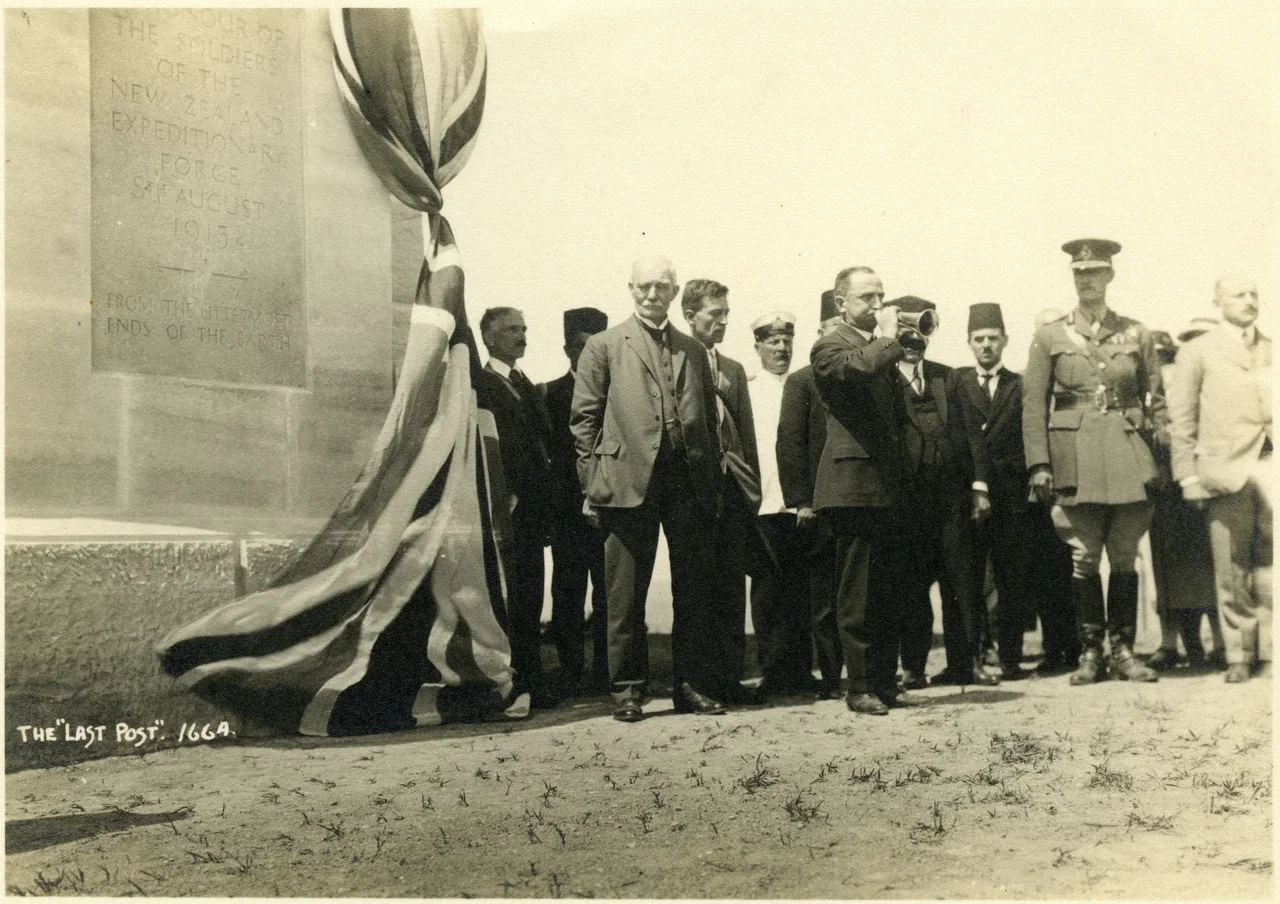
On 25 April 1915, troops landed at five beaches on the southern tip of the Gallipoli peninsula and one further north on the Aegean coast. The northern landing - on a narrow strip soon to be called Anzac Cove - was made by Australian and New Zealand soldiers under Lieutenant General William Birdwood. They came ashore in the wrong place, dropped roughly a mile north of their planned beach by undetected currents, and found themselves at the foot of impossibly steep ridges defended by Ottoman troops on the high ground. Within hours, hundreds were dead. Among the troops were boys from Wagga Wagga and Auckland, sheep-station hands from the Hawkesbury, miners from Westport, accountants from Brisbane - young men who had volunteered the year before for the adventure of seeing the world. By evening, the ANZAC commanders considered re-embarkation. The navy said it was impossible. The men dug in. They would stay for eight months.
Mehmetçik on the Ridge
Defending the ridges above Anzac Cove was the Ottoman 19th Division under Lieutenant Colonel Mustafa Kemal - the future Atatürk - who had argued from the start that the British would land at exactly this spot. When his 57th Infantry Regiment ran out of ammunition and had only bayonets to meet the attackers, he gave the order that became one of the most famous in Turkish military history: "I do not order you to fight, I order you to die. In the time which passes until we die, other troops and commanders can come forward and take our places." Every man of the regiment was killed or wounded. They were called Mehmetçik - Little Mehmet - the affectionate Turkish name for the ordinary soldier. They were farmers from Anatolia, dockworkers from Smyrna, students from Constantinople. They held the ridge.
Eight Months in the Mud
After the failed initial assaults at Cape Helles and Anzac Cove, the campaign settled into a stalemate that resembled the Western Front in miniature - trenches sometimes only meters apart, snipers, dysentery, summer heat that drove the temperature inside dugouts past 40°C. Major battles ground forward and back across the same scarred ridges: the First, Second, and Third Battles of Krithia, the Battle of Lone Pine, the assault at the Nek, the August offensive at Sari Bair, the landings at Suvla Bay. Each battle promised to break the deadlock. None did. The August offensive, which committed an additional British corps at Suvla, came tantalizingly close before bogging down in the same impossible terrain. Disease killed almost as many as the fighting. The flies, soldiers wrote home, were worse than the bullets.
The Withdrawal That Worked
By December 1915, the Allied high command had accepted that Gallipoli could not be taken. The evacuation - paradoxically, the most successful operation of the entire campaign - was carried out in stages between 7 December 1915 and 9 January 1916. Self-firing rifles rigged with cans of dripping water kept up a sporadic fire while troops slipped away in the dark. Boots were wrapped in cloth to muffle footsteps on the gangways. Roughly 105,000 Allied soldiers were withdrawn from Anzac Cove and Suvla without a single casualty - a feat the Ottomans only realized was complete the following morning, when they advanced into empty trenches. The bay was littered with abandoned equipment, mountains of stores, and cemeteries containing thousands of friends.
Two Nations Born on a Beach
Gallipoli broke careers and built nations. Winston Churchill, blamed for the strategy, was forced out of the Admiralty and out of cabinet, beginning what he later called his wilderness years. Mustafa Kemal, who had emerged as the most effective Ottoman field commander, became a national hero - the basis for the prestige he would use, after the empire collapsed, to lead the Turkish War of Independence and proclaim the Republic of Turkey in 1923. For Australia and New Zealand, both still legally British dominions in 1915, the campaign became a foundational national experience. The anniversary of the landings, 25 April, is observed in both countries as Anzac Day - the most significant commemoration of military service in either nation, surpassing Remembrance Day. The losses were terrible and the strategic gain was nil. Out of that unjustifiable cost, three modern national identities took form.
Johnnies and Mehmets
Words attributed to Atatürk in 1934, addressed to the mothers of the Allied dead buried at Gallipoli, are inscribed at the Anzac Cove memorial today: "Those heroes that shed their blood and lost their lives, you are now lying in the soil of a friendly country. Therefore, rest in peace. There is no difference between the Johnnies and the Mehmets to us where they lie side by side here in this country of ours. You, the mothers, who sent their sons from far away countries, wipe away your tears; your sons are now lying in our bosom and are in peace. After having lost their lives on this land they have become our sons as well." Historians have debated whether Atatürk wrote them in this exact form or whether they were assembled later from his sentiments. The debate matters less than what the words came to mean. The peninsula is now a vast Turkish national park. Australian and New Zealand pilgrims travel to Anzac Cove each April. Turkish families come to honor their own dead. The cemeteries lie a few hundred meters apart, walked by descendants of the men who killed each other a hundred and ten years ago. Both sides are quiet now.
From the Air
The Gallipoli (Gelibolu) Peninsula stretches northeast-southwest at roughly 40.2°N, 26.4°E, separating the Aegean Sea from the narrow Dardanelles strait. From the air the peninsula is unmistakable - a long, narrow finger of land with the Aegean to the west and the strait (often crowded with shipping) to the east. Anzac Cove sits on the western (Aegean) side; Cape Helles is at the southern tip. The nearest major airport is Çanakkale (LTBH) on the Asian side of the Dardanelles, about 20 km south of the southern tip. Istanbul Airport (LTFM) lies about 250 km northeast. Best viewed in clear morning light when the strait is calm and the cemetery fields show as pale rectangles among the scrub.
Nearby Stories
- SMS Kurfürst Friedrich Wilhelm / Barbaros Hayreddin 7.2 km away
- Samothrace temple complex 14 km away
- 2014 Aegean Sea Earthquake 24 km away
- Mount Ida (Turkey) 24 km away
- Battle of Gallipoli (1416) 32 km away
- Cardia (Thrace) 48 km away
- Mithymna 59 km away
- Cyclops Cave (Youra) 143 km away