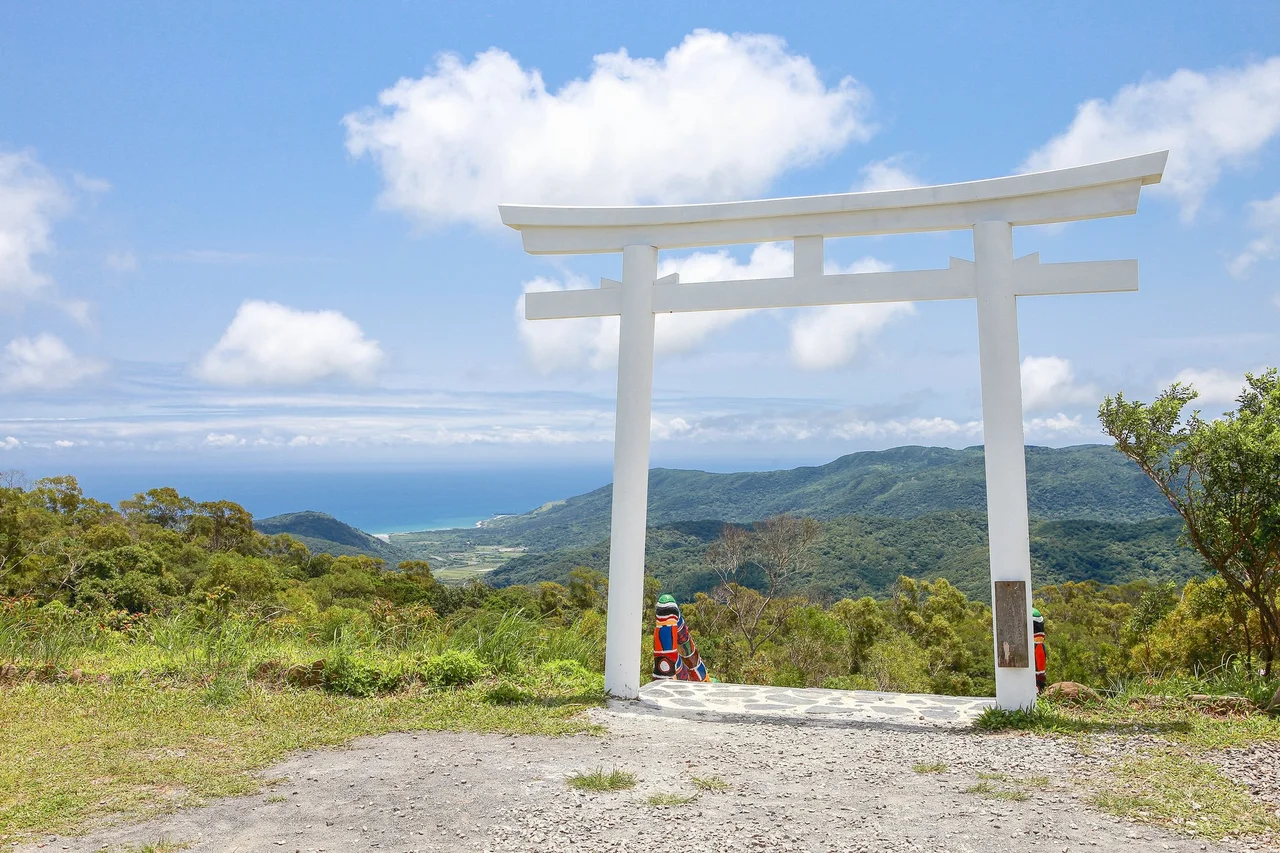

Gaoshi Shrine
A Japanese man named Satō decided to rebuild a Shinto shrine in a Paiwan village on Taiwan's southern mountains because Taiwan had sent help after an earthquake. That logic — gratitude across the complicated history of colonizer and colonized — is the thread that runs through Gaoshi Shrine, and it is not a simple one to follow.
Built Under Colonial Rule
The original Gaoshi Shrine — then called Kuskus Shrine, after the Paiwan community's name for the village — was constructed in 1939. Taiwan was then under Japanese colonial rule, which had begun in 1895 following the First Sino-Japanese War. The Japanese built Shinto shrines across the island as part of a systematic effort to integrate Taiwan into Japanese imperial culture, and to provide a spiritual framework for the communities — including indigenous Paiwan people — who lived within the colonial order.
What the Paiwan of Gaoshi thought of the shrine built in their village is not recorded in the sources available. What is recorded is that the colonial administration built it, that it stood in their community, and that after Japan's defeat in 1945 and the end of colonial rule, a typhoon destroyed it in 1946. Across Taiwan, the postwar years saw most Shinto shrines dismantled, repurposed, or left to collapse. This one fell to wind and rain.
An Unexpected Reconstruction
More than six decades later, in 2011, the Tōhoku earthquake and tsunami devastated northeastern Japan, killing nearly 16,000 people. Taiwan's response was one of the largest outpourings of international disaster aid Japan received — a fact that carries its own weight given the two countries' shared and difficult history.
Satō, moved by this response, decided to fund the reconstruction of the Gaoshi Shrine as an expression of thanks. The rebuilt shrine cost ten million Japanese yen. It opened in 2015, making it the first Shinto shrine constructed in Taiwan in the post–World War II era. The building follows the Shinmei-zukuri style, the austere architectural form associated with Ise Shrine, Japan's most sacred Shinto site.
In 2016, a torii gate donated by Japanese supporters was erected at the shrine entrance. Two years after that, in 2018, a Taiwanese priest — the first — was formally installed to conduct ceremonies. His appointment was described at the time as "the first step toward a dream."
What the Shrine Means Now
The rebuilt Gaoshi Shrine is formally unaffiliated with the Shinto religion or any other deity. It functions instead as a memorial for Taiwanese people lost in wars, including World War II — a framing that deliberately opens the shrine to a broader community of remembrance rather than limiting it to Japanese spiritual practice.
This matters in context. During the Japanese colonial period, many Paiwan and other Taiwanese indigenous people were enlisted or conscripted into Japanese military service. Their deaths in the Pacific War were real, and for decades went largely uncommemorated in a Taiwan that had moved through different political phases and national narratives. A memorial space that holds space for that loss, in a Paiwan village, rebuilt through Japanese gratitude and Taiwanese generosity, does not resolve the contradictions of colonialism — but it does something unusual: it holds them in the same place.
Gaoshi village sits in the mountains of Mudan Township, Pingtung County, above the valleys of the Hengchun Peninsula. The shrine is quiet, small, and easy to miss on a map. That is part of what makes it worth finding.
From the Air
Gaoshi Shrine is located at approximately 22.12°N, 120.84°E in the mountainous interior of the Hengchun Peninsula, within Mudan Township, Pingtung County. At altitude, the area appears as densely forested hillside terrain rising from the coastal plain. The shrine itself is small and not easily visible from the air, but the Paiwan village of Gaoshi sits in a recognizable valley in the uplands. Nearest major airport is RCKH (Kaohsiung International), approximately 70 kilometers to the north. Low-altitude overflights at around 2,000 to 3,000 feet reveal the topography that has made this region — rugged, forested, and defensible — a Paiwan homeland for centuries.
Nearby Stories
- Fangliao 18 km away
- Orchid Island 25 km away
- Zhaori Hot Spring 41 km away
- Ten Drum Rende Creative Park 69 km away
- Barclay Memorial Park 102 km away
- Mavulis Island 102 km away
- 1991 Eruption of Mount Pinatubo 741 km away
- Scarborough Shoal 780 km away