Gielgud Theatre
Beerbohm was a tabby cat named after the actor Herbert Beerbohm Tree, and he made a habit of walking onstage at least once during every production at the Globe Theatre. Actors learned to improvise around him. He chose his favourite dressing rooms with the same imperiousness, settling in with Peter Bowles or Michael Gambon or Penelope Keith for the run of a show, then moving on. When he died in March 1995 at the age of 20, the theatrical paper The Stage gave him a front-page obituary, the only cat ever to receive one. His portrait still hangs in the corridor by the stalls of what is now the Gielgud Theatre, a building that has carried three names since it opened on Shaftesbury Avenue in 1906.
Sprague's Twin Houses
The architect W. G. R. Sprague designed the theatre as a pair with the Queen's Theatre next door, which opened the following year. Both were built in a Louis XVI style with circular Regency staircases, oval galleries, and ornate gold-leaf interiors. The Gielgud originally seated 970; today, after a century of seat removals and box reconfigurations, it holds 994 across three levels. The theatre opened on 27 December 1906 as the Hicks Theatre, named for the actor, manager, and playwright Seymour Hicks, for whom it had been built. The first play was a musical, The Beauty of Bath, co-written by Hicks himself. A series of musicals followed: My Darling in 1907, the London premiere of Brewster's Millions, and in 1908 the British staging of Oscar Straus's A Waltz Dream. Then, in 1909, something happened during The Dashing Little Duke that has probably never happened in musical theatre before or since: when Hicks's wife Ellaline Terriss fell ill in the title role of a woman playing a man, her husband stepped in to play it. As far as anyone has counted, he remains the only husband ever to take over his wife's stage role.
Becoming the Globe
Later that same year, the American impresario Charles Frohman took over management of the theatre. He renamed it the Globe Theatre, picking up the name that had been free since the original Globe on Newcastle Street was demolished in 1902. The new Globe's reopening production, His Borrowed Plumes, was written by Lady Randolph Churchill, mother of Winston. During the First World War, the musical Peg O' My Heart filled the house. Noel Coward's Fallen Angels debuted there in 1925. Then, in 1939, John Gielgud directed and starred in a revival of The Importance of Being Earnest that critics would later call the definitive production of the twentieth century. Through Shakespeare seasons and post-war returns, the Globe held its place in the West End. In 1949, Gielgud brought Christopher Fry's The Lady's Not for Burning here for its successful premiere, with Richard Burton in a supporting role. In 1960, A Man For All Seasons by Robert Bolt opened on this stage with Paul Scofield in the title role.
Records and Naked Wizards
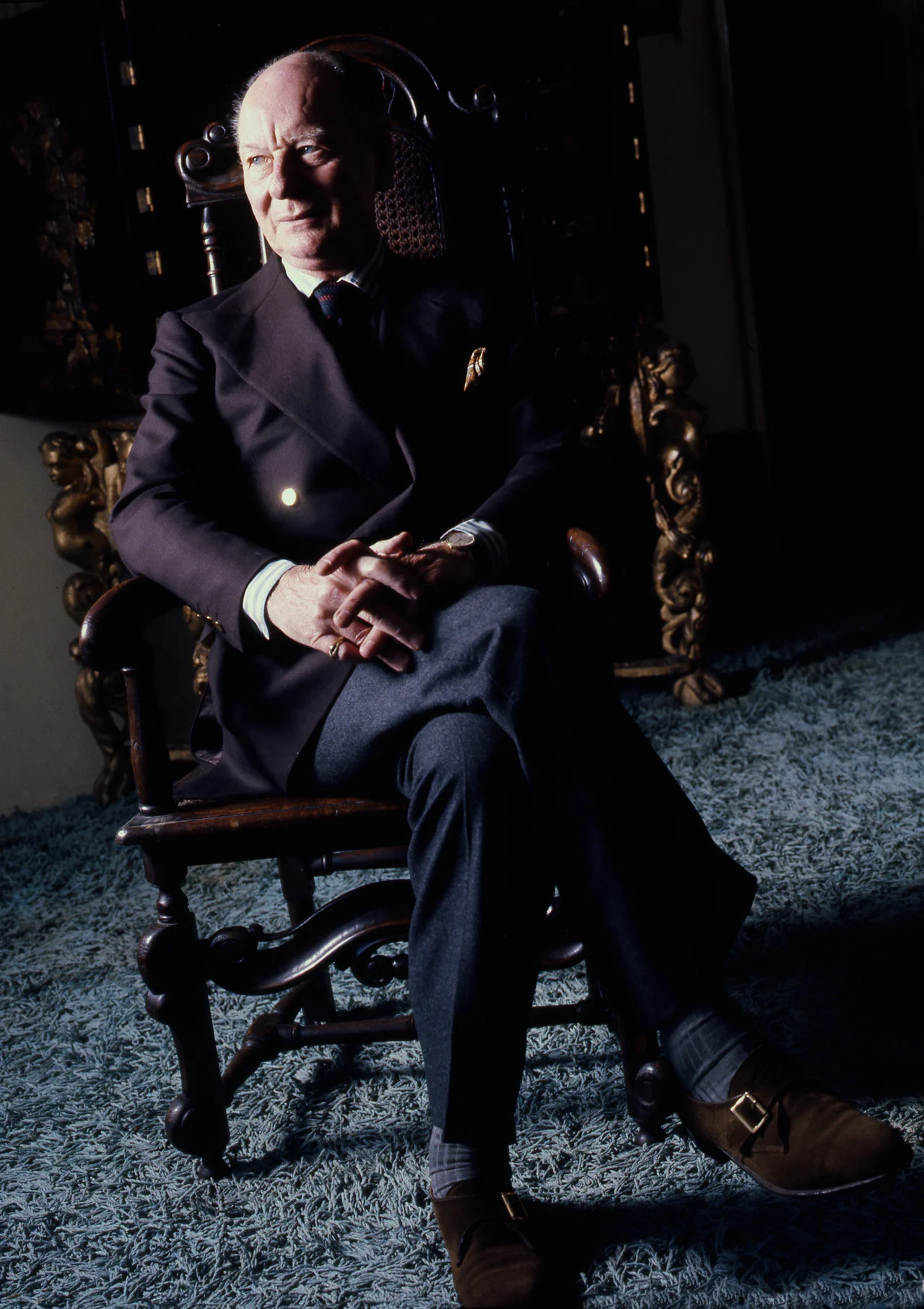
There's a Girl in My Soup by Terence Frisby opened in 1966 and ran for 1,064 performances, a theatre record that lasted seventeen years. Andrew Lloyd Webber's production of Daisy Pulls It Off, opening in April 1983, finally broke it with 1,180 performances, the longest run the theatre has ever seen. In 1987, Peter Shaffer's Lettice and Lovage premiered here with Maggie Smith and Margaret Tyzack, running for two years. In 1994, anticipating the 1997 opening of Shakespeare's reconstructed Globe on the South Bank, and wanting to avoid public confusion between two Globes, the Globe Theatre was rechristened the Gielgud Theatre in honour of Sir John Gielgud. He was still alive to see it. He died in 2000. In 2007, the theatre staged Equus with a seventeen-year-old Daniel Radcliffe, still filming the Harry Potter movies, appearing nude in the lead role. The press attention was extraordinary; the production transferred to Broadway and ran until 2009. Patrick Stewart's Macbeth came that same year.
Restoration
In 2003, the impresario Cameron Mackintosh announced plans to refurbish the Gielgud and link it through a joint entrance with the Queen's Theatre next door, which would later be renamed the Sondheim. Mackintosh's Delfont Mackintosh Theatres took operational control from Lloyd Webber's Really Useful Theatres in 2006. Work began on the facade in March 2007. The interior restoration, which included reinstating the boxes at the back of the dress circle that had been removed long ago, was completed in January 2008. The gold leaf was restored. The Regency staircase, the oval gallery, the elegant tower, all of it polished back to Sprague's original intent. The theatre is one of forty featured in the 2012 documentary Great West End Theatres, narrated by Donald Sinden.
The Modern Stage
Recent decades have produced an unbroken stream of major productions. The Audience by Peter Morgan starred Helen Mirren in 2013, Blithe Spirit brought Angela Lansbury back to the London stage in 2014, and The Curious Incident of the Dog in the Night-Time reopened here after the Apollo Theatre ceiling collapse the same year. Jez Butterworth's The Ferryman came in 2017, followed by a starry production of Sondheim's Company in 2018 with Patti LuPone. Les Misérables: The Staged Concert filled the house in 2019. Aaron Sorkin's stage version of To Kill a Mockingbird arrived in 2022. The Crucible transferred from the National Theatre in 2023. In 2024, Mark Rylance played the lead in Juno and the Paycock, and Oliver! transferred from Chichester Festival Theatre. From a Hicks musical to a Dickens musical, three names and well over a century of opening nights have passed under the same gold leaf. Beerbohm the cat would still feel at home.
From the Air
The Gielgud Theatre stands at 51.5117°N, 0.1331°W on Shaftesbury Avenue, at the corner of Rupert Street. Best viewed from 1,500-2,500 feet AGL. Nearby airports include London City (EGLC) 7 nm east, London Heathrow (EGLL) 13 nm west, and London Biggin Hill (EGKB) 12 nm southeast. Look for the cluster of West End theatres along Shaftesbury Avenue; Piccadilly Circus lies a short walk south, and Chinatown is one block to the north.
Nearby Stories
- Stevenage 5.7 km away
- Malling Abbey 5.7 km away
- 1952 Farnborough Airshow Crash 7.7 km away
- Ingatestone Hall 8.2 km away
- Hellfire Caves 9.1 km away
- The Carrington Event: The Solar Storm That Could Happen Again 9.8 km away
- Bletchley Park 16 km away
- Castle Hedingham 23 km away