
Glenstal Abbey School
In September 1925 a retired Irish monsignor bought a Norman-Revival castle in east County Limerick for two thousand pounds. Monsignor James J. Ryan had until recently been president of St Patrick's College in Thurles. The castle, called Glenstal, had been the seat of the Barrington family - Limerick baronets who had lived in the area for more than two centuries before relocating to England in the aftermath of the Irish Civil War. Ryan did something unusual with his purchase. He wrote to Belgium, to the abbot of Maredsous Abbey, and invited the Benedictines to come to Ireland to found a daughter house. In March 1927 the first two Belgian monks arrived. They opened an arts and crafts school in 1928. In September 1932 they opened the Abbey School for boys, with one headmaster, Father Columba Skerret OSB, and seven boys on the roll. The school is now ranked among the top in Ireland. The seven boys have become several hundred.
A grand statement that appeared ancient
The castle the monks moved into in 1927 was not actually old. It had been built in the 1830s by William Bardwell for the Barrington family, who had achieved their baronetcy in 1831 and wanted, in Bardwell's own brief, a "grand statement that appeared ancient, that would create a noble past in keeping with their newfound baronial status and aspirations." The result was a Norman-Revival fantasy with decorative carvings in the Celtic and Irish Romanesque style throughout the interior - in the library capitals, on the stairs, around the door surrounds. The Barringtons had been Limerick Quaker industrialists in the eighteenth century, made their money in iron, and entered the gentry in the early nineteenth. Their newfound rank required an appropriate seat. Bardwell gave them one. After the Irish Civil War the family decamped to England - the murder of Winifred Barrington in 1921, during the ambush of an RIC inspector near Newport, had pushed them out for good. The castle was even briefly offered to W. T. Cosgrave as an official residence for the newly independent Irish Free State. Cosgrave declined. Monsignor Ryan stepped in.
Belgian monks in Murroe
Maredsous Abbey, in the Belgian Ardennes, was one of the great revival foundations of nineteenth-century Benedictine monasticism. Founded in 1872, it was known for its scholarship, its liturgical music, and its connection to the German monastery of Beuron whose monks had founded it. When Monsignor Ryan wrote in 1925 to Dom Celestine Golenvaux, the abbot of Maredsous, the Belgians sent two monks to investigate. They arrived in March 1927. They found a vast neo-medieval castle on substantial grounds at Murroe, with the foothills of the Slievefelim Mountains rising behind it and small lakes in the demesne. They stayed. The Benedictine community at Glenstal grew steadily across the following decades. The arts and crafts school of 1928 became the boys' school of 1932 and then, in time, one of the most academically distinguished Catholic boys' schools in Ireland.
Boarding from seven to seven hundred
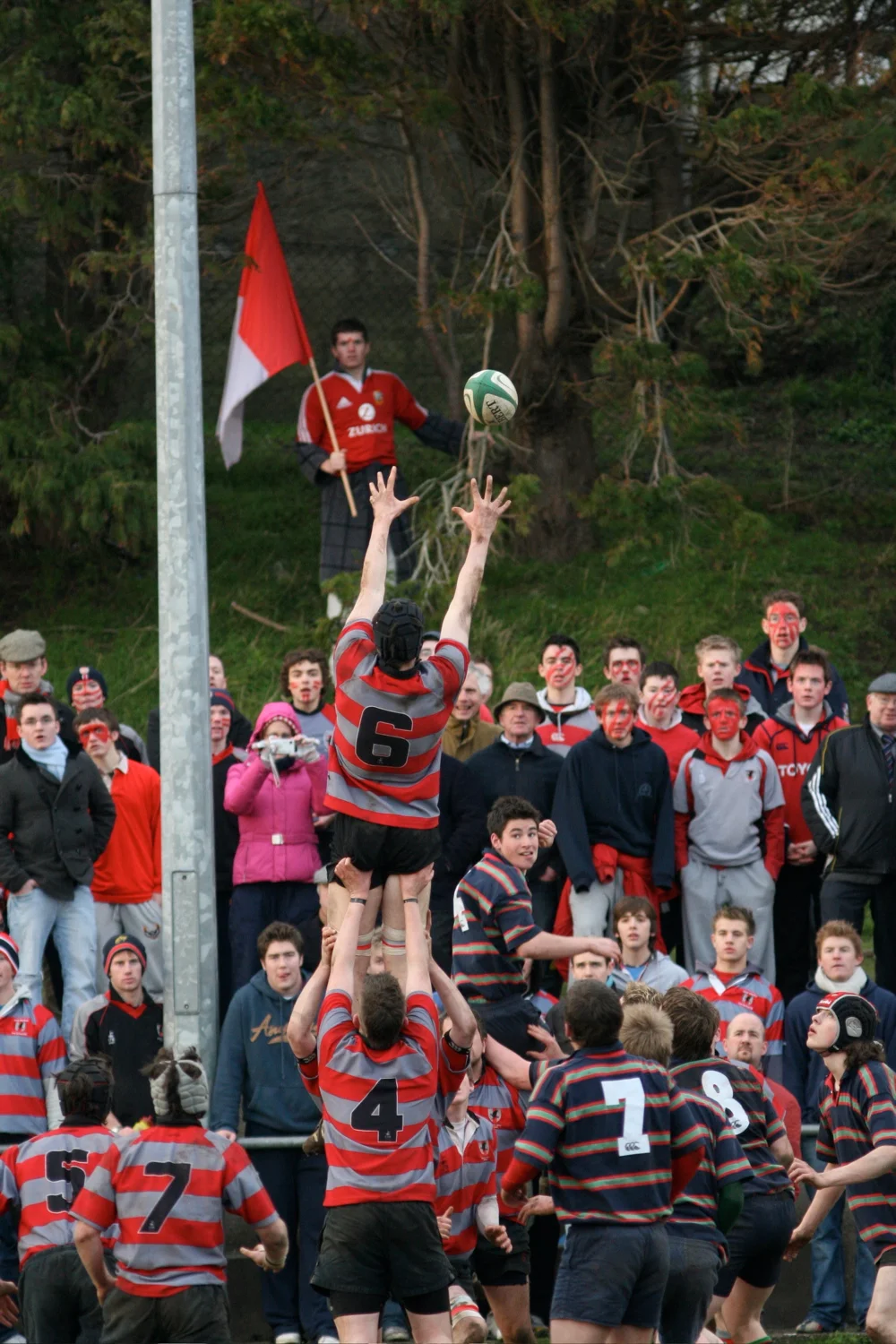
From those seven original boys in 1932, Glenstal grew into a substantial seven-day, five-day, and weekday boarding school. The school offers all three modes. It is regularly ranked among the top schools in Ireland for academic results. In 2014 the Abbot Primate of the Benedictine order, Notker Wolf, opened a new academic block costing six million euro - an atrium, eighteen classrooms, three science laboratories, study spaces, and administration offices. The school welcomed its largest-ever intake in the following years. Parents began registering interest more than a decade in advance. Pupils come from across Ireland and from Europe, the Americas, and Asia - many of them drawn, the school's second lay principal commented, by personal family ties to Ireland or by the quality of the education on offer. The first lay principal was appointed in 2017, working alongside a monastic headmaster. Rugby is the school's main sport. It won the Munster Schools Senior Cup for the first time on 18 March 2018, beating Christian Brothers College, Cork, by 18 to 17.
An accounting with the past
Like many Catholic religious institutions, Glenstal has had to face its history of abuse. The Irish Government's Scoping Inquiry Report in June 2024 identified six allegations of abuse against four alleged perpetrators in the school's history - three monks and one peer. None of the cases led to criminal or civil proceedings, but the National Board for Safeguarding Children, in its 2014 and 2018 reports, examined the abbey community's response in detail. The board recorded that the Benedictines had handled the historical accusations with proper action: removal from monastic life and treatment in the one case where an abuse was admitted. The 2018 report commended the school's awareness of child safeguarding and the warmth and care evident in its support of pupils. A Department of Education report in January 2024 found that Glenstal's current safeguarding, child protection, and anti-bullying procedures met all the required standards. The reckoning, like many in Catholic Ireland, has been partial - real cases, real harm, an institutional culture that for too long protected itself. The accounting continues.
Judges, hurlers, and a Baron Hemphill
The list of former pupils is unusually varied for an Irish school. John Blayney sat on the Supreme Court. Kim Carroll became a composer and musician. Henry de Bromhead trains some of the best racehorses in National Hunt racing. Mark Patrick Hederman, the former abbot of Glenstal itself, was a writer and thinker on philosophy and theology. John Magnier, the businessman behind Coolmore Stud - probably the most successful thoroughbred breeding operation in the world - went to Glenstal. So did Paddy Cosgrave, founder of the Web Summit. Sam O'Farrell plays hurling for Tipperary. Several Glenstal old boys have played senior international rugby for Ireland, including Ben Healy and Duncan Casey. Patrick Martyn-Hemphill, the 5th Baron Hemphill, was a former member of the House of Lords and chairman of the Galway Race Committee. Francis French, the 7th Baron de Freyne, came up here too. The school is Catholic, Benedictine, rural, and Irish - and somehow, from those seven original 1932 schoolboys, has produced an unbroken stream of jurists, jockeys, scientists, athletes, and abbots.
From the Air
Glenstal Abbey and its school stand at 52.66 N, 8.39 W on the slopes of the Slievefelim Mountains near Murroe in east County Limerick. Shannon (EINN) is 20 nm northwest; Cork (EICK) 53 nm south; Waterford (EIWF) 65 nm east-southeast. Recommended viewing altitude 1,500-2,500 ft AGL. The castle and its substantial demesne sit in a wooded park, easily identifiable from the air by the lake at the foot of the slope and the surrounding pasture. The Slievefelim ridge rises east. The Mulkear River runs west of the property toward Limerick. Mount Saint Joseph Roscrea (the daughter house that absorbed Mount Melleray in 2025) is 30 nm northeast.
Nearby Stories
- Clonmel 3.6 km away
- Bunratty Castle 5.8 km away
- Kilcooly Abbey 11 km away
- Mitchelstown Castle 12 km away
- Borrisokane 13 km away
- Aghaboe 15 km away
- Kilmacduagh Monastery 17 km away
- Dromagh Castle 31 km away