
Gol Transportes Aéreos Flight 1907
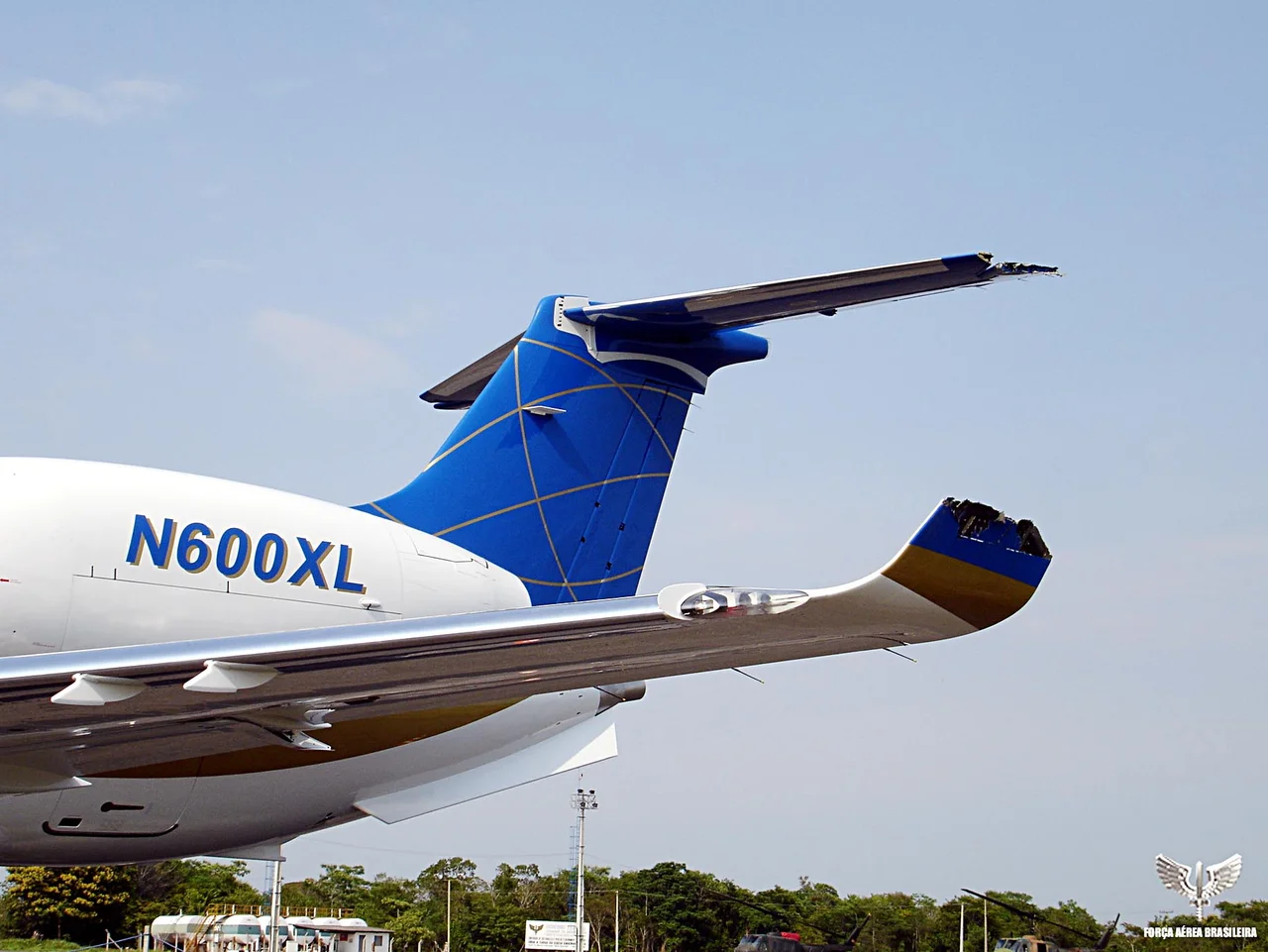
At 16:56 local time on 29 September 2006, in cloudless skies above the Mato Grosso jungle, two aircraft cruising in opposite directions at Flight Level 370 found each other. The winglet of an Embraer Legacy 600 - a business jet so new it was being delivered from the factory on this very flight - sliced through the left wing of Gol Flight 1907, a Boeing 737-800 carrying 154 passengers and crew from Manaus toward Brasília and Rio de Janeiro. The 737 broke up in midair and fell into dense rainforest, killing everyone aboard. The Legacy, trailing torn aluminum from its own damaged wing and tail, managed an emergency landing at a remote military airfield. Its seven occupants walked away uninjured. The contrast was unbearable, and the investigation that followed would fracture relations between two governments and expose a national air traffic system already near collapse.
The Collision
Both aircraft were exactly where they were cleared to be. The 737 had departed Manaus northbound, its flight plan calling for Flight Level 370 on the southbound leg from that point. The Legacy, ferrying its new American owners from the Embraer factory at São José dos Campos to a planned delivery stop in Manaus, had been cleared by air traffic control to climb to Flight Level 370 and remain there for the entire route. That clearance was the first of many errors. At that cruising altitude on that airway, opposite-direction traffic should have been separated. Forty-two minutes after takeoff, the Legacy reached FL370 and settled in. Roughly an hour later, at 16:02, its transponder stopped working - for reasons that have never been fully established. Neither crew knew. Without the transponder, neither aircraft's collision-avoidance system could see the other. The sky was clear. Neither pilot saw the other plane. At 16:56, the collision occurred.
154 Lives
The 737 fell into roadless jungle near the town of Peixoto de Azevedo. The Brazilian Air Force spent days locating the wreckage through thick canopy. On board had been 148 passengers and six crew - families returning from the Amazon, business travelers, children, pensioners. Every single one died. Brazilian newspapers ran the passenger lists for weeks. At memorial gatherings, grieving relatives held up photographs printed on white T-shirts: a husband, a mother, a son. The accident remains the second-deadliest plane crash in Brazilian history, surpassed only by TAM Airlines Flight 3054 ten months later, which killed 199 at São Paulo-Congonhas. That second disaster, striking a nation already traumatized, would precipitate the crisis these events came to be called collectively: the 2006-2007 Brazilian aviation crisis.
Two Countries, Two Reports
Brazilian CENIPA released its final report on 10 December 2008, more than two years after the crash. The report placed primary blame on Brazilian air traffic controllers - who had issued the improper clearance, failed to catch the mistake in the handoff between control centers, and mishandled the loss of radar contact - but also faulted the American pilots on the Legacy. CENIPA argued the pilots should have recognized that their TCAS anti-collision system had stopped working, and that their inattention to their instruments had contributed to the collision. The U.S. National Transportation Safety Board, which appended its own conclusions to the Brazilian report, disagreed pointedly. The NTSB found that both crews had flown their routes exactly as cleared and followed every instruction given. The TCAS issue, in the American agency's view, was a contributing factor at most. The two agencies could not agree on what had killed 154 people.
A System Under Strain
Brazil's air traffic is controlled by the Brazilian Air Force, a legacy of the military government that ruled from 1964 to 1985 and never relinquished the country's skies to civilian authority. Most controllers are military non-commissioned officers. As investigators began publicly questioning the controllers' role in the accident, a long-simmering labor conflict erupted. Controllers complained of being overworked, underpaid, and forced to operate with outdated equipment. Many spoke limited English, a skill essential for communicating with foreign pilots. Slowdowns, walkouts, and a hunger strike followed. Flights across Brazil were delayed or cancelled for weeks. In July 2007, after TAM 3054 killed 199 more people, President Lula finally fired his defense minister and vowed to reform the system.
Justice Denied
The legal aftermath stretched nearly two decades. Families filed civil suits in U.S. courts that were eventually dismissed on jurisdictional grounds. Brazilian prosecutors pursued criminal cases against the Legacy pilots and several controllers. A military court convicted one controller in 2010, sentencing him to 14 months. The pilots - Joseph Lepore and Jan Paladino of ExcelAire - were convicted in absentia in 2011 of "imprudence," with sentences initially of four years and four months, later modified to home confinement and community service in the United States. Appeals moved through Brazilian courts for more than a decade. In 2023, the U.S. government refused Brazil's extradition request. On 6 June 2024, a Brazilian judge dismissed the case against the pilots entirely: the statute of limitations had expired. The Legacy itself, repaired in Ohio, was returned to service and still flies today, operated by a Mexican charter company as XA-FLY.
From the Air
Crash site at approximately 10.44°S, 53.31°W near Peixoto de Azevedo in northern Mato Grosso, Brazil. The collision occurred at Flight Level 370 (approximately 37,000 feet) on a northwest-southeast airway over the Amazon. The remote terrain is dense rainforest with few roads. The nearest significant airports are Sinop (SBSI) and Alta Floresta (SBAT). The wreckage site is now occasionally visited by relatives of the 154 who died.
Nearby Stories
- Varig Flight 254 8.6 km away
- Xingu Indigenous Park 57 km away
- Serra do Cachimbo 74 km away
- Percy Fawcett 140 km away
- Cachimbo Airport 180 km away
- Querência 199 km away
- Nascentes da Serra do Cachimbo Biological Reserve 204 km away
- Pan Am Flight 202 219 km away