
Greece
There is a quality to the light in Greece that painters have been chasing for centuries without quite catching it. It falls from a high blue sky onto limestone and marble and the silver-green of olive groves, and it seems to clarify rather than illuminate — sharpening edges, deepening shadows, making the mountains behind the coast look close enough to touch even when they are twenty miles distant. Greece is a country of astonishing extremes packed into a small space: jagged peaks and flat beach plains, dense pine forests in the north and sun-baked scrubland in the south, sophisticated Athens and villages where life moves at the pace of the fishing boats. It is also a country whose every hill seems to carry a ruin and whose every city overlaps with something far older than itself.
The Shape of the Land
Greece is both mountainous and maritime in the most extreme sense — it is almost impossible to stand anywhere in the country and be far from either a peak or the sea. The mainland is a rugged peninsula, its spine formed by the Pindus Mountains running south from the Albanian border, breaking into smaller ranges as the land tapers toward the southern tip of the Peloponnese. Then there are the islands: more than 6,000 of them scattered across the Ionian and Aegean seas, of which roughly 200 are inhabited. Crete, the largest, is a world unto itself, with its own mountains, ancient palace sites, and dialect. The Cyclades rise from the Aegean like volcanic stepping stones. Corfu in the Ionian west is lush and Venetian-influenced; Rhodes in the far southeast carries the imprint of the medieval Knights of St. John. No two islands are alike. That variety is the country's defining characteristic — and its greatest invitation.
Four Thousand Years of Spoken Greek
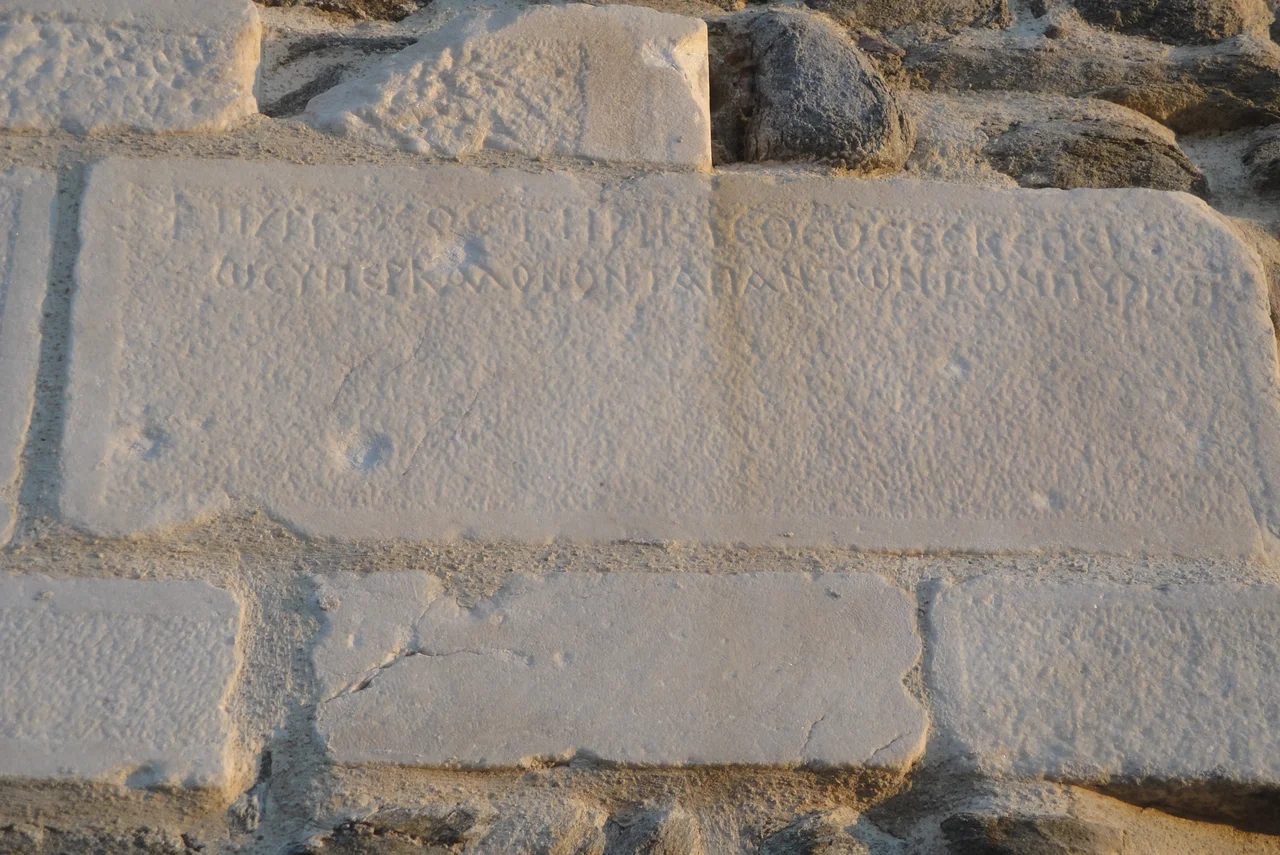
The Greek language has been spoken in this land and across the Mediterranean for nearly 4,000 years. That continuity is not merely a statistic; Greeks feel it as something lived. The ancient heritage is not a museum exhibit but part of the national identity — present in the alphabet on every road sign, in the Orthodox liturgy that echoes ancient rhythms, in the pride that parents take when a child first reads Homer. The country's history stacks like geological layers: Minoan palace civilization on Crete, Mycenaean warriors at Tiryns and Mycenae, the city-states of the classical age, Macedonian expansion under Alexander, Roman rule, Byzantine Christianity, Ottoman centuries, the Revolution of 1821, and then the difficult building of a modern nation-state. Walking through Athens, you pass all these layers in a single afternoon. The Acropolis rises above a neighborhood of neoclassical buildings, which sit above Ottoman-era foundations, which rest on Roman stones.
Climate and the Rhythm of the Year
Greece's Mediterranean climate shapes everything — the agriculture, the architecture, the daily schedule. Summers are hot and dry, with a seven-month stretch of near-constant sunshine from April to November. In July and August the midday sun turns fierce, and the meltemi winds from the north sweep across the Aegean, cooling the islands but testing anyone attempting to sail. Greeks adapt accordingly: the serious business of the morning gives way to a long afternoon pause, and life reconvenes in the cooler evening hours when restaurant tables spill onto every pavement. The most rewarding times to visit are May and June, and September and October — warm enough to swim, cool enough to walk, and uncrowded enough to feel the country on its own terms. Winter in the lowlands is mild and rainy; in the mountain interior of Epirus or Macedonia, it can be genuinely cold and snowy, revealing a Greece that beach-season visitors rarely see.
Faith, Festival, and the Greek Table
Greek Orthodoxy is not a background institution — it is woven through the calendar and the culture in ways that tourists sometimes miss. Pascha (Orthodox Easter) is the most important celebration of the year, more significant even than Christmas. On Holy Friday, candlelit processions carry the decorated funeral bier of Christ through village streets. At midnight on Holy Saturday, the lights go out in every church, a single flame is passed hand to hand through the congregation, and fireworks explode over the sea. The smell of roasting lamb follows the next morning. Food in Greece is inseparable from hospitality — a value called philoxenia, love of strangers, that predates Christianity by millennia. Shared plates of mezze, bread torn and dipped in oil, grilled fish eaten at a harbor-side table as the sun sinks into the Ionian: these are not tourist experiences but the ordinary texture of Greek life, offered freely to anyone willing to sit down.
A Land That Outlasts Its Visitors
In 2018 Greece received 33 million visitors — more than three times its own population. That wave of attention has concentrated on Santorini's caldera views, Mykonos's nightlife, and the Parthenon's carvings. Those things are extraordinary. But Greece rewards the traveler who looks slightly to the side: the uncrowded archaeological site in Epirus, the monastery balanced on a rock pillar at Meteora, the medieval city of Rhodes within its walls, the Samaria Gorge cutting sixteen kilometers through the mountains of western Crete. The whitewashed walls and blue-domed churches that define the postcard image of Greece are specific to the Cyclades — one region among many. Nafplion has neoclassical elegance; Corfu has baroque churches and Venetian loggias; Grevena has Ottoman-influenced buildings that feel closer to Istanbul than Athens. Greece is vast for its size, and consistently more surprising than the photographs suggest.
From the Air
Greece occupies the southern tip of the Balkan Peninsula at approximately 39.0°N, 22.0°E, with Athens — its capital and heart — at 37.97°N, 23.72°E. From the air, the country's defining feature is the interplay of dark mountain ridges and silver-blue water, with peninsulas and islands extending in every direction. Athens International Airport (LGAV), Eleftherios Venizelos, at 37.936°N, 23.944°E, is the country's main aviation hub and the natural entry point for the entire region. Flying in from the west, the Gulf of Corinth appears below as a long inland sea, with the twin masses of the Peloponnese and central Greece on either side. From the north, the plains of Macedonia and Thessaly give way to the tighter topography of Boeotia and Attica, with the Acropolis visible on a clear day as the city of Athens spreads across the coastal plain. Recommended viewing altitude: 8,000 to 12,000 feet for the full sweep of the Aegean and the island chains to the south and east.
Nearby Stories
- Battle of Alamana 3.6 km away
- Free and Real 5.7 km away
- Agios Thomas Tanagras 5.7 km away
- Pythian Games 11 km away
- Thespiae 12 km away
- Euripus Strait 14 km away
- French Cruiser Châteaurenault (1898) 17 km away
- Skopelos 32 km away