.jpg)
Greenway Estate
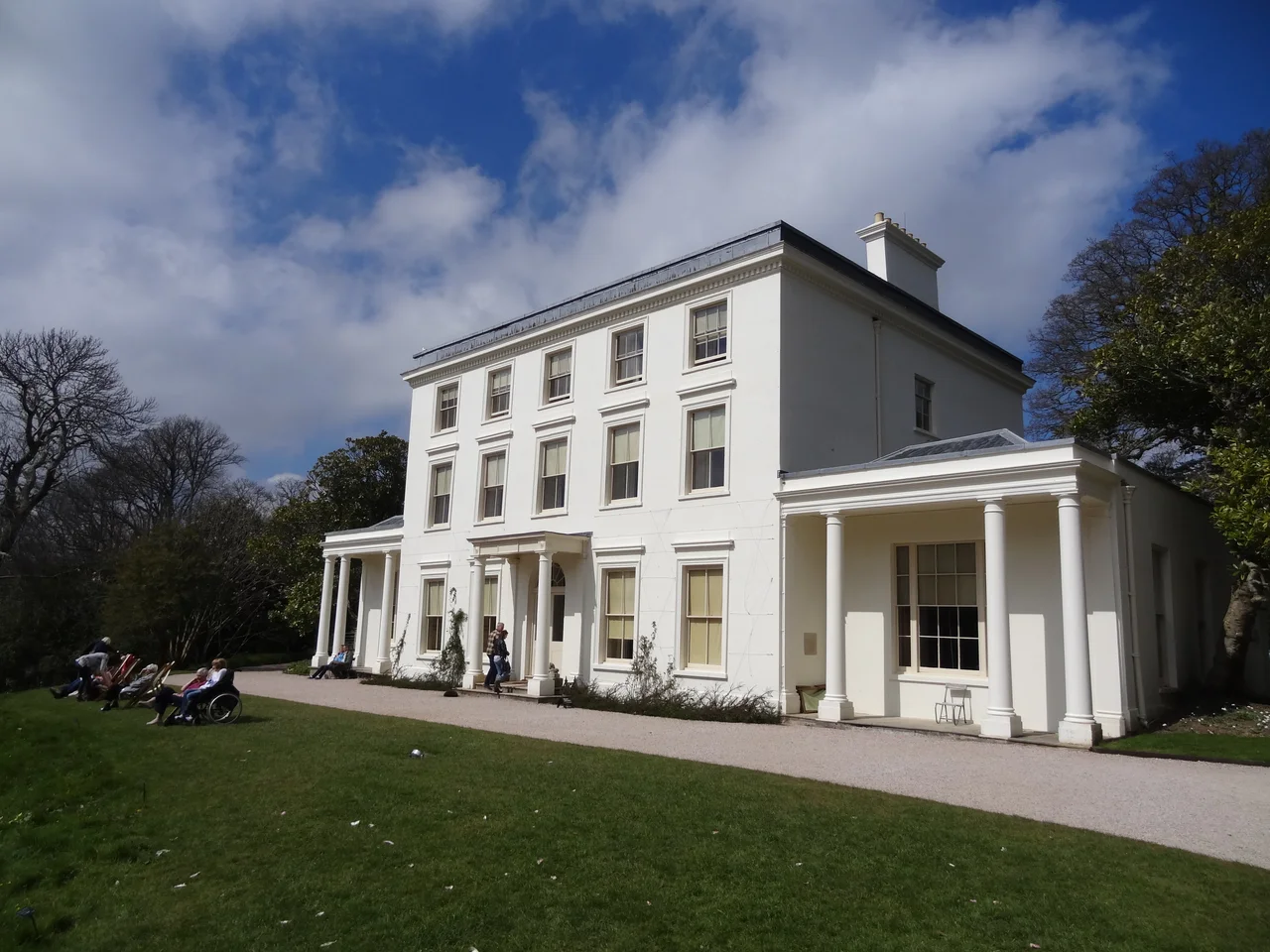
In 1938, Agatha Christie was looking for somewhere to escape. Torquay, where she had grown up, was filling in around her with new buildings that blocked the sea views she remembered from childhood. Then she heard that Greenway, a white Georgian house on a wooded bend of the River Dart, was for sale. She had known the property since she was a girl and once thought it the most perfect house on the river. The asking price for the house and 36 acres was £6,000. She bought it. For the next 38 years, between archaeological digs in Iraq with her husband Max Mallowan and writing some of the best-selling novels in the English language, this is where Agatha Christie went home.
Centuries Before the Murders
Long before Christie, Greenway belonged to one of the great Elizabethan seafaring families. The name first appears in a record from 1493 as Greynway - the crossing point of the Dart to the village of Dittisham across the water. In the late 16th century the Gilbert family built a Tudor mansion here called Greenway Court. One of their sons, Sir Humphrey Gilbert, sailed from these shores to claim Newfoundland for Elizabeth I in 1583. His brother Sir John lived at Greenway and, in 1588, was given 160 Spanish prisoners of war captured during the Armada and put them to work levelling the grounds. Their half-brother Sir Walter Raleigh lived here too. By the time the Georgian house was built in the late 18th century the Tudor building was gone, but the river slipway from the Tudor boathouse still surfaces at the lowest tides, dark stones briefly visible before the river takes them back.
A White House Above the Dart
The Greenway that Christie bought was finished in Georgian style around 1790, all calm symmetry and tall sash windows. The Elton family had developed the gardens after that, with some remodelling by the landscape gardener Humphry Repton. Later owners added a kitchen garden, a swimming pool, a boathouse, and the kind of riverside walks that would later become evidence in fictional murders. The Harveys, a Cornish copper and tin family, restored the place in the 19th century, built the village school in nearby Galmpton, and put up the Manor Inn. The Bolithos brought Cornish plants - camellias, magnolias, rhododendrons - and the gardens settled into the lush, slightly wild form that visitors see today. Pevsner described the house as tall, late-Georgian, stuccoed. Christie called it a dream.
Dame Agatha at Home
Christie and Mallowan used Greenway as a holiday house and family retreat. She wrote at her London flat and on archaeological digs in the Middle East, but Greenway was for summers, Christmases, family. She wrote into the place too. The boathouse on the riverbank is where the first body is found in Dead Man's Folly. The footpath from the house down to the old gun battery overlooking the Dart - and the battery itself - is where the killer of Five Little Pigs makes her move. The estate sits opposite Dittisham across the river in Towards Zero, and the gap of dark water becomes the alibi. In The A.B.C. Murders, the third victim dies near Churston, the railway station just two miles up the line from Greenway Halt. Christie's daughter Rosalind and her husband Anthony Hicks lived in the house from 1968 until Rosalind's death in 2004. The National Trust took over Greenway in 2000, opening the garden to visitors then and the house itself in 2009, leaving the rooms much as she left them - the piano, the books, the boxes of archaeological finds, the inhabited quiet of a writer's house.
The River and the Train
Greenway has always been a water house. The grass slopes down through trees and shrubs to the tidal Dart, and the river is the most natural way to arrive. You can also come by steam train. The Dartmouth Steam Railway runs from Paignton along the coast and stops, in season, at Greenway Halt - a small wooden platform tucked into the woods above the house, where passengers step off and walk down a wooded path. Christie wove the railway into her plots; the A.B.C. Railway Guide, the murder weapon-by-metaphor in The A.B.C. Murders, gestures to this very line. During the Second World War the U.S. Coast Guard requisitioned the house, and ten American officers slept where Christie had written. They left a frieze painted on a wall in the library showing their progress through North Africa, Sicily, Italy, and France. Christie kept it. It is still there.
From the Air
Coordinates 50.38 N, 3.58 W. Greenway sits on the east bank of the tidal River Dart about 3 nm north of Dartmouth and 2.5 nm south-southeast of Paignton. The white Georgian house is best spotted at 1,500-2,500 ft AGL in clear light - look for the wooded promontory above a horseshoe bend of the river, with the village of Dittisham directly across the water. Exeter (EGTE) lies about 25 nm to the north-northeast; Plymouth's former Roborough field is 22 nm west. The Dartmouth Steam Railway's tracks trace the coast between Paignton and Kingswear.
Nearby Stories
- St Germans Priory 7.6 km away
- Launceston, Cornwall 9.6 km away
- Castle Drogo 12 km away
- HMS Formidable (1898) 17 km away
- Siege of Lyme Regis 19 km away
- Battle of Plymouth (1652) 40 km away
- German Submarine U-672 48 km away
- Goonhilly Satellite Earth Station 69 km away