.png)
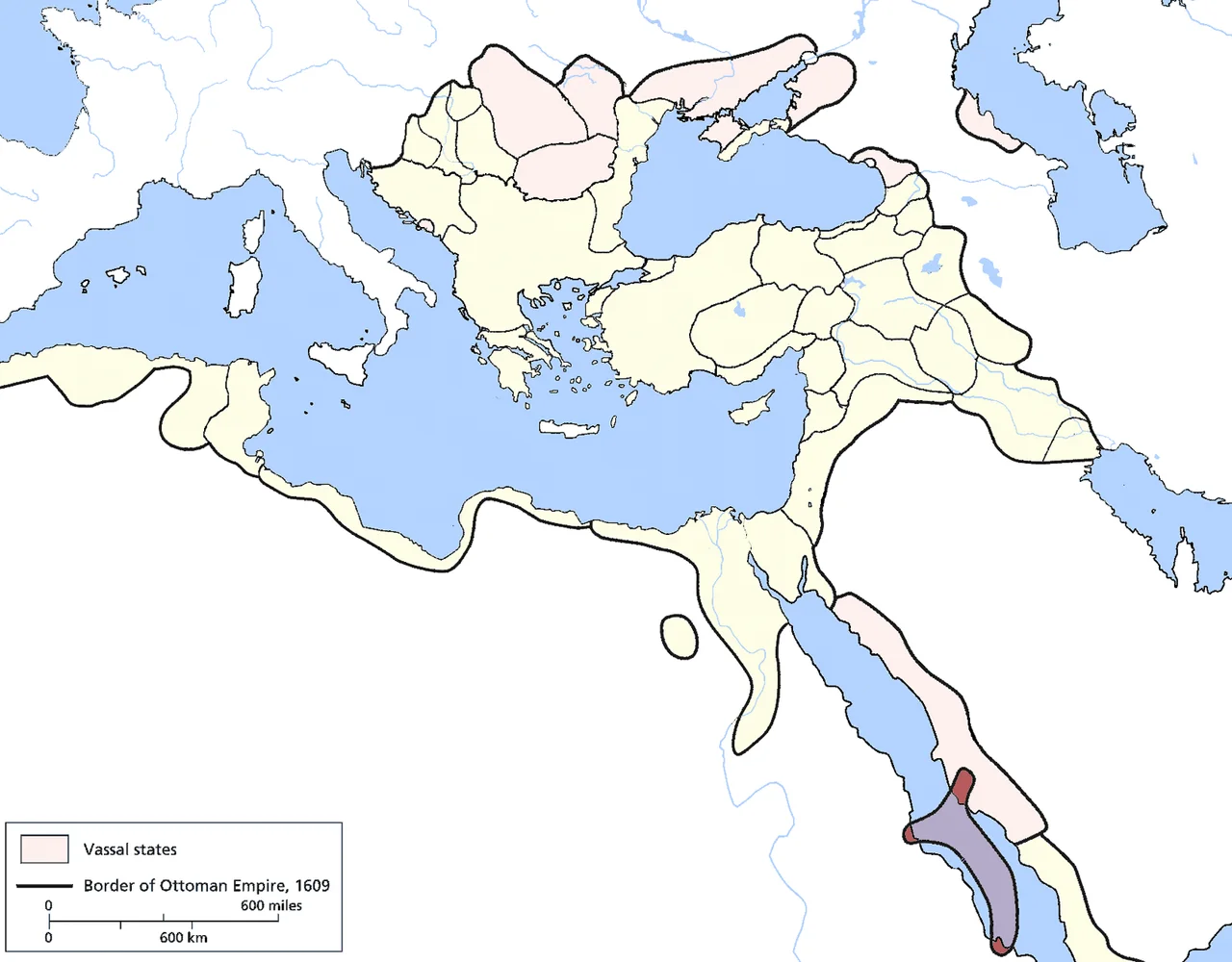
Habesh Eyalet
The governorship of Jeddah was considered, by 1829, a kind of elegant exile. The English traveler John Lewis Burckhardt wrote that the pashalik had been "reduced to perfect insignificance" by the power of the Sharif of Mecca, and that the title was given out to men who had never bothered to come and take possession. This had not always been the case. For nearly three centuries, the Habesh Eyalet - meaning, depending on the season and who was writing the documents, either the Eyalet of Jeddah or the Eyalet of Jeddah and Habesh - had been the Ottoman Empire's forward post on both sides of the Red Sea, the southern wall of an empire that governed the hajj itself.
A Province on Two Continents
In 1517, Selim I's armies defeated the Mamluk Sultanate, and the keys to Jeddah and Mecca changed hands. Jeddah was fortified immediately - not against local rebellion, but against Portuguese ships. Vasco da Gama had opened the Indian Ocean to European navies only twenty years earlier; the Portuguese were already raiding up the Red Sea, and the Ottomans intended to stop them. Under Ozdemir Pasha, who became beylerbey in 1555, Ottoman forces occupied the African Red Sea ports of Suakin and Massawa. In 1557 the province of Habesh was formally constituted, stitching together coastline on two continents: the Hejaz on the Arabian side, and what is now Eritrea and parts of coastal Sudan on the African side. Massawa had the oldest harbor but not the politics; the capital drifted across the sea to Jeddah, where it stayed from the late 16th century until the early 19th, with Medina serving briefly as the seat in the 18th century.
The Strategic Logic of Pilgrimage
Why take Eritrea? Part of the answer was mineral and mercantile - Selman Reis, an Ottoman admiral in the Red Sea, sent enthusiastic reports back to Constantinople about Dahlak Archipelago pearls, about the "gold, musk, and ivory" flowing through Berbera on the Somali coast. But the deeper logic was religious. The Ottomans had inherited from the Mamluks the role of protector of the hajj. Every year, tens of thousands of pilgrims crossed the Red Sea to reach Mecca. If the Portuguese held Dahlak and the African ports, Muslim pilgrimage itself could be squeezed. The Adal Sultanate in the Horn, defeated by Abyssinia, had asked the Ottomans to come in. Coming in meant holding the coast against a Christian European power whose galleons had better cannon than anyone had seen before.
The Coast Is Not the Interior
The Ottomans never held much more than the coast. The Abyssinian highlands - the rich hinterlands where the rain fell and the grain grew - remained outside imperial authority. Even Yemen, briefly an eyalet, cost Istanbul more in garrison salaries than it produced in taxes. Habesh was worse: a salyaneli province, meaning its taxes went directly to the central treasury after local expenses were deducted, but the local expenses included a beylerbey's salary as generous as anywhere in the empire, with almost nothing agricultural to tax. Revenue came from the iltizam, the tax farm, on goods flowing through Massawa, Beylul, and Suakin - customs duties on coffee, ivory, cloth, and the slaves taken from Africa's interior and shipped onward, a trade the imperial records describe without flinching.
The Long Slide
By the late 16th century the Portuguese threat had receded, and with it went Istanbul's serious interest in Habesh. Ottoman galleys still guarded the coast until the 17th century, then less and less after that. The Funj Sultanate from inland Sudan besieged Suakin in 1571 and the Ottoman governor had to sail across to break them. Power on the Arabian side drifted toward the Sharifate of Mecca, which by 1803 had been overrun by Wahhabi forces from Najd. The governor of Jeddah, by then, was "little esteemed" - a title handed to men the sultan wanted out of court. The eyalet lingered on paper, its sanjaks (Ibrim, Sawakin, Hargigo, Massawa, Zayla, Jeddah) listed in Ottoman almanacs, until the structure was finally dissolved in 1872.
What the Ports Remember
Fly down the Red Sea today - Jeddah to Port Sudan to Massawa - and you trace the old eyalet in cities rather than in borders. Jeddah's Al-Balad, the old town, still has Ottoman-era houses of coral stone and shuttered wooden balconies. Suakin, Sudan's coral-built port, is now mostly ruins, its Ottoman coral houses collapsed into the sand of its own harbor. Massawa, on the Eritrean coast, retains the Ottoman-built mosque of Sheikh Hanafi and the outlines of a customs fortress now scarred by 20th-century war. The eyalet's real legacy was cartographic: it proved, for the better part of three centuries, that the Red Sea was one system - that the hajj and the horn of Africa and the Hejaz coast were a single political and commercial geography. The Ottomans could not quite govern it. They did, however, keep it open.
From the Air
The historical eyalet's capital was Jeddah (21.54°N, 39.17°E). The airspace spans both shores of the Red Sea - from Jeddah's King Abdulaziz International (OEJN) on the Arabian side, to Port Sudan (HSPN) and Massawa International (HHMS) on the African coast. Recommended cruising southbound along the Red Sea at FL300-FL370 in the morning for clearest visibility across both coasts; afternoon dust haze common from the Sahara.
Nearby Stories
- Battle of Fakhkh 12 km away
- Siege of Ta'if 72 km away
- Red Sea 73 km away
- Red Sea Rift 76 km away
- Ghadir Khumm 115 km away
- Ta'if 126 km away
- Hejaz 223 km away
- Operation Moses 229 km away