
Ta'if
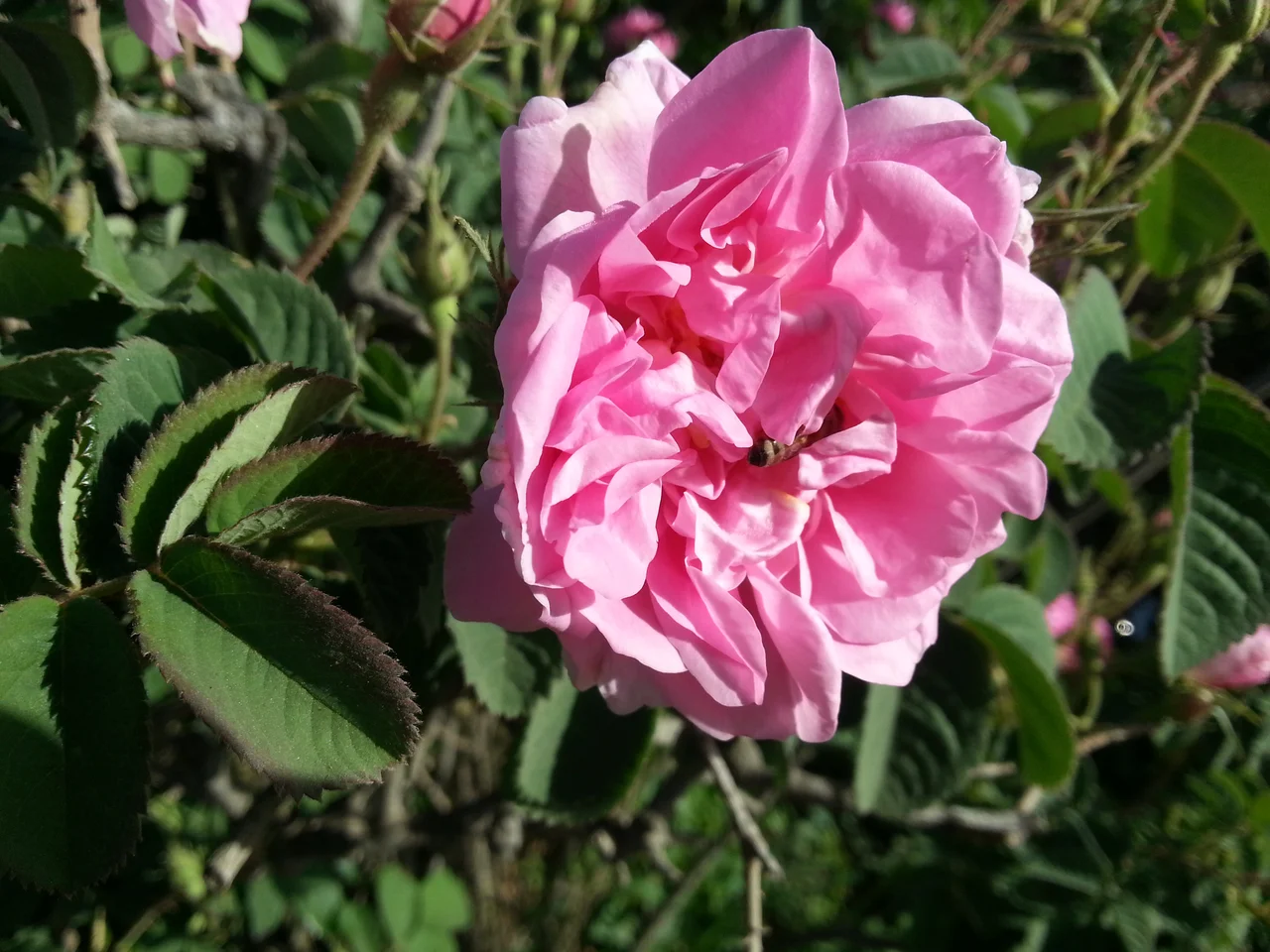
Three hundred million roses bloom here each spring. Not a poetic flourish, a production figure: Ta'if's nine hundred rose plantations collectively cultivate around three hundred million Damascus rose blooms annually, and the rose oil distilled from them ends up in perfume bottles from Givenchy and Jimmy Choo. The city's Arabic nickname, the City of Roses, is almost understatement. At 1,879 meters in the Hijaz Mountains, where the summer air is twenty degrees cooler than Mecca and the highways hairpin up through the cliffs of the Sarat range, Ta'if has been a place to escape the Arabian heat for longer than there has been an Arabian heat to escape.
The Circled City
Ta'if literally means circulated or encircled in Arabic. The name comes from a wall built around the town in pre-Islamic times, long before the seventh century CE. The city existed then, and it has existed since. There is no direct mention of Ta'if in the Quran, though Sura 43:31 refers to two cities that scholars take to be Mecca and Ta'if. The Prophet Muhammad came here in 619 CE, shortly after the death of his first wife Khadija, hoping to spread his message. According to Islamic tradition, the city's chiefs rejected him, and the crowds pelted him with stones until he fled. A gardener took him in and nursed his wounds. The city Muhammad had hoped to persuade became a place he had to escape. Within the decade, relationships shifted, and by 630 the Banu Thaqif had converted peacefully.
From Ottomans to Ibn Saud
For several centuries, Ta'if was Ottoman, part of the Hejaz that came under Istanbul's rule after the Sharif of Mecca capitulated to Selim I in 1517. The Hashemite family, traditional rulers of Mecca, led the Arab Revolt against Ottoman control during World War I. In the 1920s, Ibn Saud's forces incorporated Ta'if into what became modern Saudi Arabia after a short battle. The city at that moment was small and unimportant. In the years that followed, the Saudi government built it into one of the country's premier destinations. In the 1930s, a treaty establishing the boundary line between Saudi Arabia and Yemen was signed in Ta'if. The city kept being chosen for diplomatic and administrative weight far beyond its size.
Highway 15 Into the Mountains
Given the mountainous geography, almost no highways cross Ta'if. The exception is Highway 15, which connects the city to Mecca. The drive from Mecca takes less than an hour, and the scenery along the route is famously dramatic: the road climbs through sheer rock faces, clings to cliff edges, and delivers travelers into a different climate zone entirely. For non-Muslims, who are forbidden from entering Mecca itself under Saudi law, a cutoff near Mecca called the Christian bypass, route 298, connects to Highway 15 and allows the approach to Ta'if without entering the holy city. The route takes about three hours from Jeddah. A police checkpoint beyond the turnoff turns non-Muslims back from the holy city.
Roses and Grapes
The rose economy is serious business. Every spring the city blooms with red and pink Damascus roses, and the distilled oil is of the highest grade in the perfume world. Some Cairo bazaar vendors claim their attar comes from Ta'if, but the claims are often dubious. Shiraz in Iran also carries the City of Roses name, with its own gorgeous blooms, but no rival to Ta'if's production scale. Ta'if's agriculture does not stop at roses. Grapes, pomegranates, figs, and honey all come from the governorate, which remains one of the most agriculturally productive parts of the kingdom. Ta'if was once Saudi Arabia's best-known wine region. Under current law alcohol is prohibited, but the vineyards remain, producing fine table grapes. The historical market of Souq Okaz, a pre-Islamic poetry fair that has been revived in modern form, still draws visitors during its season.
Where Saudis Go in Summer
Ta'if is often called the best summer destination in Saudi Arabia, and among Saudis the claim is close to consensus. The population of 690,000 swells further in the hot months, when residents of Riyadh, Jeddah, and the Eastern Province come up for the climate. The nearby resort town of Al Hada sits further up the mountain on the road from Mecca, reachable by a cable car that offers views of the entire escarpment. The governorate covers fifteen municipalities with Ta'if as the capital. Taif International Airport connects the city to the kingdom and beyond, with a larger international airport planned to open by 2030. For Arabs visiting, gifts of Ta'if rose oil carry a particular weight. Arriving at someone's door with a small bottle is a gesture of high respect and leaves a lasting impression, which is partly why the city's nine hundred plantations keep finding buyers year after year.
From the Air
Located at 21.27 N, 40.42 E in Mecca Province, Saudi Arabia. Ta'if sits on a plateau at 1,879 m in the Hijaz Mountains, with peaks like Jebel Daka (among Saudi Arabia's highest) rising above. The city is visible from altitude as an urban area on a mountain plateau, noticeably greener than surrounding areas. Nearest airport: Taif International Airport (OETF). Highway 15 is the single dramatic road connecting to Mecca.
Nearby Stories
- Treaty of al-Hudaybiya 16 km away
- Jabal al-Nour 41 km away
- Al-Balad, Jeddah 64 km away
- Battle of Turubah 85 km away
- Al-Baha 124 km away
- Al-Baha Province 165 km away
- Hejaz 229 km away
- Operation Moses 283 km away