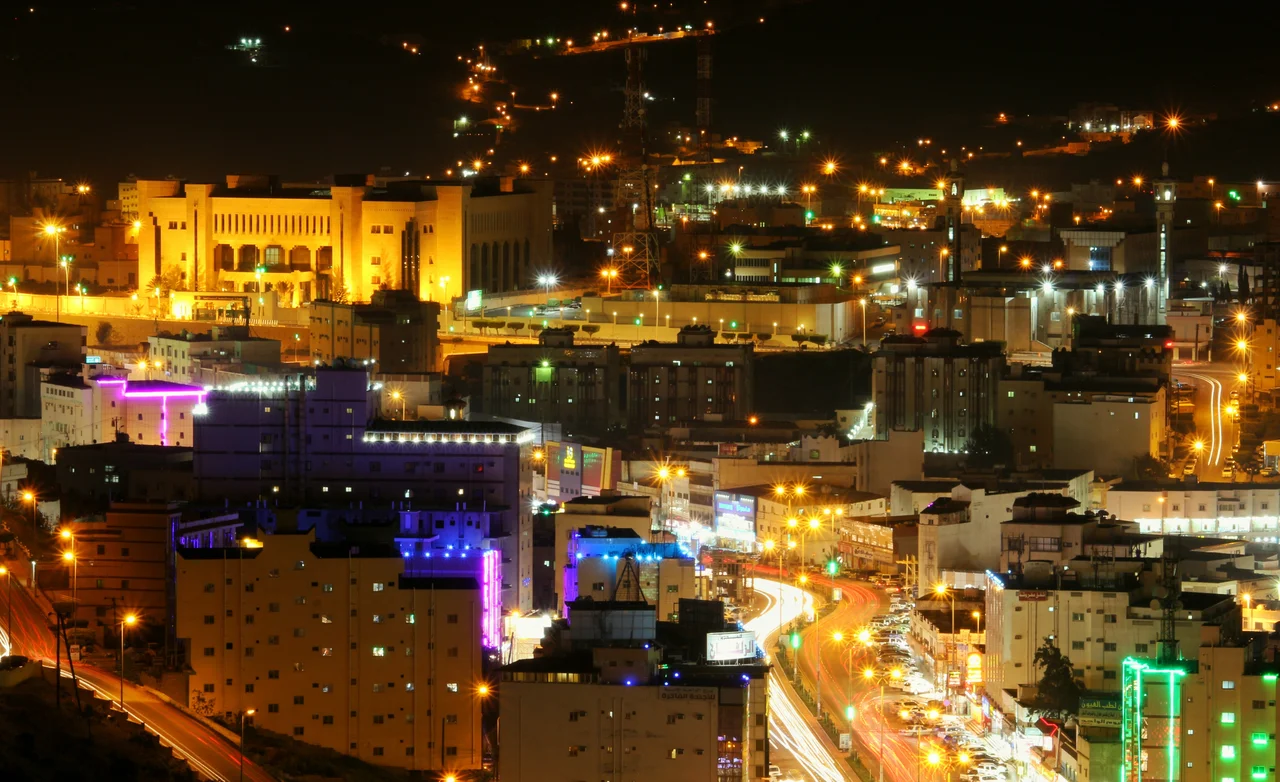

Al-Baha Province
Clouds form inside the province, not above it. At the eastern edge of Al-Baha, the Sarawat Mountains rise to 2,450 meters, and moist air masses drifting inland from the Red Sea run straight into cliffs that force them upward into cold, startled condensation. The fog can cut visibility to almost nothing. Twenty-five kilometers west, down on the Tihamah coastal plain, the sky stays bone-dry. Saudi Arabia's smallest province packs two climates, two worlds, and several thousand years of human memory into roughly ten thousand square kilometers.
A Province Carved from Tribal Land
Before Al-Baha had a map, it had clans. The Ghamd tribe answered to one paramount sheikh; the Zahran tribe answered to another. Both trace back to the Azd, an ancient Arab tribe that spread from here to Oman and Iraq, and both fought the Ottomans from their mountain strongholds - battles documented even in Ottoman manuscripts that rarely flattered their enemies. Administrative Saudi Arabia arrived late. Under King Abdulaziz, the area was the Emirate of Al-Dhafeer. Under King Faisal, the capital was moved to Baljurashi, then shifted again when Faisal's appointed governor, Saud bin Abdul Rahman, chose a small village in the land of Bani Abdullah - midway between Ghamd and Zahran territory, careful about tribal balance - as the new regional seat. The village was Al-Baha. It gave the province its name.
Stone Towers of Uncertain Purpose
Scattered across the highlands stand the qasabas - traditional stone towers unique to Al-Baha architecture. Historians argue over what they were for. Lookouts seem natural for hilltops, but a lookout is the wrong shape for a keep or a granary. Maybe they were all three. Maybe each village decided for itself. Then there is Thee Ain, 24 kilometers southwest of Al-Baha, a village built on a small outcrop of white marble. Polished stone houses stack up the slope. A spring flows from the mountains into reservoirs, each pool with its own name, feeding banana trees and fruit groves that still grow. Villagers say the marble glows at sunset. The settlement is about 400 years old, and it remembers the Ottoman wars - the inhabitants fought them off from these same stone walls.
Companions and Inscriptions
The province produced some of early Islam's most consequential voices. Abu Hurayra, who narrated more hadith than any other companion of the Prophet in the Sunni tradition, came from these hills. So did Malik ibn Awf and Tufayl ibn Amr. Long before them, the rocks here were already being written on. Hebrew inscriptions. Musnad script from the ancient South Arabian writing system. Kufic calligraphy from early Islamic centuries carved into stone at Manhal. In 2023 at Al-Ma'mlah, archaeologists unearthed 150 artifacts in a single season, including a pottery jar with early Islamic inscriptions. The poet Al-Shanfara - the famous pre-Islamic vagabond whose ode mocks every convention of tribal loyalty - spent his final days somewhere in these valleys. The province keeps absorbing its writers and refusing to give them all back.
Fifty-Three Forests
Al-Baha contains 53 named forests and wildlife areas. For a country most people picture as desert, the number sounds invented. But Raghdan, Ghomsan, Fayk, and Aljabal are real juniper and acacia groves draped across mountain shoulders, watered by the only part of Saudi Arabia regularly cooled by marine air. The World Health Organization designated the region a health resort area - unusual recognition for a Saudi province, earned by air that in summer hovers in the mild twenties Celsius while the rest of the kingdom bakes. The Sharif of Mecca once called it the Garden of the Hejaz. Modern visitors call it the Pearl of Resorts. Both names fit.
A Small Place That Matters
As of 2022, Al-Baha city had a population of 90,515. The nine governorates that make up the province contain more than 300,000 people total - a small number by Saudi standards. King Saud Domestic Airport in Al-Aqiq handles flights to Jeddah and Riyadh. Mountain highways connect the forests to Taif in the north and Abha in the south. The province feels like a secret the country is only just beginning to share with itself, as Saudi Arabia opens to tourism under Vision 2030. The qasabas still stand. The marble village still glows. And the clouds still form inside the mountains, as they have for as long as people have lived here to watch them.
From the Air
Al-Baha Province sits in southwestern Saudi Arabia centered near 20.00 N, 41.50 E. The Sarawat escarpment rises from sea level on the Tihamah coastal plain to peaks of 2,450 m in a span of roughly 25 km - expect severe terrain and orographic cloud. King Saud Domestic Airport (OEBA) in Al-Aqiq serves the province. Nearby alternates include Taif International (OETF) to the north and Abha International (OEAB) to the south. Winter brings thunderstorms and fog off the Red Sea; spring and summer are generally clear with excellent visibility of the escarpment.
Nearby Stories
- Battle of Kunfuda Bay 62 km away
- Bareq 89 km away
- Battle of Turubah 106 km away
- Asir 115 km away
- Siege of Ta'if 139 km away
- Ta'if 164 km away
- Jazan Province 275 km away
- Najd 476 km away