
Bareq
Suq Hubasha was one of the greatest markets of pre-Islamic Arabia, and Bareq is where it stood. For eight days every Rajab - the sacred month - caravans gathered in this fertile pocket between Tihamah and the Asir highlands to trade whatever the peninsula's winter and summer journeys had carried up the coast. The market was protected by the Bareq country, which meant its tribal warriors kept the peace. It survived longer than most such markets: historians note it as the last of the pre-Islamic souks to be destroyed. The town itself, according to tradition, was founded in 220 AD. Sixty thousand people still speak Bareqi Arabic - a dialect of their own, related to Hejazi and Najdi but with traces of the ancient Himyaritic language still embedded inside it.
Between the Two Worlds
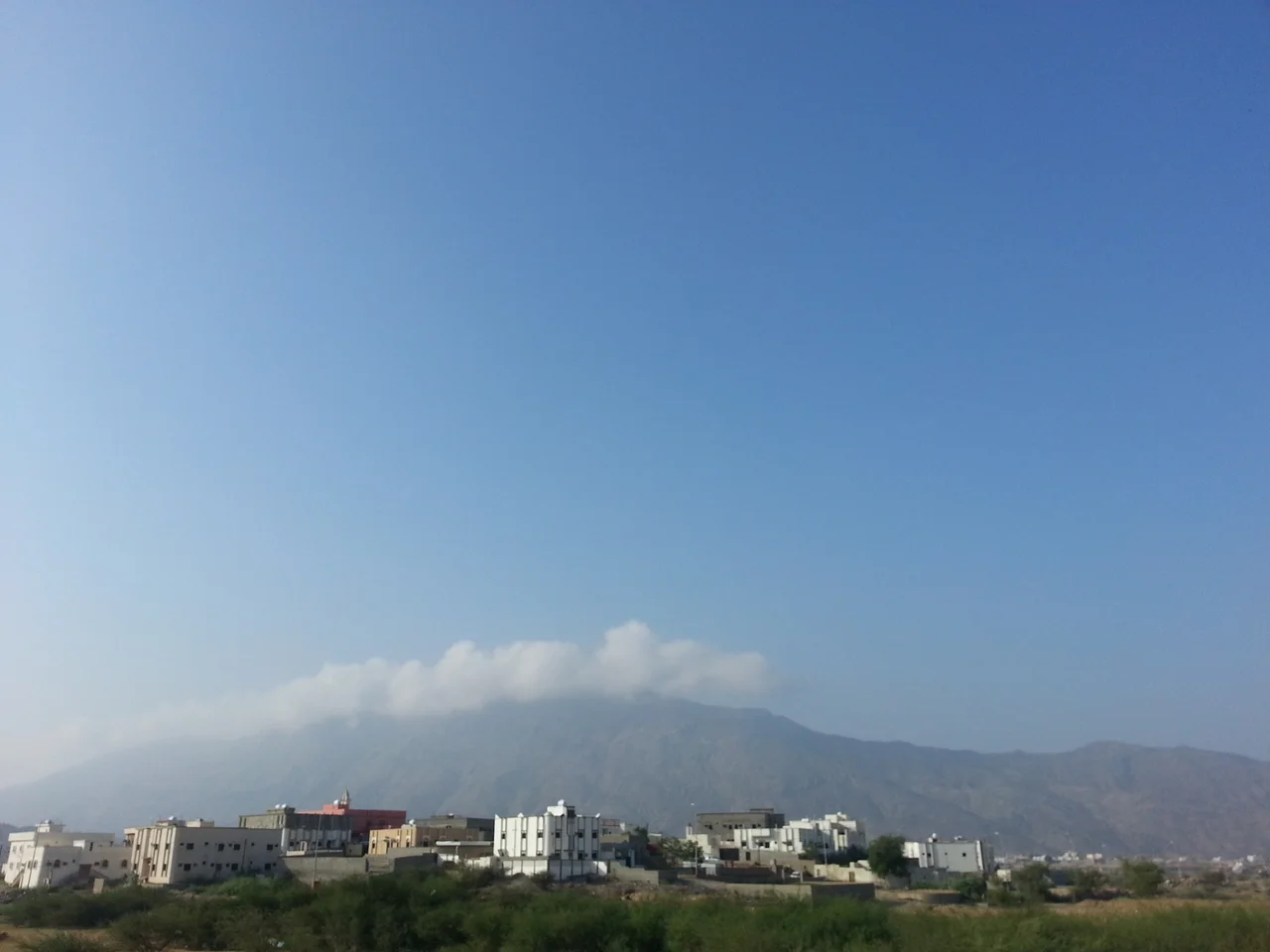
Bareq occupies a peculiar geographic sweet spot - 412 meters above sea level, about 90 kilometers inland from the Red Sea, 120 kilometers north of Abha, sitting exactly at the crossroads of Tihamah (the hot coastal lowlands) and Asir (the cool highlands). The district covers roughly 40 miles north-to-south and 57 miles east-to-west. It is bounded by Tanomah to the east, Majaridah to the north, Muhayil to the south, and Al Qunfudhah toward the Red Sea. The country is well-watered, the soil fertile, the cultivation extensive. Maize, millet, barley, and sesame are the principal crops. In the wetter districts, farmers also grow wheat, coffee, indigo, ginger, and vegetables. This is, by many measures, one of the best agricultural districts in Saudi Arabia. The population of roughly 75,000 is scattered across more than 500 named villages.
The Azd Inheritance
The inhabitants trace their origins to the Bariq tribe, one of the major branches of the ancient Al-Azd - the same great Arab tribal confederation that would produce the people of nearby Al-Baha. The Bariq tribe entered Islam in the mid-7th century and played a major role in the Muslim conquests that followed. Many Bariqis settled far beyond their home valleys - in Iraq, in Greater Syria, in Egypt and the Maghreb. The companions of the Prophet who came from Bareq include Hudhayfah al-Bariqi, Suraqah al-Bariqi, Urwah al-Bariqi, Arfaja al-Bariqi, and women remembered in their own right: Jamilah bint Adwan and Asma bint Adiy al-Bariqiyyah. Petroglyphs at Saban record even older presence - images pecked into rock long before any of these names existed.
The Idrisi Years
Bareq's modern story runs parallel to the rest of Asir. The First Saudi State reached here in 1809 under the leadership of Ahmed Ibn Zahir of the Humaydah clan. When the Egyptians destroyed that first Saudi state in 1818, the Bariqis fought them tenaciously. In 1872 the Ottoman Turks took direct control, making Bareq a sanjak of their Yemen vilayet, and it remained Ottoman for 42 years. In 1910 Muhammad ibn Ali al-Idrisi, building his emirate in Sabya, began extending political control northward. By 1915 - after the Ottomans had been weakened by the Great War and the Idrisis had signed a treaty with Britain - Bariqi troops were fighting alongside British forces. In April of that year, the British promised independence. The promise, as such promises often were, proved more flexible than advertised. Muhammad ibn Ali died in 1920, and his emirate could not withstand Ibn Saud's expansion. Bareq accepted being part of the Kingdom of Saudi Arabia in 1924.
A Dialect Worth Preserving
Bareqi Arabic is spoken by about 60,000 people, mostly in Bareq and the surrounding villages. It shares features with both Hejazi and Najdi Arabic, but also preserves elements from the ancient Himyaritic language - traces of a South Arabian tongue that has otherwise almost entirely vanished from the peninsula. The first school in Bareq was established in 1952. Today more than 100 public educational institutions operate in the governorate. The local cuisine preserves its own names too: jalamah, khmer, haneeth, lahoh, murtabak, aerykh, asida, muqalqal, and mandi. These are not regional curiosities. They are the food a specific community has eaten for generations, the way specific families fed their guests at weddings, the particular vocabulary for a particular kind of hospitality.
Winter Resort in a Hot Country
Despite its arid tropical classification, Bareq is mild enough to function as a winter resort for visitors from across Saudi Arabia. January daytime highs hover around 82 degrees Fahrenheit, lows around 64. The villages of Bilad al-Musa, Saban, and Atharb have become weekend destinations for Asiri families seeking old stone houses, open valleys, and a landscape still dense with agriculture. The petroglyphs of Saban are now studied by archaeologists. The old towers of Atharb - like the qasabas of Al-Baha - remain a puzzle and a photograph. Bareq is growing rapidly, with full government services and public utilities, but it has kept its rural character. The 500 villages have not been absorbed into a single city. They remain 500 villages.
From the Air
Bareq lies in northwest Asir Province at approximately 18.932 N, 41.944 E, at 412 m elevation. Located 120 km north of Abha, roughly 90 km inland from the Red Sea. Abha International Airport (OEAB) is the nearest major airfield to the southeast. The terrain is lower than the high Asir peaks but still includes wadis and ridges - watch for rising terrain toward the Sarawat range to the east. Climate is arid tropical with mild winters; visibility is typically good year-round with occasional haze off the coastal plain.
Nearby Stories
- Asir 50 km away
- Battle of Kunfuda Bay 52 km away
- Shadah Al-asfal 65 km away
- Thee Ain 104 km away
- Jazan Province 136 km away
- Emirate of Asir 165 km away
- Qaryat al-Faw 282 km away
- Nokra Naval Base 364 km away