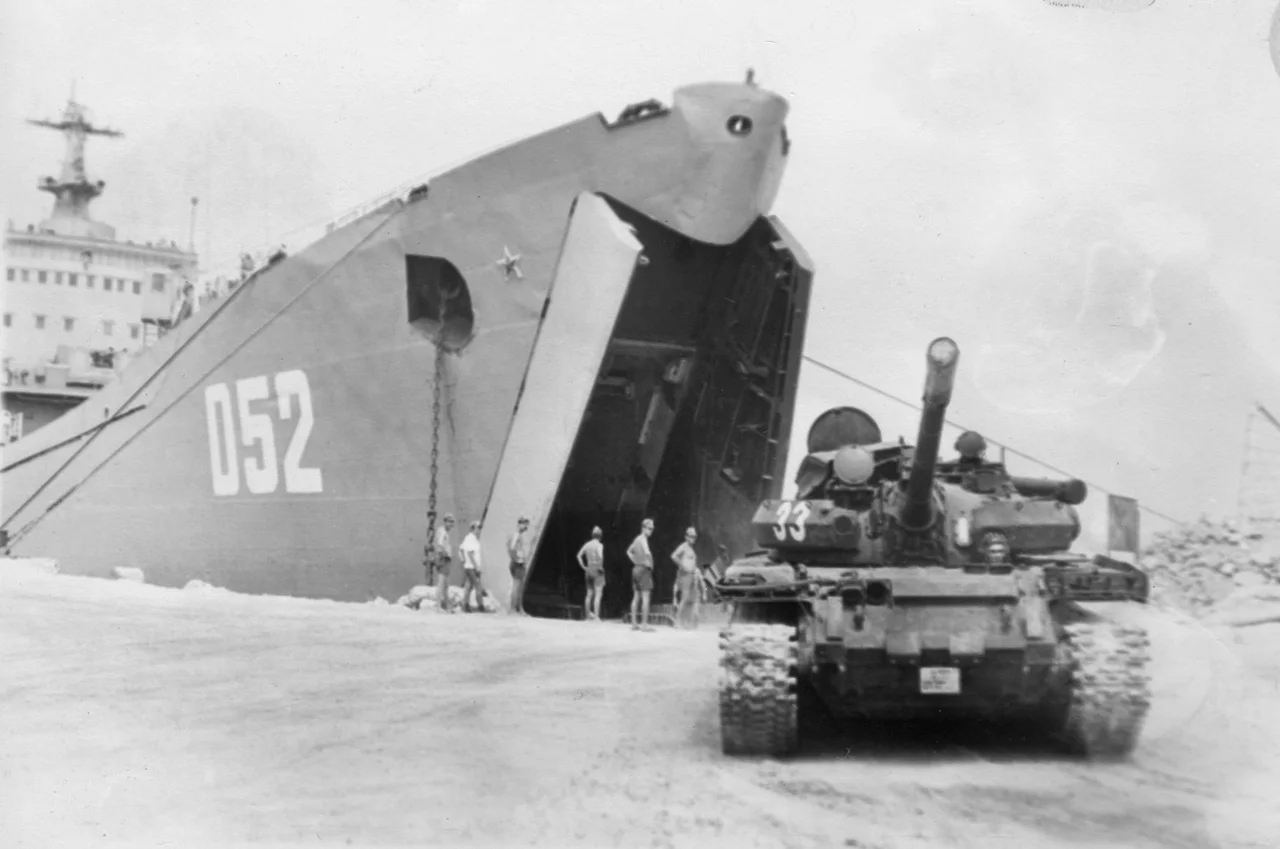

Nokra Naval Base
On September 29, 1985, during maintenance on the nuclear submarine K-175, the reactor cores depressurized. Personnel on Nokra Island in the Red Sea had made a mistake, the emergency protection systems on both reactors were reset, and 137 people were exposed to a sudden spike in radiation. The incident was not disclosed. Radiation monitoring continued for years. The submarine eventually left. The base, a Soviet logistics point tucked into the Dahlak Archipelago off the coast of what was then Ethiopia, kept operating under the bland code 933 PMTO. This was the Cold War's Red Sea - where American signals intelligence operated out of Kagnew Station in Asmara, where Soviet submarines rotated through Nokra, and where the Eritrean liberation movement slowly closed the ring around a base whose defenders could do nothing to stop it.
How the Soviets Ended Up Here
The Nokra base existed because the Soviets lost another one. In 1977, during the war between Somalia and Ethiopia, the USSR threw its support to Ethiopia. Somalia, which had hosted a Soviet naval base at Berbera since 1964, responded by giving the USSR three days to pack and leave. Moscow needed a replacement somewhere in this corner of the Indian Ocean - a place to maintain the nuclear submarines and surface ships now operating far from home waters. In May 1977 Ethiopian leader Mengistu Haile Mariam visited Moscow and offered the port of Massawa as a naval base in exchange for military aid. But Massawa was under siege by Eritrean separatists. Assab was too small. The decision was made to set up on one of the islands of the Dahlak Archipelago in the Red Sea. Nokra Island was chosen, and in 1978 an intergovernmental agreement formalized the 933rd Logistics Support Point.
The PD-66 and What It Could Fix
In the first half of 1978, the Soviet floating dock PD-66 was delivered to Dahlak - an achievement that earned Captain 2nd Rank V. Vasiliev and members of the SS-21 rescue vessel crew the Order of the Red Star. The base could repair Soviet submarines operating in the Indian Ocean, and later was adapted to handle surface ships as well. The first nuclear-powered submarine to arrive, K-108, came in April 1980 under Captain 1st Rank V.L. Ratnikov for anti-aircraft and preventive maintenance. In the fall of 1980, the Project 671 nuclear submarine K-369 was repaired at Nokra after its retractable devices struck the superstructure of the tanker Akhtuba while on the surface. The base also serviced Pacific Fleet and Northern Fleet submarines that had been on months-long combat missions in the Arabian Sea since 1979. Marines rotated through roughly every six months, sometimes drawn from the Black Sea Fleet. From February 1985 the Black Sea Fleet's counter-sabotage commando frogmen of the PDSS provided security in rotating nine- to ten-month tours.
The War That Found Them Anyway
The base had been carefully positioned to avoid the war. Then the war found it. By June 1988 the worsening Eritrean civil war made submarine visits impossible - they stopped coming. The base's role shrank to servicing surface ships. Soviet warships began fighting the Eritrean naval forces that harassed Ethiopian shipping. On May 13, 1990, the Natya-class minesweeper Razvedchik repelled an attack by four Eritrean boats on the Soviet tanker International, sinking one of them. On May 27, 1990, the gunboat AK-312 engaged four Eritrean boats, sinking three before returning safely to base. In October 1990, the MPK-118 Komsomolets Moldavii suppressed two Eritrean shore batteries and destroyed an ammunition depot. On December 10, 1990, Eritrean separatists fired on the tanker Sheksna, and the accompanying minesweeper Paravan provided cover. The minesweeper Dizelist sank two of six Eritrean boats in December 1990. Soviet Navy ships now lived in a combat zone that Soviet foreign policy had not intended to enter.
Massawa Falls, Nokra Becomes Untenable
In February 1990, the Eritrean People's Liberation Front stormed Massawa in Operation Fenkil, cutting Ethiopia's access to the sea. Ethiopian warships relocated to Nokra. From that point on, the base and its surrounding waters came under systematic Eritrean artillery fire from the mainland shore. The 85th Operational Surface Ship Brigade found itself defending a logistics facility against an army that had just defeated the government it had come to support. On February 6, 1991, the Commander-in-Chief of the Soviet Navy ordered the withdrawal of all Soviet forces from Nokra to avoid separatist attack. The evacuation began at noon. Within six hours the repair ship PM-129 had taken aboard base personnel, PD-66 dock staff, an air defense platoon, and a naval infantry unit with their weapons and documents. At 5:14 that evening the Soviet flag came down. As dusk fell, the ships left the piers.
What Sank and What Remains
The withdrawal was not clean. On the night of February 12, 1991, the ships sailed out of the bay in sequence and formed convoy KON-63 heading north. The voyage to Aden was rough, and the uncrewed barge MBSS-219, carrying a fire engine on board, sank in the Gulf of Aden. The convoy reached Aden. The PD-66 dock was left in Ethiopian hands and eventually sank at its moorings because the Ethiopian side could not maintain it. The base equipment became Ethiopian property on paper, but within months the Mengistu regime fell, and Eritrean independence was completed in 1991. The base lost its meaning. Several technically faulty Ethiopian ships, left unmaintained, sank where they were tied. The Soviet Union itself dissolved later that year. As of 2009, Nokra Island and the abandoned base had become a tourist attraction for diving enthusiasts exploring the wrecks. The half-submerged Italian hospital ship from World War II that had been a navigation hazard during the base's operations was now just one more layer of history lying in shallow water, along with a floating dock, several corvettes, and the traces of Soviet nuclear submarine repairs that once mattered very much.
From the Air
Nokra Naval Base is located at 15.71°N, 39.94°E on Nokra Island in the Dahlak Archipelago, about 35 km east of Massawa, Eritrea. Massawa International (HHMS / MSW) is the nearest airport. The Dahlak Archipelago consists of Dahlak Kebir (~750 km²), Nokra (~130 km²), and more than 120 smaller islands, mostly uninhabited. Surrounding waters have numerous reefs, shoals, and rocky banks - careful navigation required. Historical note: several shipwrecks including a WWII Italian hospital ship and abandoned Soviet-era vessels remain in shallow waters around the island. The area is now primarily a diving destination.
Nearby Stories
- Adulis 35 km away
- Northern Red Sea region 40 km away
- Eritrea 50 km away
- Attacks on the Sounion 142 km away
- Italian Submarine Guglielmotti (1938) 151 km away
- Nakfa 170 km away
- Emirate of Asir 266 km away