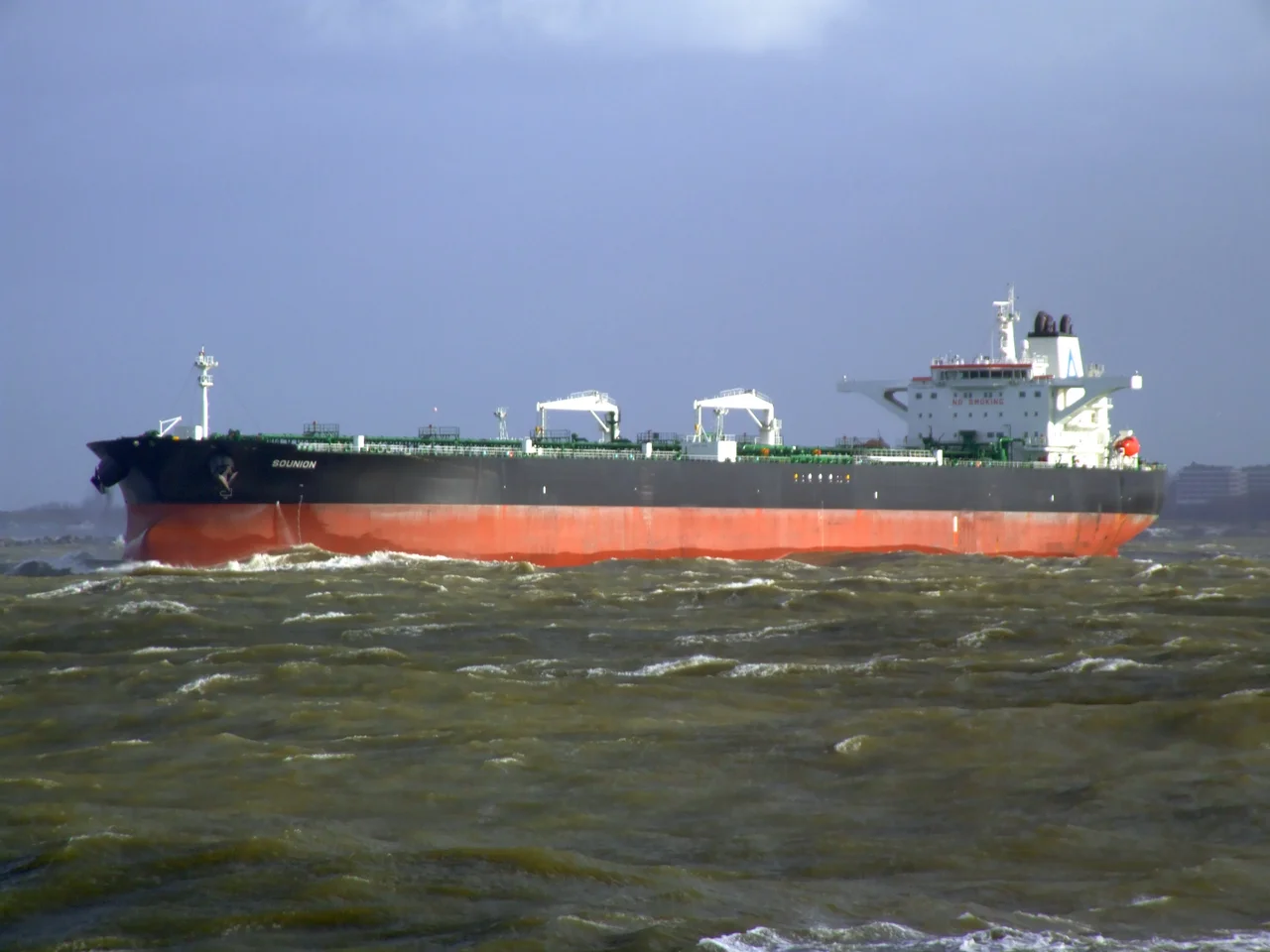

Attacks on the Sounion
On the afternoon of 21 August 2024, a Greek-flagged oil tanker named the Sounion was steaming north through the Red Sea with 150,000 tons of Iraqi crude in its holds - about a million barrels, four times what the Exxon Valdez spilled into Prince William Sound in 1989. Houthi fighters in two fast attack craft closed on the 274-meter ship about 77 nautical miles west of Al Hudaydah, Yemen, and opened fire on its four-man security team. Three projectiles struck the tanker. A fire broke out on board. The engine went dead. The crew - 25 Filipinos and Russians - were told to abandon ship. A French frigate, the Chevalier Paul, raced in under the European Union's Operation Aspides and took them all off in the dark. That was day one of a month-long crisis that came very close to becoming the worst oil spill in maritime history.
The Crew
The twenty-five merchant sailors who abandoned the Sounion were Filipino and Russian, crewing a Greek-owned ship under contract to Delta Tankers of Athens. Two of Delta's other vessels, the Delta Blue and the Delta Atlantica, had already been attacked by Houthi forces earlier in the Red Sea crisis. The sailors on the Sounion were civilians. They had no part in the politics of Gaza or Tehran or Sanaa. The Chevalier Paul, responding to their distress call, evacuated all of them to Djibouti over the night of 21-22 August. While the French crew was working to save the mariners, a Houthi explosive boat approached at speed. The Chevalier Paul's 20mm Narwhal guns destroyed it. Everybody aboard the Sounion got to shore alive. That, at least, was the outcome the crew deserved.
The Explosions
On 23 August, the Houthis released their own footage. It showed their fighters boarding the empty tanker, then cutting to a long shot of three simultaneous blasts detonating across the ship's length - plainly charges set by hand rather than missile or drone strikes. The Houthis' own fighters, chanting their movement's slogan, stood by as the Sounion burned. This was a different kind of attack from what the Houthis had done earlier, to the Rubymar in February 2024 or the Tutor that June - both of which had been sunk in the course of strikes but not deliberately destroyed after boarding. The Sounion was blown up on purpose, fully loaded, in the middle of a sea that Yemeni fishermen depend on for food.
The Environmental Stakes
A million barrels of Iraqi crude burning into the Red Sea would have been catastrophic. The Red Sea is a narrow, enclosed marine system with unusually high biodiversity - coral reefs, mangroves, migratory tuna, turtles, the fishing grounds that feed coastal Yemen. US State Department spokesman Matthew Miller described the Houthis as willing to destroy the fishing industry and regional ecosystems that Yemenis and other communities in the region rely on for their livelihoods. Pentagon administrator Sabrina Singh, asked what the attack actually accomplished, answered: They said they were launching these attacks to help the people of Gaza, not sure how that helps anyone in Gaza. The potential spill would have fallen hardest on the coast the Houthis claim to defend.
The Salvage
An initial tugboat mission on 2 September was aborted because the ship was still on fire and the conditions were unsafe. For ten days the Sounion burned and drifted. On 12 September the Greek Coast Guard announced a new attempt, escorted by Greek and French warships. Two days later, on 14 September, a salvage team from the Greek tugboat Aigaion Pelagos managed to secure a tow line in temperatures on deck that reached 400 degrees Fahrenheit. Over 200 personnel worked the operation. The fires took three weeks to extinguish fully. On 16 September, Aspides confirmed the Sounion had been towed safely away from Yemen. She was moved 150 miles north and then on to Suez. In January 2025, the maritime security firm Ambrey announced that the cargo had been successfully offloaded and the ship was declared safe. The Red Sea did not become the Exxon Valdez.
Why It Matters
The Houthi spokesman Yahya Saree posted video claiming the Yemeni Navy had sunk the Sounion in response to Delta Tankers' use of Israeli ports. The movement framed the strike as an act of solidarity with Palestinians in Gaza. Three facts cut against that framing. The Sounion was carrying crude from Iraq to a Greek refinery - not to Israel. Her crew were Filipinos and Russians. And the ecosystem most at risk from her destruction was Yemen's own. The Red Sea crisis that began in late 2023 has disrupted global shipping, forced vessels around the Cape of Good Hope, and pushed up freight rates worldwide. It has also drawn navies from the EU, United States, United Kingdom, and others into a low-grade naval war that has killed sailors, damaged ships, and - in the Sounion's case - nearly produced an environmental disaster that would have punished Yemeni fishing communities for a cause nobody explained to them.
From the Air
The attacks occurred at 14.99 N, 41.65 E in the southern Red Sea, roughly 77 nm west of the Yemeni port of Al Hudaydah. The nearest major airfield is Sana'a International (OYSN) - 200 km east - though Yemeni airspace is restricted due to active conflict. Djibouti-Ambouli International (HDAM) lies about 450 km to the southwest and has been the hub for Western military air operations over the Red Sea crisis. Expect high density altitude, significant dust and haze, and active military air traffic. Commercial overflight of the southern Red Sea has been severely curtailed since late 2023.
Nearby Stories
- Kamaran 44 km away
- Italian Submarine Guglielmotti (1938) 63 km away
- 2025 Israeli attacks in Yemen 83 km away
- Danakil Depression 107 km away
- Southern Red Sea region 114 km away
- Nokra Naval Base 136 km away
- Yemen Eyalet 198 km away