.png)
Yemen Eyalet
Of 80,000 Ottoman soldiers dispatched from Egypt to Yemen between 1539 and 1547, only 7,000 survived. The Ottoman accountant-general in Egypt recorded this figure, probably with some bookkeeping despair, as the empire discovered what armies from Rome to Britain would eventually rediscover: Yemen is extraordinarily difficult to hold. For roughly 374 years across two separate occupations, Istanbul tried to govern the southwestern corner of the Arabian Peninsula as a province, an eyalet, of the Ottoman Empire. The Zaidi imams of the northern highlands were not persuaded. Neither were the Yemenite Jews, the Shafi'i merchants of the lowland coast, nor the tribes whose loyalties could be bought but never owned.
Why Yemen Mattered
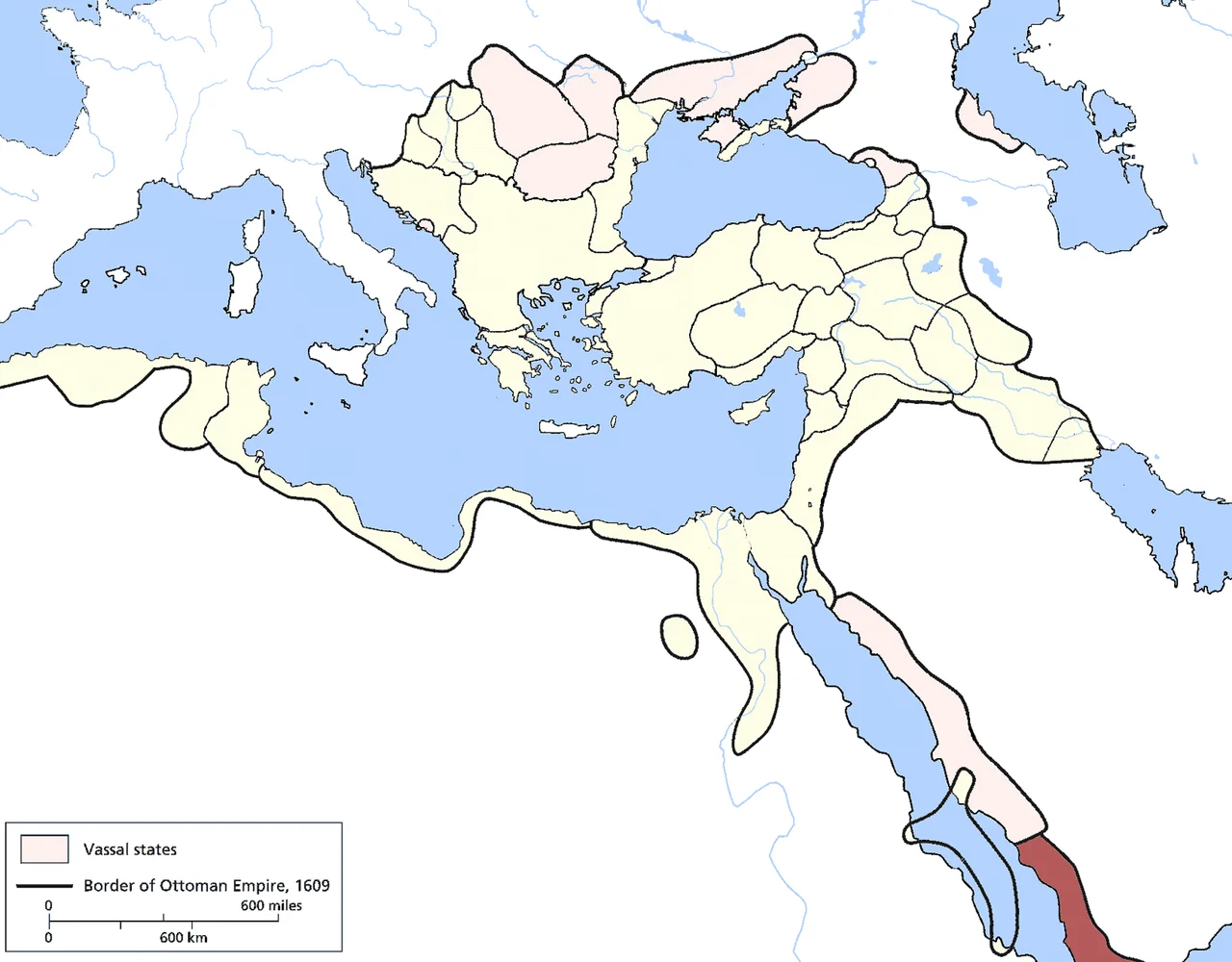
The Ottomans cared about Yemen for two reasons, one religious and one commercial. The religious reason was Mecca and Medina. Ottoman sultans styled themselves Custodians of the Two Holy Mosques, and any power controlling the southern Red Sea coast could threaten the pilgrim routes and Mecca itself. The commercial reason was the spice and textile trade with India, which since the early sixteenth century had been disrupted by Portuguese fleets sailing into the Indian Ocean. When the Mamluks of Egypt annexed Yemen in 1516 and then surrendered to the Ottomans the following year, the territory came along. Hadim Suleiman Pasha, the Ottoman governor of Egypt, was ordered to command a fleet of ninety ships to conquer the country. He stormed Aden in 1538 and extended Ottoman authority across the Tihama coastal plain. Zabid became the administrative headquarters of the eyalet.
The Zaidi Imams
Resistance came almost immediately. Imam al-Mutahhar, described by Ottoman sources as lame and therefore, in their accounting, unfit for the imamate, led Zaidi tribes to recapture Sana'a in 1567. Over eighty battles followed. In 1568 at Dhamar, Zaidi forces beheaded the Ottoman commander Murad Pasha and sent his head to al-Mutahhar in Sana'a. Sultan Selim II, infuriated, ordered the Albanian-born general Sinan Pasha to lead the entire Ottoman army of Egypt into Yemen. The campaign succeeded, barely, but never settled the highlands. In 1597, Imam al-Mansur al-Qasim proclaimed the imamate after Ottoman authorities promoted Hanafi jurisprudence over Zaidi Islam. His son, al-Mu'ayyad Muhammad, inherited a war that ended with a 1627 Ottoman retreat from Aden and Lahej, and by 1636 the Ottomans had been driven entirely from Yemen. They would be gone for more than two centuries.
Coffee and Diplomacy
The Zaidi Qasimid State that followed became the strongest Zaidi polity ever established, extending from Asir in the north to Dhofar in the east. During the seventeenth century, Yemen was the sole coffee producer in the world. The port of Mocha, on the Red Sea coast, gave the coffee bean its name and grew fabulously wealthy on the trade. Yemen exchanged diplomatic missions with Safavid Persia, Mughal India, and Ethiopia, where Emperor Fasilides sent three separate embassies hoping, without success, for a political alliance. That wealth did not survive. In the early eighteenth century, Europeans broke Yemen's coffee monopoly by smuggling coffee plants to Java, the Caribbean, and Brazil. The Qasimid dynasty declined through succession disputes, tribal insubordination, and the rising militant power of the Wahhabi movement, which stripped the Zaidi state of its coastal possessions after 1803.
A Costly Dignity
During the reign of Al-Mutawakkil Isma'il, from 1644, and his successor Al-Mahdi Ahmad, from 1676 to 1681, the Qasimid state imposed some of its harshest discriminatory laws on the Jews of Yemen, a community whose presence in the country predated Islam by many centuries. These ghiyar laws culminated in the Exile of Mawza in 1679, when the imamate expelled all Yemenite Jews to the hot, arid Tihama coast. Many died of thirst, hunger, and disease before they were eventually allowed to return. The Exile of Mawza remains a defining trauma in Yemenite Jewish memory, preserved in the poetry and liturgy of a community that would later be almost entirely transplanted to Israel during the 1949-50 Operation Magic Carpet. The Qasimid imams who ordered the expulsion are remembered in Zaidi historical writing as the state's most powerful rulers. Yemenite Jews remember them differently.
The Second Occupation
The Ottomans returned to the Yemeni coast in 1849 and pushed into the highlands in 1872, reconquering Sana'a and making it the capital of the new Yemen Vilayet. They governed with more caution this time, forgiving rebellious chiefs and appointing them to administrative posts, attempting even to secularize Yemeni society. It did not help. Revolts between 1904 and 1911 killed as many as ten thousand Ottoman soldiers and cost the treasury five hundred thousand pounds a year. Ahmed Izzet Pasha proposed withdrawing to the Tihama and leaving the highlands alone. In 1911, Istanbul signed a treaty with Imam Yahya Hamidaddin recognizing him as an autonomous leader of the Zaidi north. When the First World War ended Ottoman rule in 1918, Imam Yahya simply continued governing as he had been. He was assassinated in 1948. The kingdom he left behind lasted until 1962, when the house of Hamidaddin fell in a revolution that began yet another civil war.
From the Air
Coordinates: 13.32°N, 43.25°E. The Tihama coastal plain rises sharply to the Yemeni highlands above 2,000m. Sana'a International Airport (OYSN) sits at 2,250m elevation; Aden International (OYAA) is at sea level. Recommended viewing altitude: 10,000-20,000 feet AGL for the dramatic escarpment views. Airspace restrictions apply throughout Yemen; consult current NOTAMs. Visibility often reduced by dust haze, particularly in summer.
Nearby Stories
- Ashrafiya Mosque 7.8 km away
- Assab 16 km away
- Italian Empire 20 km away
- Zafar, Yemen 116 km away
- USS Cole Bombing 117 km away
- Battle of Al Hudaydah 150 km away
- Southern Red Sea region 152 km away
- Tadjoura 166 km away