
Italian Empire
The empire began with a navigation company buying a bay. In 1869, as the Suez Canal was opening and changing global trade forever, the Rubattino Shipping Company purchased Assab Bay on the southern Red Sea coast from local Danakil chiefs - a coaling station for Italian steamers bound for India. Thirteen years later, the Italian government took it over. By 1941, the same Italian state claimed Libya, Eritrea, Somalia, Ethiopia, the Dodecanese Islands, Albania, and a concession in Tianjin. By 1960, all of it was gone. Italy's colonial project lasted 78 years, took hundreds of thousands of African lives, and ended with the country's soldiers expelled from every overseas holding they had ever claimed.
Latecomer to the Scramble
Italy had only become a unified country in 1861. By the time it tried to compete for overseas colonies, Britain, France, Belgium, and Germany had already staked out most of Africa. The 'Slap of Tunis' in 1881 - when France imposed a protectorate on Tunisia despite a significant Italian community there - left Italian nationalists smarting for compensation. Italy signed the Triple Alliance with Germany and Austria-Hungary in 1882 and began looking for colonies wherever it could take them. The Red Sea coast, where competing European powers had left gaps, seemed manageable. In February 1885, by secret agreement with Britain, Italy annexed Massawa from the crumbling Egyptian Empire. This cut off the Ethiopian Empire of Yohannes IV from the sea. Ras Alula, Yohannes's general, ambushed and killed 500 Italian troops at the Battle of Dogali in 1887. The Italian public demanded revenge. Italy sent more troops.
Adwa, and the Humiliation That Lasted Forty Years
Italy's first major confrontation with the Ethiopian Empire ended in one of the great military disasters of the 19th century. Prime Minister Francesco Crispi, believing he could make Ethiopia an Italian protectorate, pushed troops across the border in 1895. The Treaty of Wuchale, signed in 1889 with Menelik II, had been deliberately translated differently in Amharic and Italian - the Italian version implied protection, the Amharic version did not. Menelik repudiated the Italian interpretation. War came. At the Battle of Adwa on 1 March 1896, 80,000 Ethiopian troops under Menelik II defeated the Italian force. Italian losses totaled 6,889. For Ethiopians, Adwa became a founding moment of African independence. For Italian nationalists - and especially for the fascists who would come to power three decades later - it became an unhealed wound. Mussolini invaded Ethiopia in October 1935 partly to avenge Adwa. His forces, using mustard gas and air power, killed an estimated 275,000 Ethiopians before occupying Addis Ababa in May 1936.
The View from the Other Side
Tell the colonial story honestly and the African voices cannot be missing. In Libya, Italian rule from 1911 onward included mass displacement, concentration camps in Cyrenaica that killed tens of thousands of civilians, and the execution of resistance leader Omar Mukhtar in 1931. In Ethiopia, Marshal Rodolfo Graziani's 1937 Addis Ababa massacre killed an estimated 19,000 to 30,000 people - including 2,000 members of the Ethiopian Orthodox clergy at the Debre Libanos monastery - in reprisal for an attempt on his life. In Eritrea, the Italians imposed racial laws that made mixed marriages illegal and barred Eritreans from most professions while celebrating their military service in the Ascari colonial regiments. Tens of thousands of Eritrean Ascari fought and died in Italian campaigns; others served in Italy's army of occupation in Ethiopia, where some committed atrocities against fellow Africans. The Italian 'civilizing mission' used the labor, bodies, and lives of African peoples while treating them as permanent subordinates.
Italian East Africa, 1936-1941
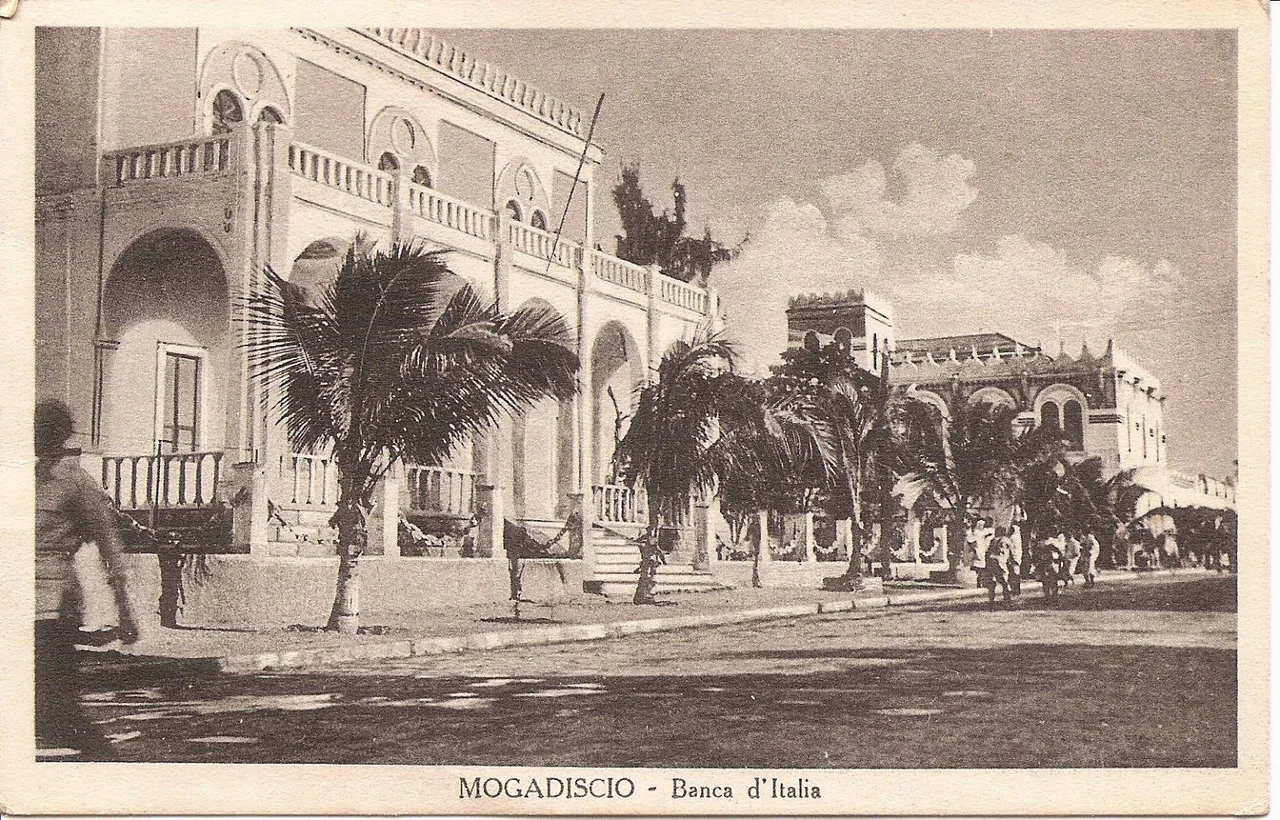
In May 1936, Mussolini proclaimed the Italian Empire and merged newly conquered Ethiopia with existing colonies of Eritrea and Italian Somaliland into Africa Orientale Italiana - Italian East Africa. The goal was 'demographic colonization': by 1939, some 165,000 Italian settlers had moved into AOI, with another 120,000 to 150,000 in Libya. Infrastructure projects - roads, railways, the Asmara-Massawa Cableway - were real but served Italian interests first. Asmara in Eritrea became an architectural showcase of modernist Italian design, 'Piccola Roma,' with more cinemas and Art Deco buildings than most Italian cities of comparable size. The empire's manpower for its wars came largely from African recruits. Of the 4,359 Italian Empire deaths in the Second Italo-Ethiopian War, 1,086 were Eritreans, 507 were Somalis or Libyans - and only 2,313 were Italians. The colonial subjects did much of the actual fighting and dying.
The Empire Unravels
World War II destroyed it in five years. The East African Campaign of 1940-41 saw British, Indian, African, and Free French forces attack Italian East Africa from every direction. On 5 May 1941 - exactly five years after Mussolini's proclamation of empire - Emperor Haile Selassie I reentered Addis Ababa. The last organized Italian resistance ended with the fall of Gondar in November 1941, though small groups continued guerrilla operations until 1943. North Africa was lost by May 1943. Italy's surrender in September 1943 triggered German attacks on former Italian allies in Albania, the Dodecanese, and elsewhere, ending Italy's rule in those territories. The 1947 Treaty of Paris stripped Italy of all colonial possessions. The UN handed Eritrea to Britain to administer, later federating it with Ethiopia. Libya came under Anglo-French administration. Italy was granted a UN trusteeship over Italian Somaliland until 1960, when the new Somali Republic was formed from the merger of Italian Somalia with British Somaliland. On 1 July 1960, Italy's empire officially ended. Tens of thousands of Italians were expelled or left Africa in the aftermath. The colonies Italy had taken by force became independent countries dealing with the borders and scars Italy had left behind.
From the Air
The Italian Empire at its 1936-1941 peak covered Libya, Italian East Africa (Eritrea, Ethiopia, Italian Somaliland), the Dodecanese Islands, and Albania. Key historical points of interest visible from the air include: Massawa in Eritrea (15.61°N, 39.45°E) where Italy began its Red Sea expansion; Addis Ababa (9.03°N, 38.74°E); Asmara (15.32°N, 38.93°E) with its remarkable modernist core; Tripoli (32.89°N, 13.19°E); and Rhodes (36.45°N, 28.22°E) in the Dodecanese. Nearest current airports: Addis Ababa Bole (ICAO: HAAB, IATA: ADD), Asmara International (HHAS, ASM), Tripoli Mitiga (HLLM, MJI), Rhodes Diagoras (LGRP, RHO). From altitude, Italian-era infrastructure remains visible in the road networks of Eritrea and Libya and in the urban grids of Asmara, Massawa, and Mogadishu.
Nearby Stories
- Bab-el-Mandeb 13 km away
- Mokha 15 km away
- Perim 35 km away
- Yemen Eyalet 60 km away
- Southern Red Sea region 97 km away
- Tadjoura 99 km away
- Sultanate of Aussa 146 km away
- Lake Abbe 200 km away