
Hard Rock (Exercise)
Twelve and a half million dead. That was the estimate the Campaign for Nuclear Disarmament published in 1982 for the casualties from the attack scenario Britain's government had planned to simulate. The Thatcher government had deliberately scaled down the nuclear attack from earlier exercises - fewer than 50 megatons compared with more than 200 megatons in 1980's Square Leg simulation - because the public reaction to the previous figures had been so dire. Even so, CND ran the numbers. Twelve and a half million dead from 50 megatons. Thirty-nine million from 220 megatons - 72 percent of the British population at the time. They published their counter-analysis under the title 'Hard Luck'. By July 1982 nineteen county councils had refused to take part. The exercise was postponed indefinitely. It never ran.
The Civil Defence Cycle
Since 1949, Britain had been planning for nuclear attack. From the mid-1970s the government ran a major national civil defence exercise every two or three years. The 1980 Square Leg exercise had been the most realistic of the cycle - and after parts of its scenario leaked to the press and to CND, the public learned for the first time in detail what 'civil defence' actually meant. The 200-megaton attack model envisaged firestorms in every major city, infrastructure collapse, and a death toll the government had not been candid about. Public confidence in civil defence cratered. Hard Rock, planned for September-October 1982, was the government's attempt to reset the conversation. It was deliberately designed with a smaller attack: fewer than 50 megatons, no strikes on some obvious targets such as American airbases, scenarios chosen to look survivable. It was also the first British civil defence exercise not planned entirely by the military - local authorities, required by the Civil Defence (Planning) Regulations 1974 to maintain contingency plans, were brought into the design.
Nuclear-Free Zones
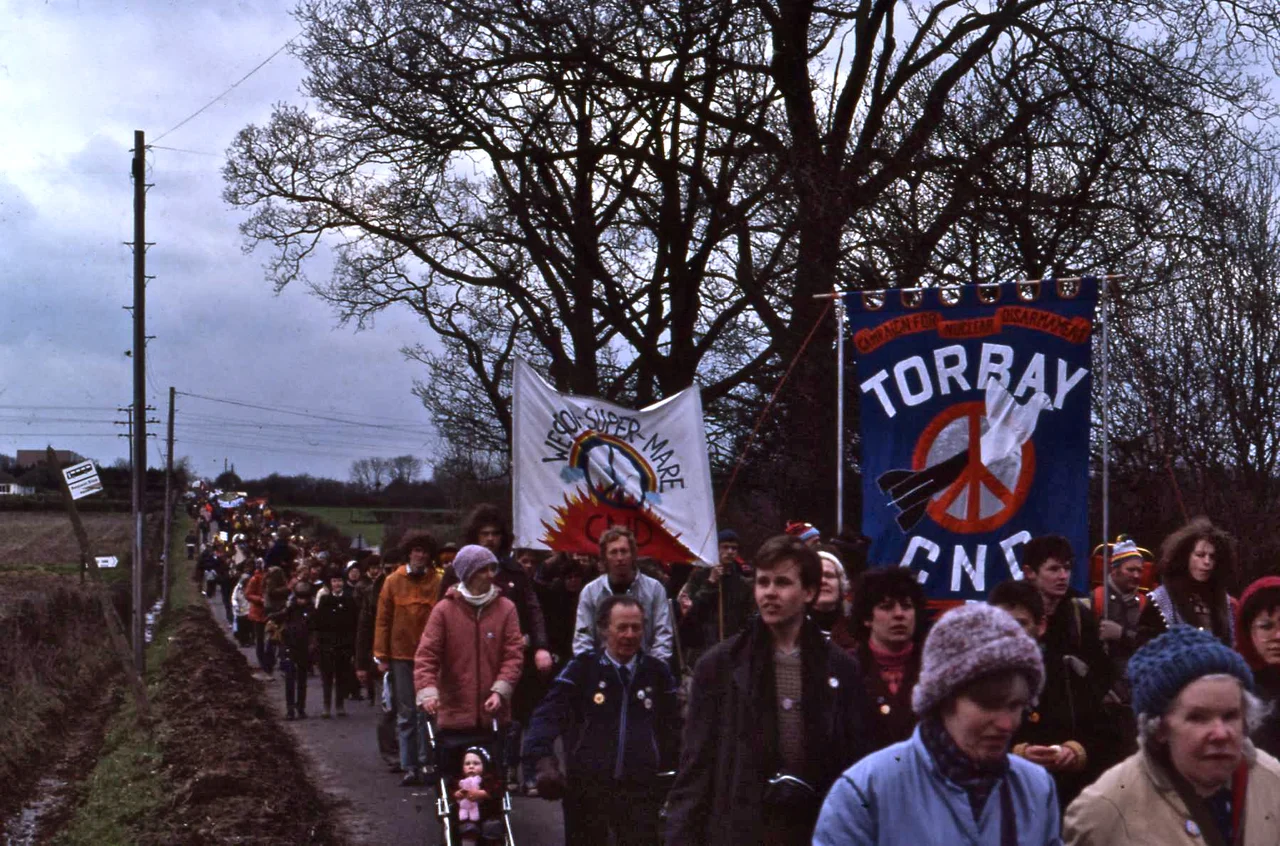
From 1980 a movement had been growing across British local government. Councils were declaring themselves 'nuclear-free zones' - symbolic gestures that committed them to opposing nuclear weapons and refusing to cooperate with nuclear infrastructure. The Greater London Council under Ken Livingstone became the most prominent example. Manchester City Council declared in 1980. Sheffield, Leeds, Liverpool, and many smaller authorities followed. By 1982 the policy had become unofficial Labour Party doctrine. When the Home Office wrote to 54 local authorities asking them to participate in Hard Rock, nineteen county councils - all Labour-run - plus the Greater London Council refused outright. Seven more said they would participate only partially. The CND, working with Scientists Against Nuclear Arms and the unofficial backing of the Labour National Executive Committee, produced an information pack supporting the refusing authorities. Peace camps were planned for the regional seats of government - the bunkers from which civil defence would be coordinated - including the famous Kelvedon Hatch Secret Nuclear Bunker that served as London's regional command. Protestors planned to identify the personnel who showed up.
Twelve Million Casualties
The journalist Duncan Campbell, working with Philip Steadman of the Open University and Stan Openshaw of Newcastle University, ran the Hard Rock attack scenario through their own model. They forecast 12 million deaths or serious injuries: 2 million from the bombs themselves, 5 million from fallout, and the rest from the collapse of food, water, medical care, and basic services in the weeks afterward. CND's own estimate was 12.5 million dead from 50 megatons. Their 'Hard Luck' counter-publication was a small piece of brilliant political theatre - publishing what the government would not, in numbers that were difficult to dispute. The exercise itself was postponed indefinitely in August 1982. The Conservative government blamed Labour's NEC for the collapse. In response, in 1983, it passed the Civil Defence (General Local Authority Functions) Regulations - a law compelling local authorities to take part in civil defence exercises. Defence Secretary Michael Heseltine established Defence Secretariat 19 to better explain the government's nuclear deterrence policy.
What the Cancellation Meant
The civil service proposed running Hard Rock again after the Conservatives' landslide victory in the 1983 general election. It never happened. Labour peer Willie Ross, Baron Ross of Marnock, claimed in the House of Lords that the Ministry of Defence was actually glad the exercise had been cancelled - because it would have exposed widespread inadequacies in local civil defence planning. A Home Office investigation in 1988 found that, even after the 1983 Regulations, local authorities were widely refusing to implement them. From 1986 British civil defence planning quietly transitioned away from large national exercises to a Planned Programme of Implementation at local level, shifting the focus from nuclear war to an 'all hazards' approach to civil emergencies. The Cold War ended four years later. Hard Rock had been the last major British nuclear civil defence exercise that was ever seriously planned - and it was killed not by nuclear weapons but by a network of county councils, peers, journalists, and academics who refused to play along. The coordinates assigned to this Wikipedia article fall on a hillside above Lough Foyle near Derry, one of the regional seats of government identified for the exercise; the actual planning headquarters of Hard Rock was the now-disused Kelvedon Hatch bunker in Essex.
From the Air
This article's coordinates fall near 55.040 N, 7.175 W, on the eastern shore of Lough Foyle just east of City of Derry Airport (EGAE). The nearest commercial airport is City of Derry itself; Belfast International (EGAA) lies sixty miles east-southeast. Several Hard Rock regional seats of government were located in Northern Ireland during the Cold War; the wider exercise spanned the entire United Kingdom. From altitude, the immediate area is rural, dominated by the broad expanse of Lough Foyle and the dunes of Magilligan Point to the north.
Nearby Stories
- Killowen Castle 2.7 km away
- Castledawson 11 km away
- Creeslough Explosion 11 km away
- German submarine U-218 12 km away
- Gortin 15 km away
- SS Devonian (1900) 22 km away
- St Patrick's Purgatory 28 km away
- Port Ellen Distillery 42 km away