
Hardenberg
After dark, in summer, a man in old clothes walks the streets of Hardenberg swinging a wooden clapper. It is theater now, the kind of thing tourist boards arrange, but the clapper is older than the country. The Klepperman was the medieval night watchman: fire spotter, town crier, neighbor with a noisemaker. Hardenberg kept him so long that the town named itself after the sound - Klepperstad, the city of the clapper. The watchman is gone. The nickname is not.
The Bishop's Hard Hill
The name is literal. In 1230, the bishop of Utrecht needed a strong castle to hold the eastern edge of his territory, and he chose a rise of high ground west of an older village called Nijenstede. He called the fortress Hardenberch - hard hill - and trusted the Vecht river to defend two sides while moats handled the rest. The previous bishop had been killed three years earlier at the Battle of Ane by a rebel from nearby Coevorden, and the new fortress was an answer to that humiliation. By 1354 a second bishop replaced the original castle with a stone oval, 125 by 60 meters, large enough that ordinary people drifted in from Nijenstede and lived inside the walls. In 1362 the town received city rights. The rebellion that had killed a bishop had, after a century, produced a city.
Vechtdal
The Vecht enters the Netherlands from Germany at Emlichheim, threads through Gramsbergen, and arrives at Hardenberg as a slow brown river curling through pasture. With Ommen and Dalfsen, Hardenberg shares the Vechtdal - the Vecht Valley - which is the kind of landscape Dutch cyclists drive hours to reach. Low water meadows. Pollard willows. Long bicycle paths that follow the river without quite touching it. The Pieterpad, the long walking route from Pieterburen on the Wadden Sea to the Sint-Pietersberg in Limburg, passes through here, and a steady current of hikers moves through town carrying small packs and large appetites. The river is the reason Hardenberg exists, and it is now also the reason people come back.
What the Walls Remember
The Hardenberg castle did not last. By the 15th century the border had moved, the defensive role had migrated to Coevorden, and in 1518 Bishop Philip of Burgundy ordered the whole fortress demolished. The Hoftekerk church stands on the spot now. But starting in 1959, archaeologists began uncovering sections of the old fortress wall, and chunks of it are preserved in the town center - low stone foundations that look almost domestic until you remember what they once supported. The town burned almost completely in 1497, was occupied in the Second World War, and lost its small Jewish community to the death camps. A synagogue stood here until 1948 and was demolished in 1980. Hardenberg's modern center is bright and unsentimental, but the bones underneath are very old.
What Came After the Klepperman
When the watchman's clapper was no longer needed, the town found other work. In the late 1950s a company called Wavin opened its main plant here and grew into a multinational producing plastic pipes - the unglamorous infrastructure of European plumbing. For decades it was the biggest employer in town. Three railway stations opened in 1905 link Hardenberg to Zwolle, Emmen, and Almelo along what locals call the Vechtdallijnen. Hardenberg has produced its share of athletes too: the rower Helen Tanger, an Olympic bronze medalist in 2004, was born here; Niek Kimmann from nearby Lutten took BMX gold at the Tokyo Olympics; and the football manager Arne Slot grew up in Bergentheim, just outside town.
The Sound the Town Kept
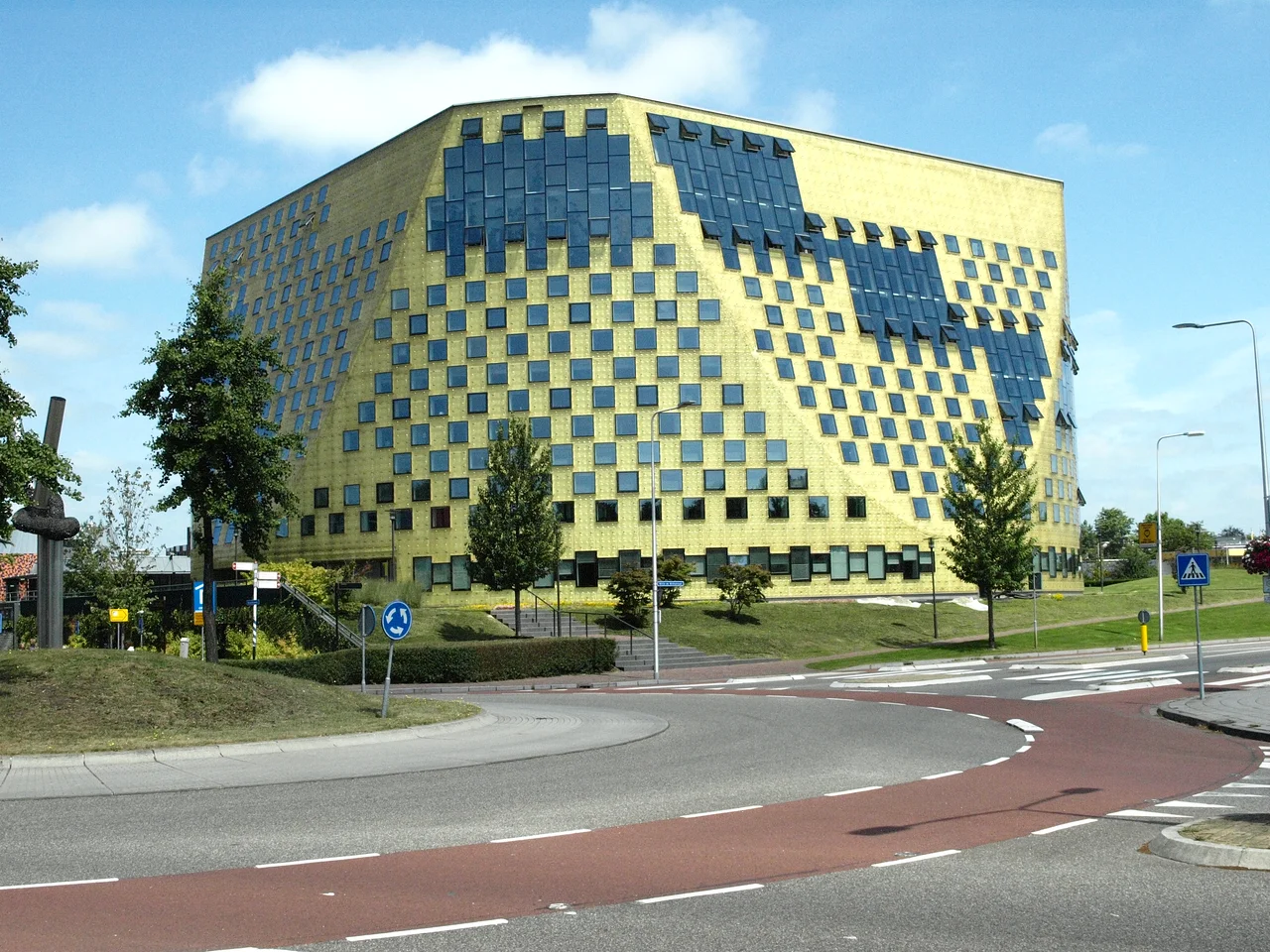
Hardenberg sits where the Netherlands runs out and Germany begins, a place that has been a frontier for almost a thousand years and is now, mostly, a comfortable Dutch town of about twenty thousand people. The four-day evening walk fills the streets in summer. A hot air balloon festival drifts color across the Vecht. The municipal building, finished in 2008, was famously voted the ugliest new building in the country by a construction magazine - a distinction the town wears with some humor. And in the warm months, the Klepperman still makes his rounds. He does not need to watch for fire anymore. He walks because the town long ago decided that the sound of a wooden clapper in the dark was worth keeping.
From the Air
Located at 52.58 N, 6.62 E in Overijssel, eastern Netherlands. The Vecht river is the easiest visual cue - a slow meander running roughly east-west through low farmland. The German border lies about 12 km east; Coevorden is 15 km northeast, Hoogeveen 25 km northwest. Nearest airports: Groningen Eelde (EHGG, 70 km north) and Munster-Osnabruck (EDDG, 75 km southeast). Typical maritime climate; expect cloud and haze over the lowlands in autumn and winter.
Nearby Stories
- Central European Hockey League 3.9 km away
- Sellingerbeetse 4 km away
- Twist, Germany 4.3 km away
- Drenthe 5.4 km away
- Sallandse Heuvelrug National Park 8.1 km away
- Nieuwe Toren, Kampen 11 km away
- Round House (Nunspeet, Netherlands) 12 km away
- Bad Bentheim 12 km away