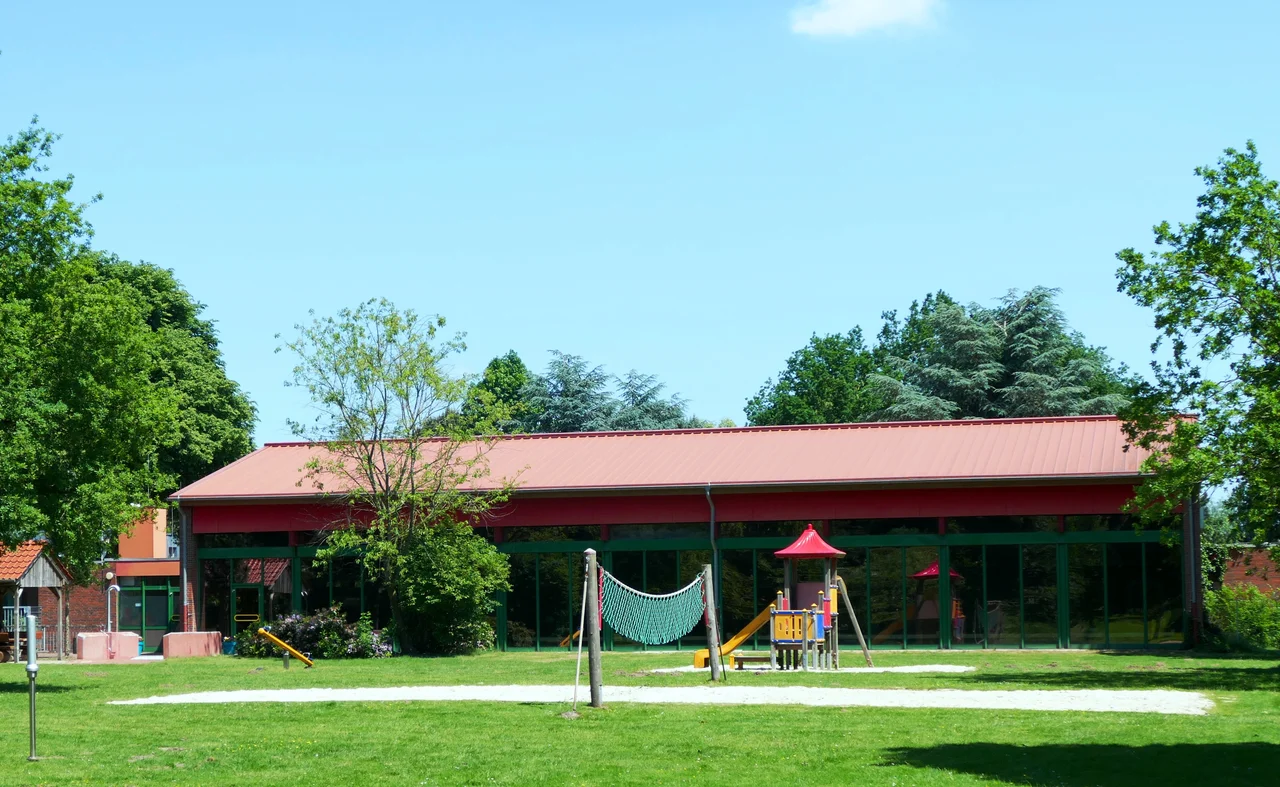

Twist, Germany
The name has nothing to do with the dance. In Low German a twist is a dispute, and the village called Twist sits on what was, for several centuries, a disputed border with the Dutch kingdom - a stretch of bog so featureless and so wet that drawing a line through it was a matter of decades of argument. Locals pronounce the name Tweest, not Twist, which throws off visitors expecting Chubby Checker. The settlement itself is young by German standards: the first farmers arrived in 1784, on the invitation of the Münster prince-bishop Max Franz, who had a bog to drain and tenants to find.
The German Texas
In the 1950s the surveyors found oil. Substantial deposits sat beneath the peat, and for the next four decades Twist became one of Germany's small but real petroleum towns. Pumpjacks - the slow nodding kind you see in the Permian Basin - dotted the fields between villages. A Dutch plastics company called Wavin opened a major production site to take advantage of the local feedstock. The combination of crude oil and natural gas extraction with downstream plastic manufacturing gave Twist a swagger it had never previously known. The locals took to calling it das deutsche Texas - the German Texas - though the scale was hilariously modest by Permian Basin standards. The pumpjacks are still there. The Erdöl-Erdgas-Museum in the town center displays the equipment and tells the story.
The Bog That Made Everything Possible
Before oil, Twist had peat. The Nord-Süd-Kanal, finished in the late nineteenth century, made systematic drainage of the bogs possible for the first time, and what had been waterlogged moss became, slowly, arable farmland. The same canal allowed peat to be barged out as fuel. The first settlers had been Heuerleute - tenant farmers - working ground so infertile that survival meant supplementing meager harvests with seasonal labor in the Netherlands. The arrival of organized drainage transformed everything. So did fertilizer, when it arrived in the early twentieth century. The bog that had been a barrier became, eventually, a resource. Today portions of it have been deliberately re-flooded as part of the Internationaler Naturpark Moor, a Dutch-German cross-border project to restore the peat ecosystem before it disappears entirely.
A Church Clock That Tells No Time
The Church of St. Franziskus, built in 1928-29 in the expressionist style by the architect Theo Burlage, has a spire with clock faces on three sides. Look up and you will notice they show no numbers. Instead, the top figure is an Iron Cross stamped with 1914 and 1918 - the duration of the First World War. The other 33 figures around the faces are name tags, one for each soldier killed in action from the villages of Schöningsdorf and Provinzialmoor. The clock does not tell the hour. It keeps the names visible. Inside the church, an altar crucifix designed by Wolfdietrich Stein rises five meters to fill the full height of the sanctuary. The whole building is a war memorial dressed as a parish church, built for a community still counting its losses a decade after the armistice.
Bifurcations
Recent research by the German onomastician Jürgen Udolph offers a different explanation for the name. He traces Twist to an old Germanic root twistel, meaning a bifurcation - a place where a stream splits in two, or where a settlement is divided from its neighbors. By this reading the name describes the geography itself: a separated settlement at the fork of waters. Both meanings - dispute and bifurcation - feel appropriate. Twist still sits at a frontier, and the village center is still genuinely separated from its scattered outlying settlements: Schöningsdorf with about 1,100 people, Rühlerfeld with 900, smaller numbers in Adorf, Hebelermeer, and Neuringe. The Heimathaus Twist in the center hosts blues and jazz concerts that draw audiences from across the region, including across the border from the Netherlands.
From the Air
Twist sits at 52.65 N, 7.09 E in the Emsland district, directly on the Dutch border. From the air the village is identifiable by the parallel ditches of the drained bog stretching for kilometers in all directions, and by occasional oil pumpjacks scattered across the fields. The A31 Autobahn passes just east of town; the Dutch A37 begins at the border crossing. Münster Osnabrück (EDDG) is the nearest commercial airport at about 90 km southeast. The Internationaler Naturpark Moor wetlands extend across the border into the Dutch province of Drenthe, and the boundary itself is not visible from altitude.
Nearby Stories
- COVID-19 protests in the Netherlands 3 km away
- Westerbork Transit Camp 4.9 km away
- Schüttorf 7.4 km away
- Sellingerbeetse 8.8 km away
- Hardenberg 8.8 km away
- British Occupation Zone in Germany 11 km away
- Friesoythe 15 km away
- Quakenbrück 15 km away