.JPG)
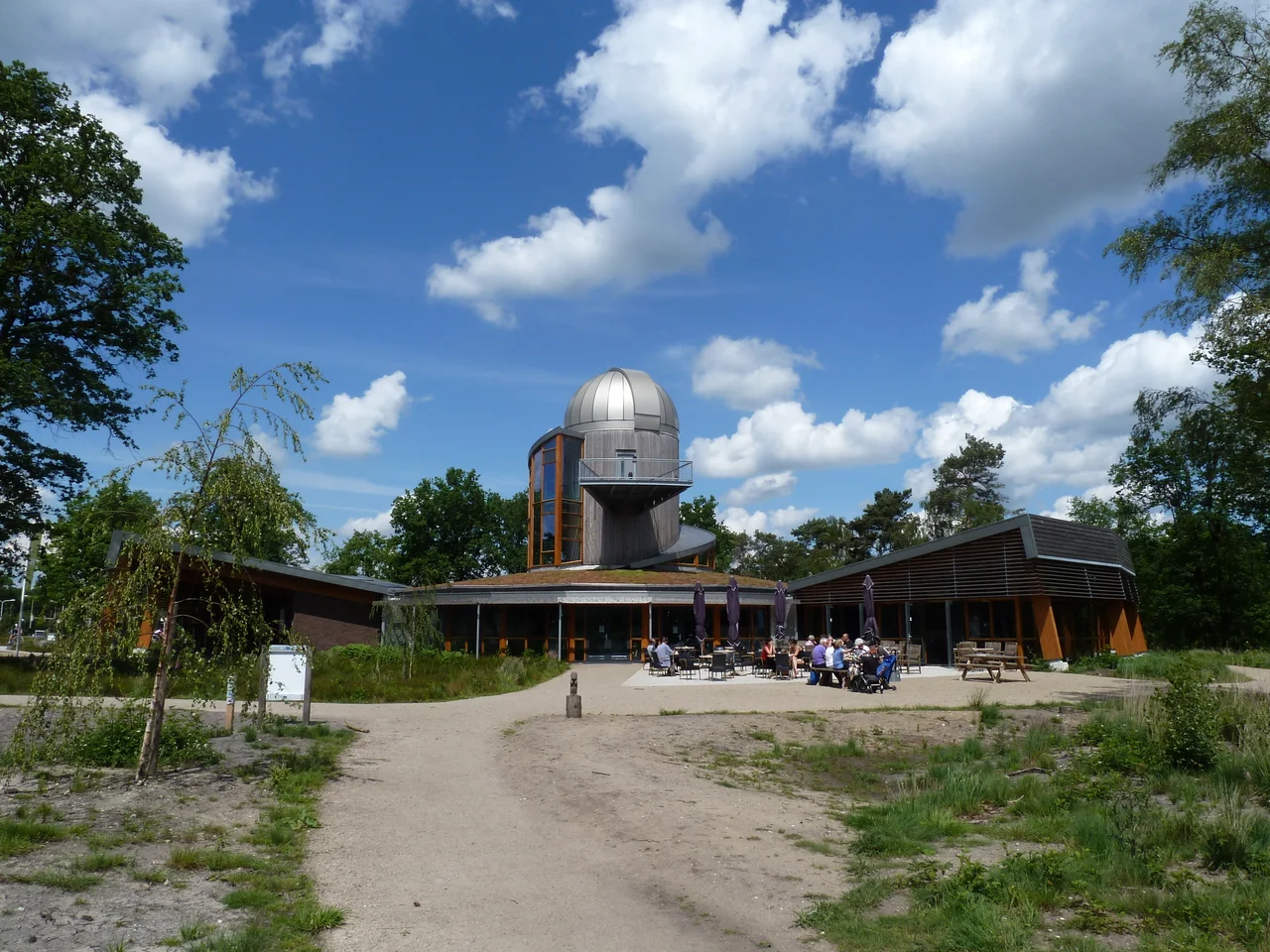
Sallandse Heuvelrug National Park
In a country whose highest natural point south of the Wadden barely tops 320 meters, a hill of 75.5 meters above sea level qualifies as something the Dutch are willing to call a mountain - and to give a name to. The Koningsbelt is one such mountain. The Sprengenberg is another. The Holterberg, the Haarlerberg, the Hellendoornse Berg. Together they form the Sallandse Heuvelrug, a long ridge of purple heather and Scots pine in the province of Overijssel that exists because, 150,000 years ago, a glacier shoved the local sand into a pile and then went home.
What the Ice Left
The ridge is a moraine, built during the Saalian glaciation when ice sheets reached this far south. Before they arrived, the Rhine and other rivers had laid down thick deposits of sand, gravel, and thinner clay layers across the region. The Saalian ice pushed those layers up into hills and gouged the valleys between them. The next glaciation, the Weichselian, never quite reached the Netherlands - the ice stalled in what is now the North Sea - but the cold permafrost at its edges shaped the landscape in another way. Wind-blown sand piled up against the frozen ground, and as the permafrost slowly thawed, it left behind the dry valleys that still seam the ridge today. By the time the Holocene warmed up 11,700 years ago, the bones of the Heuvelrug were already in place.
The Heath Is a Human Invention
Forests covered the ridge for most of the Holocene. Then the medieval population grew, and people started using the landscape the way people did. Trees came down for lumber. Sheep and goats grazed the cleared ground. Farmers cut the top layer of sod and carried it to their fields as fertilizer. By the late Middle Ages, what had been deep forest was open heath with sand drifts blowing across it - so much so that by the late 1800s, foresters began replanting Scots pine, Douglas fir, and larch to hold the soil down. In the late twentieth century, the pendulum swung again. Conservation managers have cleared back stretches of forest to restore the heath, because the heath itself is now part of the cultural heritage - and because of one bird.
The Last Korhoen
The black grouse - Lyrurus tetrix, Korhoen in Dutch - holds its courtship dance, called a lek, on open heath in the cold light of early morning. The males puff up their white tail coverts and make a sound somewhere between a coo and a bubbling rasp, and they have been doing it across northern Europe for as long as there has been northern Europe. They no longer do it anywhere else in the Netherlands. The Sallandse Heuvelrug holds the country's last breeding population, which is why the park's heath is managed so carefully - clipped, burned in patches, kept open against the slow advance of pine. The same heath supports the European nightjar, the European stonechat, and roughly eighty bird species that breed within the park. In the wetter hollows you can find common frogs, smooth and crested newts, and the slow worm in the dry uplands. Highland cattle and sheep do the trimming work the medieval farmers used to do.
What 75 Meters Buys You
Across 5,000 hectares - 2,700 of them inside the national park boundary south of the Nijverdal-Raalte road - the ridge is a small empire of footpaths and bike trails. The Dutch word for the experience is uitzicht, the view, and on the Heuvelrug the view is bigger than the elevation suggests. The horizon over central Overijssel curves gently rather than dropping behind a dike, and the air smells of resin and heather. Hikers and cyclists work the official routes between the visitor center on the N35 and outposts at Nijverdal, Holten, and Rijssen. Mountain bikers favor the sandier tracks. In winter the ridge does not become an alpine destination - the snow rarely lasts - but the trails take on a different quiet, and the pine canopy holds its color when the rest of the country has gone gray.
An Older Quiet
Two unexpected presences mark the modern park. One is the Canadian War Cemetery near Holten, where more than 1,300 Canadian soldiers killed in the final weeks of the Second World War lie under rows of white stones - a quiet field at the edge of the heath, oriented so the rising sun reaches each marker in turn. The other is the wolf. As wolves return to the Netherlands, sightings have been logged on the Sallandse Heuvelrug, though they do not yet hold territory here. The park's official advice is straightforward: keep your distance, and if a wolf approaches, scare it off. Dutch wolves are getting too comfortable around people, and on a small, densely settled ridge, that kind of comfort is what conservationists worry about most.
From the Air
The Sallandse Heuvelrug runs roughly north-south across central Overijssel, centered near 52.33 N, 6.42 E, between Nijverdal in the north and Holten in the south. Nearest airports: Twente Airport (EHTW) about 20 km east near Enschede, Lelystad (EHLE) about 50 km west, and Münster-Osnabrück (EDDG) further east in Germany. From low altitude on a clear day, the ridge is easy to identify - a long band of forest standing perhaps 40 to 75 meters above the surrounding flat farmland, with the broad purple heath fields of the Holterberg and Sprengenberg standing out in late summer when the heather is in bloom.
Nearby Stories
- Veluwezoom National Park 2.4 km away
- Stalag VI-C 3.8 km away
- Nieuwe Toren, Kampen 4.1 km away
- 2009-10 Eerste Divisie 6.1 km away
- Achterhoek 7.9 km away
- Hardenberg 8 km away
- Bad Bentheim 8.8 km away
- Gerleve Abbey 17 km away