
Harewood House
Edwin Lascelles laid the foundations of Harewood House in 1759, and the money came from sugar. His father Henry had purchased plantations in the West Indies in the late seventeenth century, and the income from enslaved labour in Barbados built the country house that Edwin then commissioned from John Carr of York. Robert Adam designed the interiors. Capability Brown shaped the thousand-acre landscape. The Lascelles still live here. In 2007 the actor David Harewood, whose ancestors were among those the family enslaved, came to interview the present earl on camera. In 2023 a portrait of David Harewood was commissioned for the walls of the house. The story of Harewood is being told more honestly now than it has been in 250 years.
Two Estates, One House
What is now Harewood was assembled from two adjoining estates: Harewood Castle, the medieval seat of the Gascoignes and then the Ryther family, and Gawthorpe, the neighbouring manor whose hall sat in the valley below. The Wentworths of Gawthorpe bought out the Ryther interest, the merged estate passed to the London merchant Sir John Cutler in 1696, and from his Boulter heirs the Lascelles acquired it in 1721. Within forty years Edwin had decided that Gawthorpe Hall was not grand enough, and he employed John Carr, an architect already busy with the country houses of Yorkshire's great families, to design him a new one further up the slope. The foundations were laid in 1759, and the house was largely complete by 1765.
What Sugar Built
Two hundred and fifty years on, Harewood is honest about the source of its wealth. The Lascelles family acknowledge in their own published statements that the estate was funded by plantations worked by enslaved African people in Barbados and elsewhere in the Caribbean. The house, the park, the Adam ceilings, the Reynolds and Lawrence portraits in the gallery, the Italian Renaissance paintings, the Capability Brown lake and cascade: all are the material legacy of that violence. David Lascelles, the present earl, has spoken publicly about it since at least 2005. The 2007 BBC encounter between him and the actor David Harewood, whose family name and ancestry trace back to the people the Earls of Harewood enslaved, was one of the more searching conversations a country house has ever hosted on its own grounds. The commissioned portrait of David Harewood, hung in March 2023, makes the reckoning visible inside the house itself.
Carr, Adam, Brown
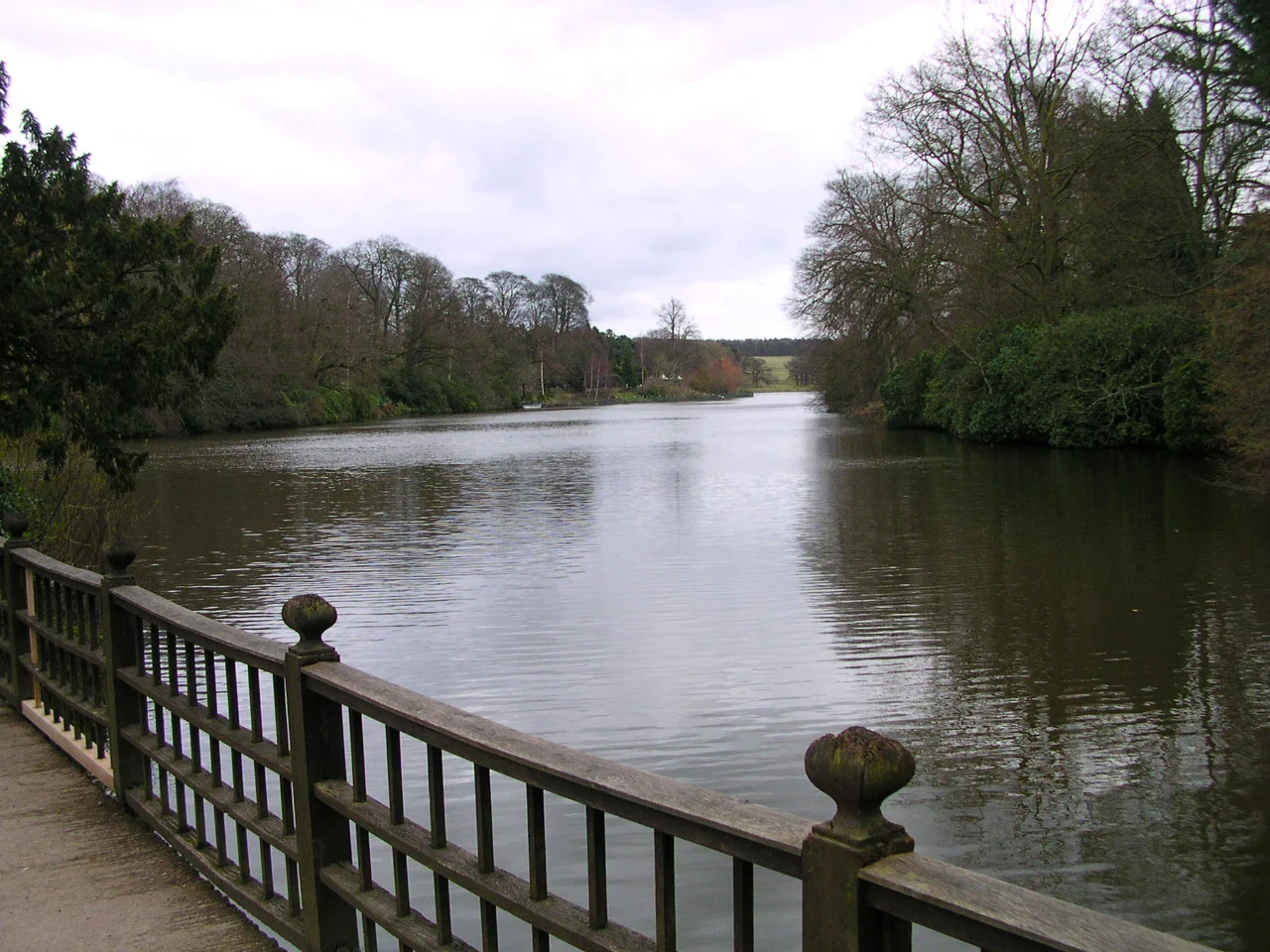
The three names that shaped 18th-century English taste all worked here at the same time. John Carr designed the exterior and supervised the build. Robert Adam revised some of Carr's elevations and then took on the interiors, his designs approved in 1765: the Entrance Hall, the Yellow Drawing Room, the Cinnamon Drawing Room, the Gallery, the State Bedroom. Lancelot Brown, called Capability for his habit of telling clients their grounds had great capabilities, laid out the thousand-acre landscape, sweeping the formal gardens away and replacing them with the studied informality that became the English park. The lake, the cascade below it, the long views across to Almscliffe Crag, are all his.
The 20th and 21st Centuries
Princess Mary, the Princess Royal and only daughter of George V, married into the family and moved permanently to Harewood by the late 1940s. The house was opened to the public, and the grounds hosted concerts connected with the Yorkshire Symphony Orchestra and the Leeds Musical Festival. On 28 March 1965 the Princess Royal suffered a fatal heart attack walking the grounds. Her son George, the 7th Earl, was a serious opera man, director of the Royal Opera House and then the English National Opera, and he steered the house toward the role it still plays today: visitor attraction, gallery for both Italian masters and modern British art, working family home. Since 1996 part of the estate has played the village of Emmerdale for ITV. Elton John, Westlife and the production teams of Downton Abbey, Victoria and Mary Berry have all come through the gates. Harewood is many things now. It is also, still, the seat of David Lascelles, the 8th Earl, who lives in the house his ancestors built.
From the Air
Harewood House sits at 53.90°N, 1.53°W in the Wharfe valley about 8 miles north of Leeds. From above, look for the long pale facade of the house above its terraced parterre, with Capability Brown's lake curving south of the building and All Saints' Church and the ruins of Harewood Castle to the east. Leeds Bradford Airport (EGNM/LBA) is 6 miles southwest. The A61 Leeds-Harrogate road skirts the south edge of the park.
Nearby Stories
- Hovingham Hall 6 km away
- RAF Elvington 7.6 km away
- Battle of Hatfield Chase 9.1 km away
- Wentworth Castle 11 km away
- Murder of Suzanne Capper 12 km away
- Pendle Hill 13 km away
- RAF Topcliffe 15 km away
- Hawes Junction Rail Crash 26 km away