
Hayes, Hillingdon
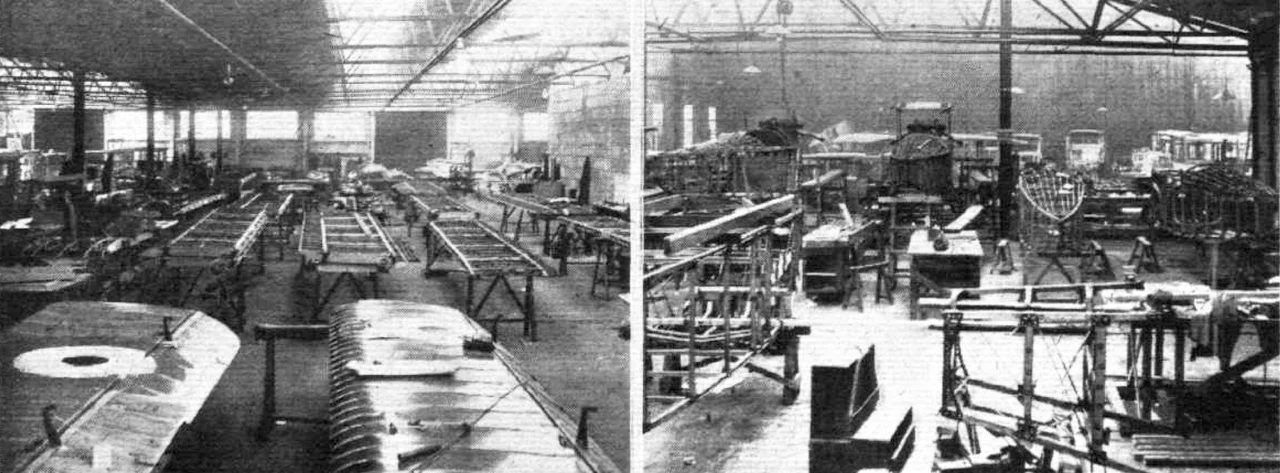
Turn over any Beatles LP made in Britain before 1979, look at the back, and you will find a small line of type: 'Manufactured in England by The Gramophone Co. Ltd., Hayes, Middlesex.' From the late 1920s until the vinyl plant closed, every Beatles single, every album, every Sgt. Pepper pressed for the British market - and most pressed for the world - came out of an EMI factory in this west London suburb thirteen miles from Charing Cross. The factory took up most of Blyth Road. Decca Records was around the corner. Marshall amplifiers started a few streets away in 1964. For most of the twentieth century, Hayes was where British recorded sound was made. Today the EMI buildings are repurposed as the Old Vinyl Factory complex, with a gold-disc installation in the town centre marking the fiftieth anniversary of Sgt. Pepper, manufactured here on 1 June 1967.
Brushwood by the Canal
The name Hayes comes from the Old English hǣs - 'land overgrown with brushwood' - and the Domesday Book of 1086 spells it Hesa. For seven hundred years up to 1546, Hayes belonged to the Archbishop of Canterbury, an estate granted to him by the Mercian royal family in some long-forgotten transaction. Henry VIII took the manor from Thomas Cranmer in 1546, the same year he was building Hampton Court. St Mary's Church, on the small rise the village once clustered around, contains a twelfth-century font and a Saint Christopher mural painted on the north wall in the fourteenth century, faded now but still visible. The town's transformation happened in the 1860s, when the Grand Junction Canal (later the Grand Union) and the Great Western Railway both passed within yards of one another at Hayes & Harlington station. The combination of cheap water transport and fast rail to Paddington made Hayes a magnet for industry, and the brushwood gave way to factories.
The Gramophone Company
In 1907 the Gramophone Company, the British arm of the firm whose 'His Master's Voice' trademark of Nipper the dog listening to a phonograph horn had just been adopted, broke ground for a new factory on Blyth Road. Dame Nellie Melba laid the foundation stone. The company grew into HMV, merged with Columbia Graphophone in 1931 to form EMI, and by the 1930s the Hayes complex was pressing records by the million. In the Central Research Laboratories, known as CRL, Isaac Shoenberg developed in 1934 the 405-line all-electronic television system that the BBC began broadcasting in 1936. Alan Blumlein did his work here on binaural recording and stereophonic sound, including the films 'Trains at Hayes Station' (1935) and 'Walking and Talking,' both demonstrations of stereo on film made years before the rest of the world thought to try. Blumlein and his team also worked on the H2S airborne radar that gave RAF Bomber Command its night-bombing capability from 1943. Blumlein himself was killed in June 1942 in a test-flight crash.
George Orwell on the Uxbridge Road
Eric Arthur Blair came to Hayes in April 1932 as a schoolmaster at The Hawthorns High School for Boys on Church Road. He was twenty-eight, broke, and looking for time to write. In Hayes he finished a manuscript he had been calling 'Days in London and Paris' and renamed it 'Down and Out in Paris and London.' He chose, for the title page, a new name. George Orwell - George for England, Orwell for the Suffolk river he loved. The book came out in January 1933 under that name. He lived in Hayes another year, teaching by day, writing by night. He thought the place 'one of the most godforsaken places I have ever struck' - he disguised it as West Bletchley in 'Coming Up for Air' and as Southbridge in 'A Clergyman's Daughter' - but he wrote three books in or about Hayes before he was done. The Hawthorns school later became the Fountain House Hotel; the building survived, with its blue plaque, until 2022.
7 July 1944
On Friday 7 July 1944, at 14:59 local time, a German V-1 flying bomb came down at the main entrance to a surface air-raid shelter at the Gramophone Company factory on Blyth Road. The concrete roof of the shelter collapsed. Twenty-four people were killed instantly. Twenty-one more were seriously injured; some died later, bringing the death toll to thirty-seven. Most were factory workers. Some of the badly injured were rescued from the emergency exit at the rear of the shelter; others were trapped for hours. Twelve of the victims are buried together in Cherry Lane Cemetery, in a mass grave. The original bomb census form, filled out by hand by an air-raid warden that afternoon, is held now in the National Archives. The doodlebugs that summer killed more than six thousand Londoners between June and October. Hayes lost its share, in the place where everyone in the town worked.
Marshall and the Music
In June 1964, drum-shop owner Jim Marshall opened a small factory in Silverdale Road, Hayes, with fifteen employees and 5,000 square feet of floor space. He had been building guitar amplifiers in the back of his shop in Hanwell because the American Fender amps that British rock guitarists wanted were too expensive and too clean-sounding. Marshall's amps - heavier, dirtier, with more distortion when you pushed them - became the sound of British rock. The Who, Cream, Hendrix, Led Zeppelin all played through them. The factory expanded; the famous wall of Marshall stacks behind every late-1960s and 1970s rock band came out of this building. Two streets away, the Beatles' records were being pressed. Cream played live at Botwell House Catholic church in September 1966. The Who played there in June 1965. Some of the most influential British rock of the twentieth century was made or pressed within half a mile of Hayes & Harlington station. The musicians knew it. They came back.
From the Air
Hayes sits at 51.51°N, 0.42°W, in the London Borough of Hillingdon, west London, about thirteen miles west of central London. From altitude, Hayes is immediately adjacent to the north-east boundary of London Heathrow Airport - the airport runways and terminals are visible to the south, the Hayes urban area stretches north of the M4 motorway. Key visual features: the Grand Union Canal runs east-west through the town centre, the Great Western Main Line railway parallels the canal slightly to the south, the M4 motorway runs along the southern edge, and the Old Vinyl Factory complex (the former EMI buildings on Blyth Road) is in the town centre near the railway station. Because Hayes lies directly under the Heathrow approach paths to Runways 27L/27R, expect heavy commercial traffic at 1,500 to 4,000 feet AGL during westerly operations. Class A controlled airspace begins at 2,500 feet AAL in the London CTR. Nearest GA airports: Denham (EGLD) 8 nautical miles north-west, White Waltham (EGLM) 14 nautical miles west, Booker / Wycombe Air Park (EGTB) 16 nautical miles north-west. Recommended viewing altitude is via clearance only.
Nearby Stories
- Woking Palace 2.7 km away
- Wanstead Roman Villa 3.9 km away
- River Lea 7.6 km away
- Waytemore Castle 11 km away
- Sevenoaks 14 km away
- Abingdon-on-Thames 18 km away
- Death of Harry Dunn 19 km away
- Highclere Castle 21 km away