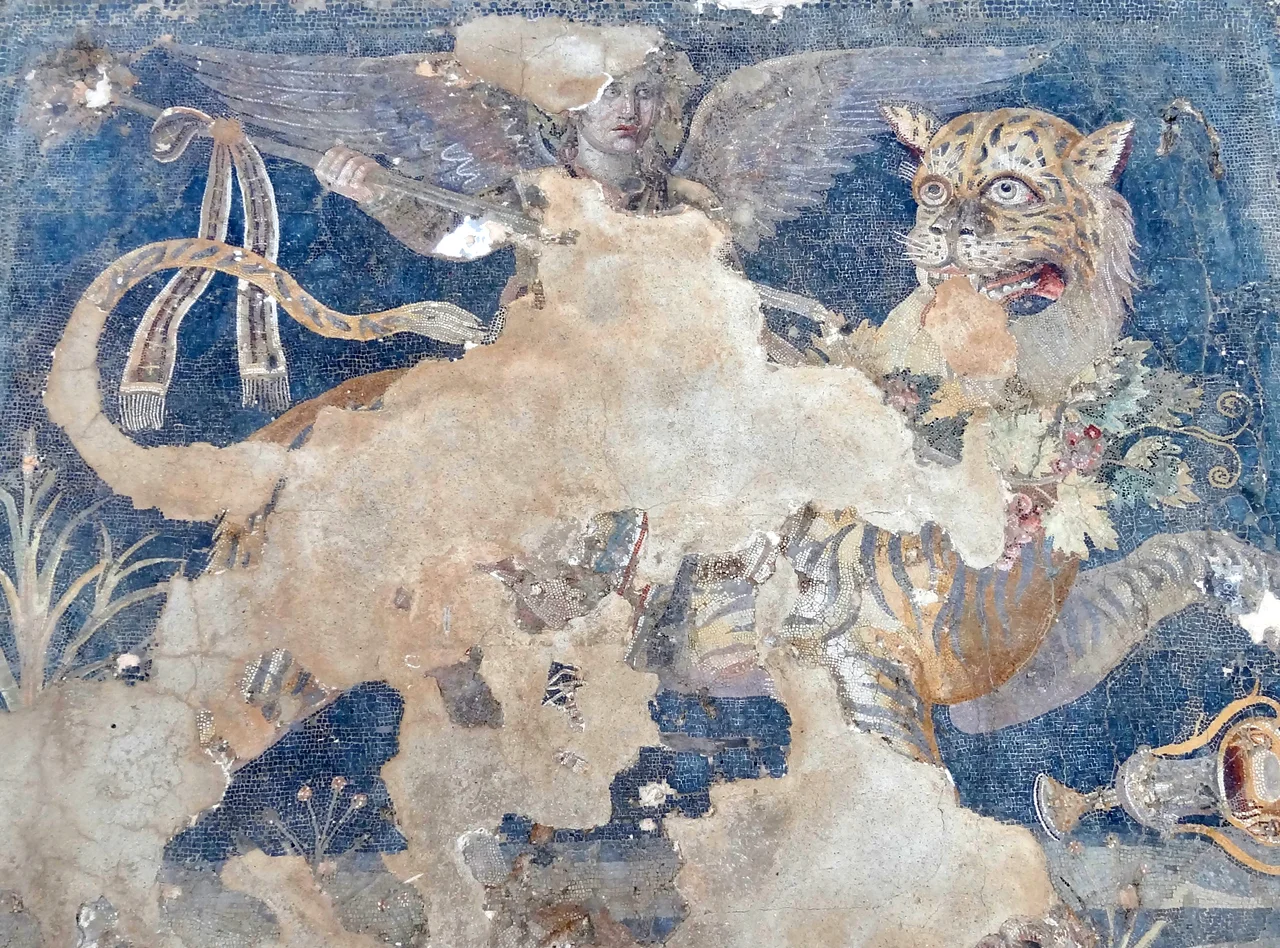

Hellenistic Greece
Alexander the Great died in Babylon in 323 BC, aged thirty-two, without naming a successor. His generals looked at each other across the body of the man who had conquered the world, and then, over the next decades, tried to carve that world up among themselves. The wars of the Diadochi — the Successors — lasted nearly fifty years and produced a new political order stretching from Egypt to the edge of India. In the middle of all this, the old Greek city-states of the mainland went on existing. Athens still philosophized; Sparta still refused to join anyone; Corinth sat at its strategic crossroads. But the axis of power had shifted decisively northward and eastward. The age that followed Alexander's death — the Hellenistic period — was one of the most culturally productive and politically turbulent in Greek history.
The World After Alexander
Alexander's conquests had done something irreversible to the Greek imagination. The petty wars between city-states — Athens against Sparta, Thebes against Corinth — suddenly seemed small when set against an empire that ran from the Adriatic to the Indus. Ambitious young Greeks emigrated by the tens of thousands to the new cities Alexander's successors were founding: Alexandria in Egypt, Antioch in Syria, Seleucia on the Tigris, and dozens more. Many traveled as far as what are now Afghanistan and Pakistan, where Greek-speaking kingdoms — the Greco-Bactrian Kingdom and the Indo-Greek Kingdom — survived until the end of the first century BC. The cities left behind on the Greek mainland did not disappear, but they had lost their starring role. Athens remained the largest, wealthiest, and most intellectually vibrant city in the Greek world — the city that gave rise to Stoicism and Epicureanism, to Menander's comedies and Euclid's geometry. It was also, increasingly, a city that needed powerful patrons to survive.
Leagues, Kings, and the Dance of Power
Without a single dominant Greek power, the mainland organized itself into leagues. The Achaean League eventually encompassed most of the Peloponnese. The Aetolian League expanded into central Greece, including Phocis. These federations were genuine experiments in collective governance — councils of city representatives, assemblies of citizens, shared foreign policy — and they were capable of real military achievement. The Aetolian League defeated a Celtic invasion of Greece at Delphi in the early third century BC. But the city-states and their leagues were perpetually manipulated by the larger Hellenistic monarchies. Macedonia under the Antigonid dynasty kept garrisons in key Greek cities. Egypt's Ptolemaic rulers funded anti-Macedonian factions in Athens to weaken their rivals. When one power rose, the others subsidized resistance. Philip V of Macedon, the last Macedonian king with both the talent and the opportunity to unite Greece, was called "the darling of Hellas" — and then squandered his position by forming an alliance with Carthage at exactly the moment Rome was looking for a pretext to intervene.
The Shadow from the West
Rome entered Greek affairs reluctantly and then never left. The First Macedonian War broke out in 212 BC, inconclusive but ominous. The Second, in 198 BC, ended in 197 BC with Philip V's crushing defeat at Cynoscephalae at the hands of the Roman proconsul Titus Quinctius Flamininus — a man who happened to admire Greek culture and spared the cities he could have destroyed. At the Isthmian Games of 196 BC, Flamininus declared all Greek cities free. The crowd erupted. But the freedom was a Roman gift, which meant it was a Roman loan. All cities except Rhodes were enrolled in a new league that Rome ultimately controlled; democracies were replaced by oligarchies friendly to Rome. When the Seleucid king Antiochus III invaded Greece with 10,000 men in 192 BC, hoping to be welcomed as a liberator, the Romans routed him at Thermopylae in 191 BC — the same pass where Leonidas had held the Persians three centuries earlier. Rome had become the arbiter of the Greek world without quite intending to.
The End of Macedon and the Fall of Corinth
The final reckoning came in stages. In 168 BC, the Roman general Lucius Aemilius Paullus crushed the Macedonian army at Pydna, captured King Perseus, broke the kingdom into four client states, and punished every Greek city that had offered even rhetorical support to the losing side. Macedon rebelled under an adventurer named Andriscus in 149 BC, was defeated, and became Rome's first Greek province the following year. Then Rome demanded the dissolution of the Achaean League — the last significant center of Greek independence. The Achaeans refused. Feeling they had nothing left to lose, they declared war. Greek cities rallied to them; enslaved people were freed to fight. It made no difference. In 146 BC the Roman consul Lucius Mummius defeated the Achaean forces, marched to Corinth — the strategic city at the isthmus, one of the wealthiest in the ancient world — and razed it to the ground. The men were killed; the women and children were enslaved; the art was shipped to Rome. The Greek peninsula became a Roman protectorate. Three centuries of Hellenistic struggle ended not in unification but in submission.
What Hellenism Left Behind
To focus only on the military losses is to miss what the Hellenistic age actually accomplished. Greek became the common language of an enormous swath of the world, from Egypt to central Asia — a lingua franca that allowed science, philosophy, and literature to travel across political boundaries. Alexandria's Library assembled the largest collection of texts the ancient world had ever seen. Euclid systematized geometry; Archimedes worked out the principles of levers and buoyancy; Hipparchus mapped the stars. The Stoic school founded in Athens spread across the Mediterranean and shaped Roman thought profoundly. Greek art, already brilliant in the classical period, became more emotionally complex and technically ambitious — the Winged Victory of Samothrace, the Laocoön, the portraits of real individuals rather than idealized types. When Rome absorbed Greece in 146 BC, it inherited all of this. The political independence of the city-states ended. The culture did not. If anything, it accelerated.
From the Air
Hellenistic Greece is centered on the Greek mainland and particularly on Athens, Corinth, and the Peloponnese — the heartland of the city-states that lived and competed through this era. Coordinates: 38.50°N, 23.00°E for central Greece. The isthmus of Corinth, the narrow land bridge connecting mainland Greece to the Peloponnese, is clearly visible from altitude as a thin neck of land between the Gulf of Corinth to the west and the Saronic Gulf to the east — strategically crucial in antiquity and dramatically recognizable from the air today. The nearest major airport is Athens International (LGAV), Eleftherios Venizelos, at 37.936°N, 23.944°E. Approach from the northwest at 6,000 feet traces the route ancient armies would have taken down from Macedonia through the plains of Boeotia toward Athens. The ancient battlefield at Thermopylae, where both Leonidas and the Romans stopped invaders centuries apart, lies approximately 180 km north-northwest of Athens near the modern town of Lamia.
Nearby Stories
- Battle of Alamana 3.6 km away
- Free and Real 5.7 km away
- Agios Thomas Tanagras 5.7 km away
- Pythian Games 11 km away
- Thespiae 12 km away
- Euripus Strait 14 km away
- French Cruiser Châteaurenault (1898) 17 km away
- Skopelos 32 km away