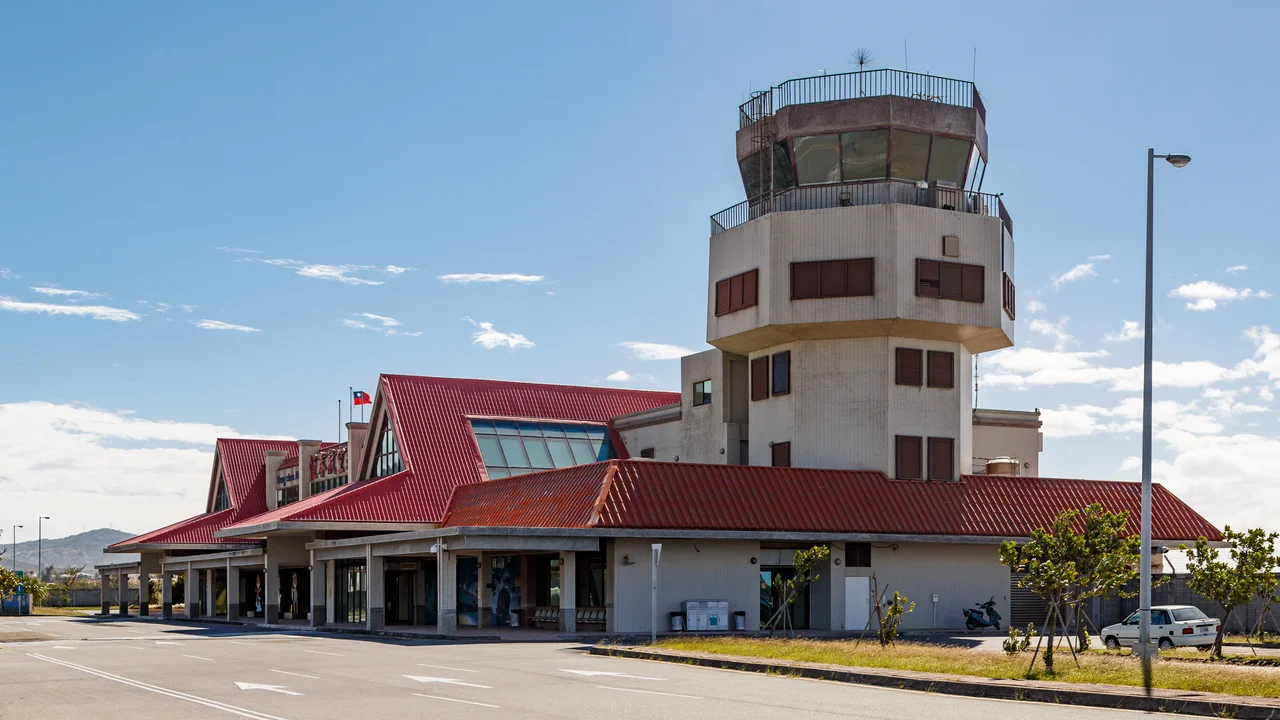

Hengchun
A Qing dynasty viceroy rode through the southernmost corner of Taiwan in 1875 and noticed something the locals already knew: the crops never browned, the air never turned cold, the seasons barely seemed to change. He called the place Hengchun — Always Spring — before he left, and the name has stuck ever since. That quiet observation turned into a proper noun that now greets visitors to Taiwan's most tropical township, a place where the thermometer rarely dips below 18 degrees Celsius even in January and where the ocean surrounds you on three sides before you've even unpacked.
A Name Older Than the Walls
Before viceroy Shen Baozhen renamed it, the settlement was called Longkiau — a word borrowed from the Paiwan people who had lived on this peninsula long before any colonial power arrived. The Dutch knew it as Lonkjouw; American sailors knew it as a place of danger after the Rover Incident of the 1860s, when shipwrecked men were killed by local tribes. That incident, and the subsequent 1871 Mudan Incident in which Ryukyuan sailors met a similar fate, brought enough foreign pressure on the Qing Empire that Shen Baozhen was dispatched to bring order and build institutions. He came, he observed, he renamed. The new county seat he ordered built around a Paiwan village south of old Longkiau would be called Hengchun, and it would be fortified properly — walls, gates, and all.
The Walls That Refused to Fall
Construction of the walled town began in 1875, the first year of the Guangxu Era, and was completed in 1879. Four gates faced the cardinal directions — north, east, south, and west — and a moat ringed the outer walls for a total circumference of about 2,550 meters, confirmed by an official survey in 1988. Today Hengchun Old Town is one of the best-preserved walled settlements in Taiwan. About half of the original wall still stands, and all four gates remain intact. Walking through the south gate in the late afternoon, when the stonework catches the low sun and the air smells faintly of the sea, it is easy to forget that the town behind you fills with tour buses on weekends. A magnitude 7.0–7.2 earthquake struck about 30 kilometers southwest of Hengchun on December 26, 2006 — the strongest in a century — and damaged fifteen of the historic buildings in the center. The walls held.
Gateway to the South
Hengchun is the entry point to Kenting National Park, the southernmost national park in Taiwan, and the commercial pulse of the Hengchun Peninsula. On weekday mornings the old town has a quiet, lived-in quality: vegetable stalls near the gates, schoolchildren on bicycles, elderly residents doing tai chi in the shade of the old wall. By Friday evening the picture changes completely. Kenting's main strip, a few kilometers to the south, transforms into a sprawling night market, and the roads through Hengchun back up with cars from Taipei and Kaohsiung. Tourism here runs hot from April through October, when the beaches are warm and clear. In winter the peninsula stays mild enough to draw people escaping the grey north — Hengchun in January is warmer at night than Pingtung City during the day.
Cinema and the Southern Tip
Hengchun gained an unexpected kind of fame in 2008 when the film Cape No. 7 opened across Taiwan. The movie, set largely in and around the town, became the highest-grossing Taiwanese film in the country's cinema history at the time of its release. The story — a young musician, old love letters, a cross-cultural village band — made Hengchun feel like more than a stopover on the way to the beach. The film's protagonist, Aga, lives in a house that became a pilgrimage site for fans. Hengchun already had the gates and the tropical air. After Cape No. 7, it had a kind of cinematic identity that other Taiwanese beach towns lacked.
Always Spring
The climate that gave Hengchun its name is real. Average monthly temperatures range from 21 to 28 degrees Celsius, with ocean breezes that keep the daytime highs from getting as brutal as they would inland. The peninsula sits at the convergence of the Taiwan Strait and the Philippine Sea, and the result is a place where palm trees grow at the roadside and tropical rainforest covers the hills. Strong katabatic winds can sweep down from the mountains, particularly in winter, rattling shop signs and sending plastic chairs skidding across restaurant terraces. But the cold fronts that chill the rest of Taiwan lose their edge here, and the sun usually reappears within hours. Temperatures drop below 15 degrees Celsius roughly once every three years, an event that locals apparently still talk about afterward.
From the Air
Hengchun sits at approximately 22.00°N, 120.75°E at the very southern tip of Taiwan's main island. The four ancient gates of Hengchun Old Town are visible from low altitude — the walled enclosure forms a rough square in the center of the township. The Eluanbi Lighthouse at Cape Eluanbi is a navigation landmark roughly 9 kilometers to the southeast. The nearest major airport is RCKH (Kaohsiung International), approximately 75 kilometers to the north. Approach from the north along Highway 26 and the coastline becomes visible on both sides as the peninsula narrows. Recommended viewing altitude: 3,000–5,000 feet for the full peninsula perspective, or low and slow along the coast for the gate structures.
Nearby Stories
- Fangliao 18 km away
- Orchid Island 25 km away
- Zhaori Hot Spring 41 km away
- Ten Drum Rende Creative Park 69 km away
- Barclay Memorial Park 102 km away
- Mavulis Island 102 km away
- 1991 Eruption of Mount Pinatubo 741 km away
- Scarborough Shoal 780 km away