
Hetman National Nature Park
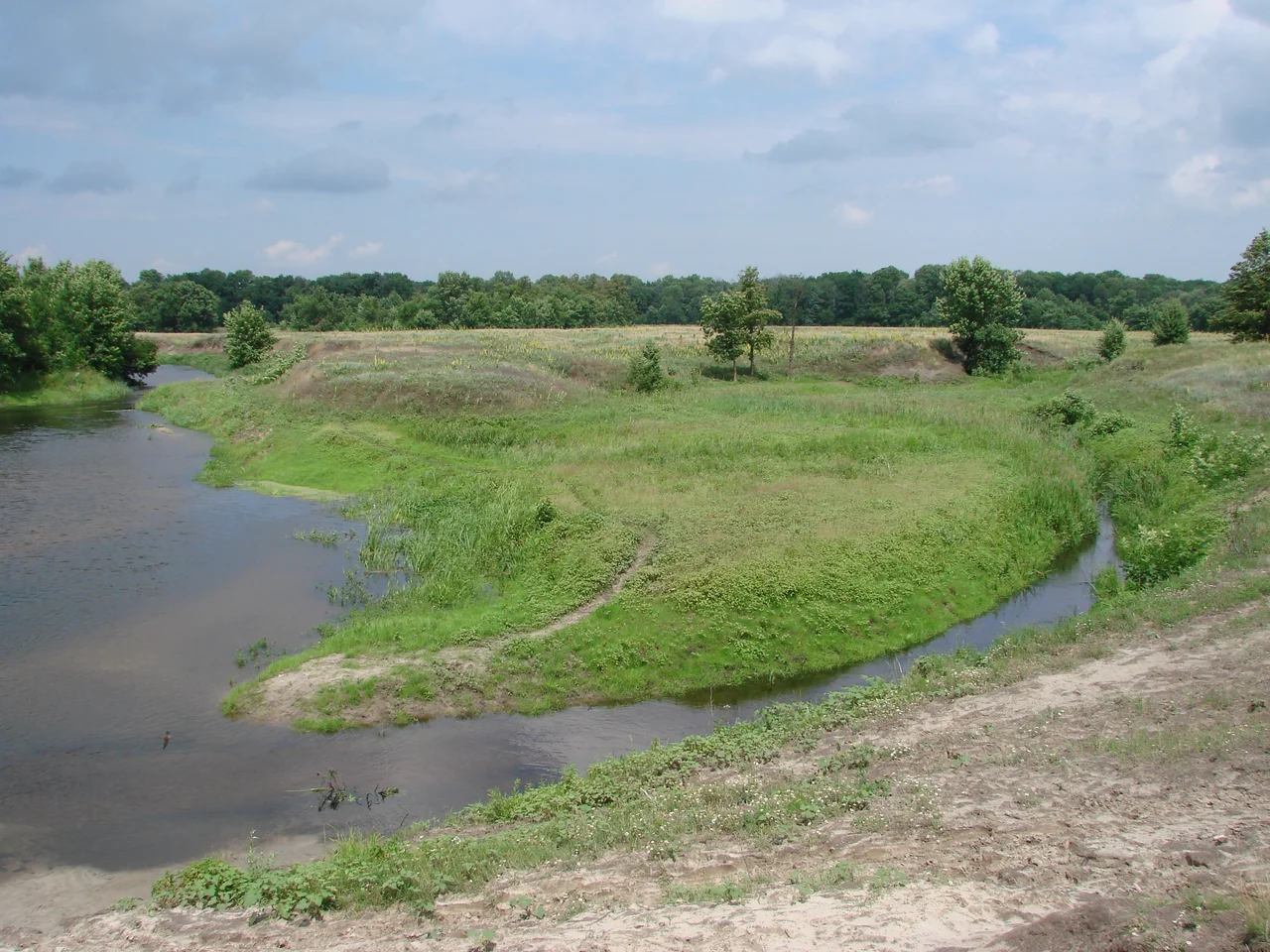
The park is shaped less like a rectangle than like a river itself. Instead of guarding a mountain or a lake, Hetman National Nature Park follows the Vorskla River for all 122 kilometers of its run through Ukraine's Sumy Oblast, hugging the water's right bank as it curls west and south from the Russian border. Walk any stretch of it and you are never far from moving water, floodplain willows, and the soft, spongy ground where the river spills over each spring. The name reaches back to the Cossack Hetmans who once governed these lands, and the landscape they knew, a mosaic of oak woods and open grass, survives here in one of its last unbroken corridors.
A Park You Follow, Not Enter
Most national parks have a gate and a boundary you cross. Hetman has a current. Created on April 27, 2009, it was designed to preserve the floodplains and river terraces of the Left Bank forest-steppe, a landscape that once stretched broadly across this part of Ukraine and has since been carved up by farms, roads, and villages. The park threads between them, breaking briefly where a bridge or a settlement interrupts the water, then resuming downstream. The terrain is mostly flat, cut here and there by low hills and ravines. This is not wilderness in the dramatic sense. It is something rarer in eastern Europe: a working river valley left intact enough that its native web of life still holds together, from the water's edge up onto the dry terraces above.
The Quiet Kingdom of Fungi
The trees announce themselves first. Oak, linden, ash, aspen, willow, cherry, pine, and birch crowd the banks and terraces, a forest-steppe blend of woodland and grassland found in a band that runs from central Ukraine all the way to the Ural Mountains. But the park's real specialty grows lower and stranger. Hetman is unusually rich in fungi, and among the many species of larger mushrooms recorded here, several are scarce enough to appear in the Red Book of Ukraine, the national register of threatened life. To find them you look not up at the canopy but down, into leaf litter and onto fallen logs, where coral-shaped and antler-like fruiting bodies push up in the damp shade. It is a reminder that a river valley's biodiversity is measured not only in birds and trees but in the humble, essential organisms breaking everything down and feeding it back.
Continental Seasons on the Water
The Vorskla valley lives by a humid continental rhythm, the kind of climate that swings hard between seasons and even between day and night. Summers here are mild and green; winters arrive cold and snowy, sheeting the floodplain in white and freezing the shallows at the river's edge. That seasonal extremity shapes everything visitors experience. Spring floods recharge the wetlands and set the willows leafing; summer opens the hiking trails and the river to kayaks; autumn is prime mushroom season in the damp woods; winter empties the park into a hushed monochrome. For those who come, there are marked hiking paths, guided ecological walks, and kayaking routes downstream, alongside the education programs the park runs for local schoolchildren, teaching the next generation to read a river valley the way their Cossack forebears once did.
From the Air
Centered near 50.40 degrees north, 35.02 degrees east, the park unspools as a green corridor tracing the meandering Vorskla River across otherwise agricultural terrain in Sumy Oblast. From a few thousand feet the tree-lined floodplain reads as a darker sinuous ribbon against the surrounding fields. The nearest sizable airport is Sumy (UKHS) to the north; the river and its wooded banks are the primary navigational landmark.
Nearby Stories
- Krasnokutskyi Arboretum 13 km away
- Hryhorii Skovoroda Literary Memorial Museum 29 km away
- Hadiach 32 km away
- Sumy 34 km away
- Velyki Sorochyntsi 37 km away
- Derzhprom 52 km away
- Central Black Earth Nature Reserve 75 km away
- Konotop 111 km away