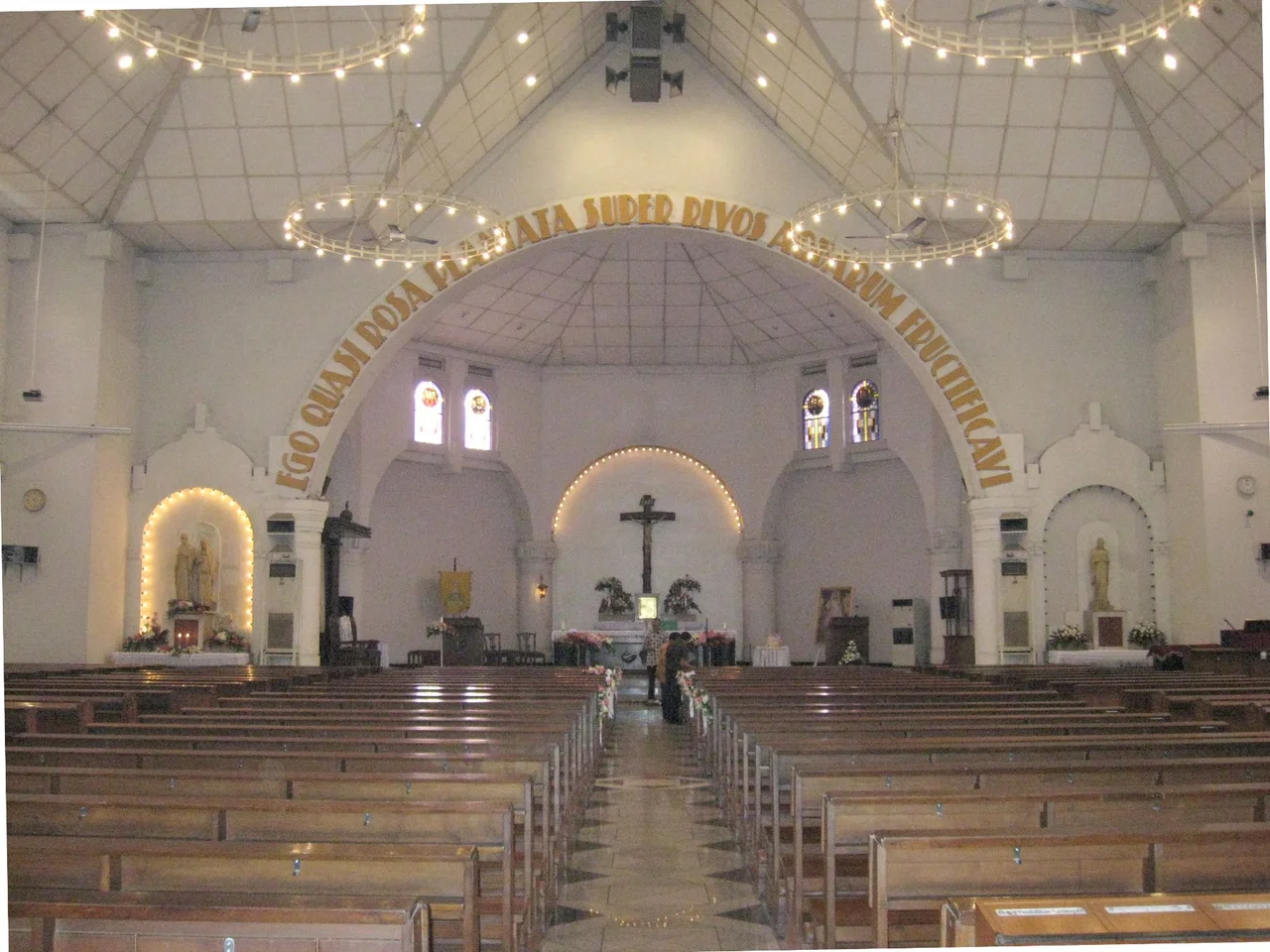

The Cathedral That Kept Its Head
When the Japanese army marched into Semarang in early 1942, they had a straightforward demand for Bishop Albertus Soegijapranata: surrender the cathedral. His answer has become the stuff of local legend. The Japanese could have his church, Soegijapranata told them, only if they removed his head first. Then he suggested they try the cinemas down the street instead. The soldiers left. The bishop kept both the cathedral and his head. It is a story that tells you everything about the Holy Rosary Cathedral at Randusari - a building that has outlasted empires, revolutions, and occupiers not through fortification but through the sheer stubbornness of the people who claimed it as theirs.
Purchased from the Health Department
The land where the cathedral now stands once belonged to the city's health department. In 1926, the Catholic Church purchased it for a practical reason: the existing churches at Gedangan and Candi were too far away for Semarang's growing Catholic community. The new church at Randusari opened formally in 1927, a simple structure meant to serve an expanding congregation. By 1930, it had been designated a parish church under Father J. Hoebrecht. Five years later, the original building was torn down entirely and replaced with a new design by the architect J. Th. van Oyen, built by a contractor named Kleiverde. The replacement was more ambitious - a stone-foundation building with a large, column-free congregation hall, parapeted roofs and arches, and a west-facing facade. The church expanded again in 1937, its grounds fenced off from the surrounding neighborhood. What had begun as a practical solution to distance was becoming something grander.
The Bishop Who Would Not Bend
In 1940, the Apostolic Vicariate of Batavia was split in two, and Albertus Soegijapranata became the apostolic vicar of the new Semarang vicariate. Randusari was named its cathedral - the seat of Catholic authority in Central Java. Soegijapranata was no ordinary cleric. He was the first indigenous Indonesian to hold the position, and his loyalties ran deep toward both his faith and the emerging Indonesian nation. When Japan occupied the Dutch East Indies two years later, his refusal to surrender the cathedral was not mere defiance; it was a statement about who this building belonged to. After Indonesia proclaimed independence in August 1945, Soegijapranata threw his support behind the new republic. The Indonesian National Revolution brought chaos to Semarang, and in January 1947 the bishop made the difficult decision to relocate the vicariate's seat to St. Yoseph Church in Bintaran, where he could better serve the independence cause. He would not return to Randusari until 1949, after the Dutch finally recognized Indonesian sovereignty.
A Quiet Corner of Tugu Muda
The cathedral sits in one of Semarang's most historically layered neighborhoods. The Tugu Muda area is a designated Cultural Property of Indonesia, anchored by the Tugu Muda monument itself - a memorial to the five-day battle of Semarang in October 1945. Within walking distance stand Lawang Sewu, the haunted former railway headquarters with its thousand doors, and the Mandala Bhakti Museum. Bulu Market hums nearby. The cathedral occupies a quieter pocket within this cluster, its rectangular form and west-facing facade set back from the commemorative grandeur of its neighbors. The building is not Semarang's most visually dramatic landmark, but it is among its most persistent - a structure rebuilt, expanded, threatened, abandoned, and reclaimed across a century of upheaval.
Succession and Continuity
Soegijapranata served as bishop until his death, and his successor arrived from within the cathedral's own walls. Justinus Darmojuwono had been parish priest and vicar general at Randusari since 1962. His consecration as bishop following Soegijapranata's death ensured continuity - the cathedral's leadership passed not through distant appointment but through the community it had built. In June 2012, the diocese funded the construction of an official bishop's residence and office on the cathedral grounds. Called Wisma Uskup, it contains a chapel, archive, secretariat, garden, and six rooms of residential space. The complex now includes the cathedral proper, a meeting hall, and a school. What the Catholic Church purchased from a municipal health department in 1926 has become a self-contained ecclesiastical compound, the administrative heart of the Archdiocese of Semarang, serving a Catholic community that has grown steadily across a century of independence.
Stone Foundation, Living Memory
From above, the cathedral is easy to overlook. It lacks the towering spires of European Gothic or the gleaming domes of basilicas elsewhere in Southeast Asia. Its Art Deco lines are modest, its stone foundation solid rather than spectacular. But the Holy Rosary Cathedral was never meant to impress from a distance. Its power is in what happened inside and around it: a bishop staring down an occupying army, a congregation walking away during revolution and walking back during peace, a community funding its own bishop's residence because the institution had earned their loyalty. The column-free hall that van Oyen designed in 1935 still gathers worshippers beneath its parapeted arches. Semarang has changed utterly around it - from Dutch colonial city to Japanese-occupied territory to revolutionary battleground to modern Indonesian metropolis. The cathedral has changed too, rebuilt and expanded with each era. But its purpose has never wavered.
From the Air
Located at 6.99S, 110.41E in the Randusari neighborhood of Semarang, Central Java. The cathedral sits near the Tugu Muda roundabout, adjacent to the more visually prominent Lawang Sewu building. Ahmad Yani International Airport (ICAO: WARS) is approximately 6 km to the west. Best viewed at 2,000-3,000 feet for urban detail. The Tugu Muda area is identifiable from the air by the roundabout and the distinctive twin towers of Lawang Sewu nearby.
Nearby Stories
- Fort Willem I, Ambarawa 19 km away
- The Sultan Who Besieged the Future 32 km away
- Dieng Temples: Java's Oldest Stone Shrines, Named for Heroes Nobody Built Them For 32 km away
- Ceto Temple 44 km away
- U-168: The U-Boat Betrayed by Its Own Allies 57 km away
- Cepu Forest Railway 60 km away
- Karimunjawa: The Convict Islands That Became Paradise 96 km away
- Battle of Kalijati 264 km away