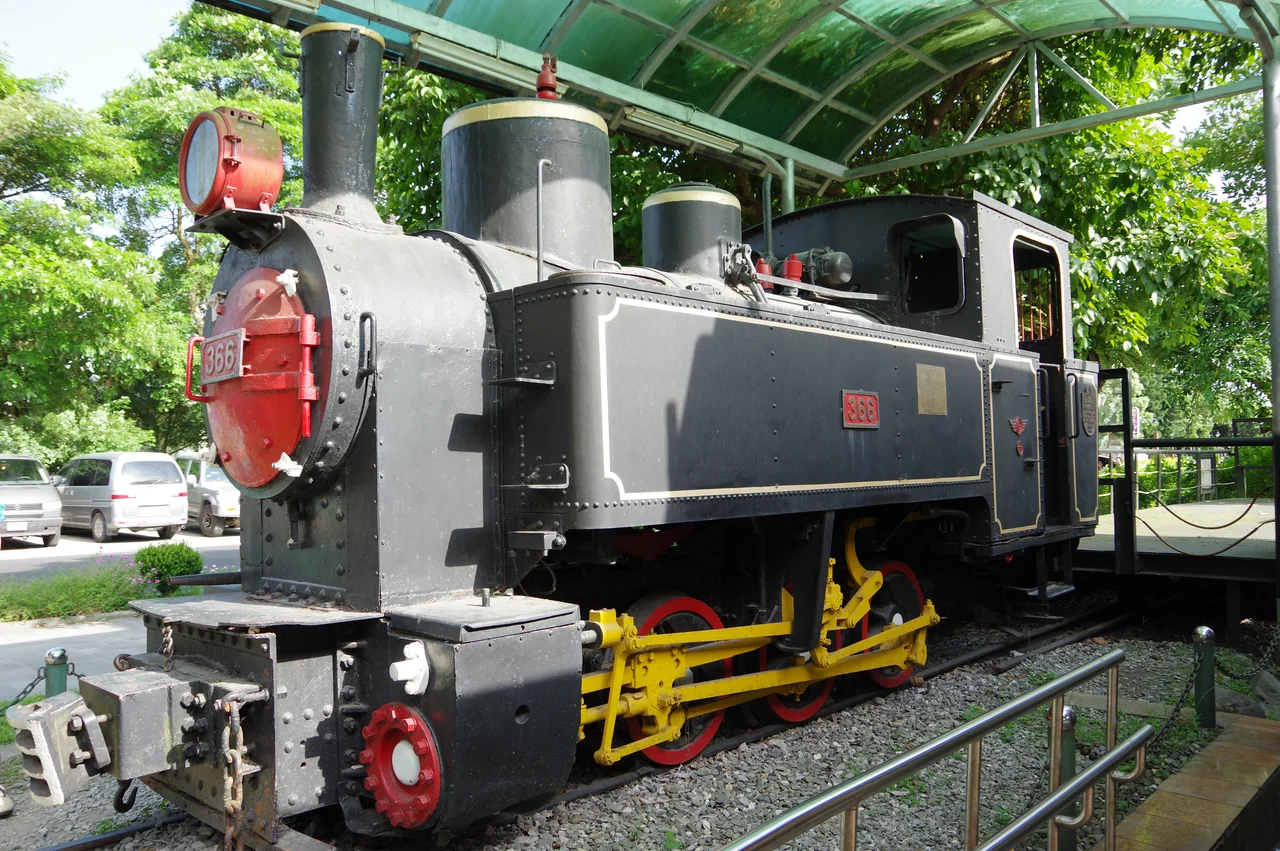

Hualien Sugar Factory
Sugar built eastern Taiwan differently than it built the west. On the western plains, the sugar industry arrived with a scale and infrastructure that reshaped entire cities. In Hualien, on the narrow floor of the Huatung Valley, it arrived more intimately — one factory, one township, and a long industrial relationship between a colonial enterprise and the land that supported it. The Hualien Sugar Factory in Guangfu Township has been operating, damaged, restored, silent, and finally repurposed across more than a century. Its walls carry the weight of Japanese colonial ambition, wartime destruction, postwar reconstruction, and eventual obsolescence. The cane fields are gone now, but the factory remains.
Founded in a Colonial Economy
Japan took control of Taiwan in 1895 following the First Sino-Japanese War, and the colonial administration quickly identified sugar as one of the island's most exploitable agricultural products. By 1913, the facility now known as the Hualien Sugar Factory was established under the name Hualien Manufacturing Plant Dahe Factory — a designation that was functional rather than poetic, naming the enterprise by its purpose and location. Sugar production in this era required significant land clearing, water management, and labor mobilization. The Huatung Valley, with its fertile alluvial floor and relatively accessible river water, was suited to the crop. Cane fields spread across the valley; workers from indigenous communities and migrant Han populations both contributed to the industry that the factory organized and processed.
War from Above
During World War II, as Allied forces worked to sever Japan's supply chains across the Pacific theater, industrial facilities throughout Taiwan became targets. The Hualien Sugar Factory did not escape. United States Air Force bombing heavily damaged the plant during the war years — the machinery wrecked, the buildings struck, the production capacity eliminated. When Japan surrendered in 1945 and Taiwan's governance transferred to the Republic of China, officials inherited a landscape pocked with similar industrial casualties across the island. An assessment determined that the Hualien factory should be restored rather than abandoned. The decision was neither obvious nor inevitable — it reflected a judgment about the continuing economic value of sugar in a postwar economy that was still finding its footing.
Restoration and the Taiwan Sugar Corporation
After the handover of Taiwan in 1945, the factory was renamed the Hualien Sugar Factory under the newly formed Taiwan Sugar Corporation — a state-owned enterprise that consolidated much of the island's sugar industry. Restoration work proceeded, and by 1948 sugar production had restarted. The next five decades were the factory's steady years: the cane grew, the machinery ran, the workers came and went through generations. Taiwan Sugar Corporation mills like this one became fixtures in the communities they anchored, providing stable employment in agricultural areas where alternatives were limited. Guangfu grew partly around the factory's rhythms — the harvests, the crushing seasons, the quiet months in between. The railway station nearby made the factory accessible; the valley floor made it viable.
The Silence of 2002
Taiwan's sugar industry had been declining for decades before the Hualien factory finally stopped. Global sugar prices, changing land use, and the economics of modernized production had gradually made small regional operations like this one difficult to sustain. In 2002, the factory ceased operations — the end of nearly nine decades of continuous industrial purpose, interrupted only by wartime damage. The cessation was not dramatic; it was the kind of quiet ending that industrial closures often are, a last batch processed, the machinery stilled, the gates left but the activity gone. For Guangfu Township, it marked the end of an era that had shaped the community's economy and daily life since before living memory.
What the Factory Became
Closed factories face a familiar choice: demolition or reinvention. The Hualien Sugar Factory chose reinvention. Today the site operates as a heritage attraction under the stewardship of the Hualien County Cultural Affairs Bureau, with the buildings preserved as a record of colonial-era industrial architecture and post-war Taiwanese economic history. The structures — built to process sugar on an industrial scale — now house exhibitions, cultural programming, and visitor services. Walking the grounds, you move through different eras simultaneously: the Japanese-era construction in the original walls, the ROC-era restoration in the restored machinery, and the contemporary repurposing in the signage and exhibits. The factory is a short walk south of Guangfu Station, which still operates on the Taiwan Railway's Taitung line.
From the Air
The Hualien Sugar Factory is located at approximately 23.66°N, 121.42°E in Guangfu Township, Hualien County, on the floor of the Huatung Valley. From the air, the factory complex is visible as a cluster of industrial-era structures south of Guangfu Station — look for the characteristic low-profile rooflines of former processing buildings amid the valley's agricultural patchwork. The nearest airport is Hualien Airport (RCYU), approximately 28 km to the north-northwest. Recommended viewing altitude is 2,000–3,500 feet to resolve the factory site from surrounding farmland. The Taiwan Railway Taitung line provides a useful navigational reference running along the valley floor.
Nearby Stories
- Paper Dome 4 km away
- Liyu Lake 5.2 km away
- Hai'an Range 11 km away
- Xitou Nature Education Area 15 km away
- Namasia District 25 km away
- Twin Forts of Romblon 1201 km away
- Sinking of MV Sewol 1209 km away
- Sibuyan Island 1250 km away