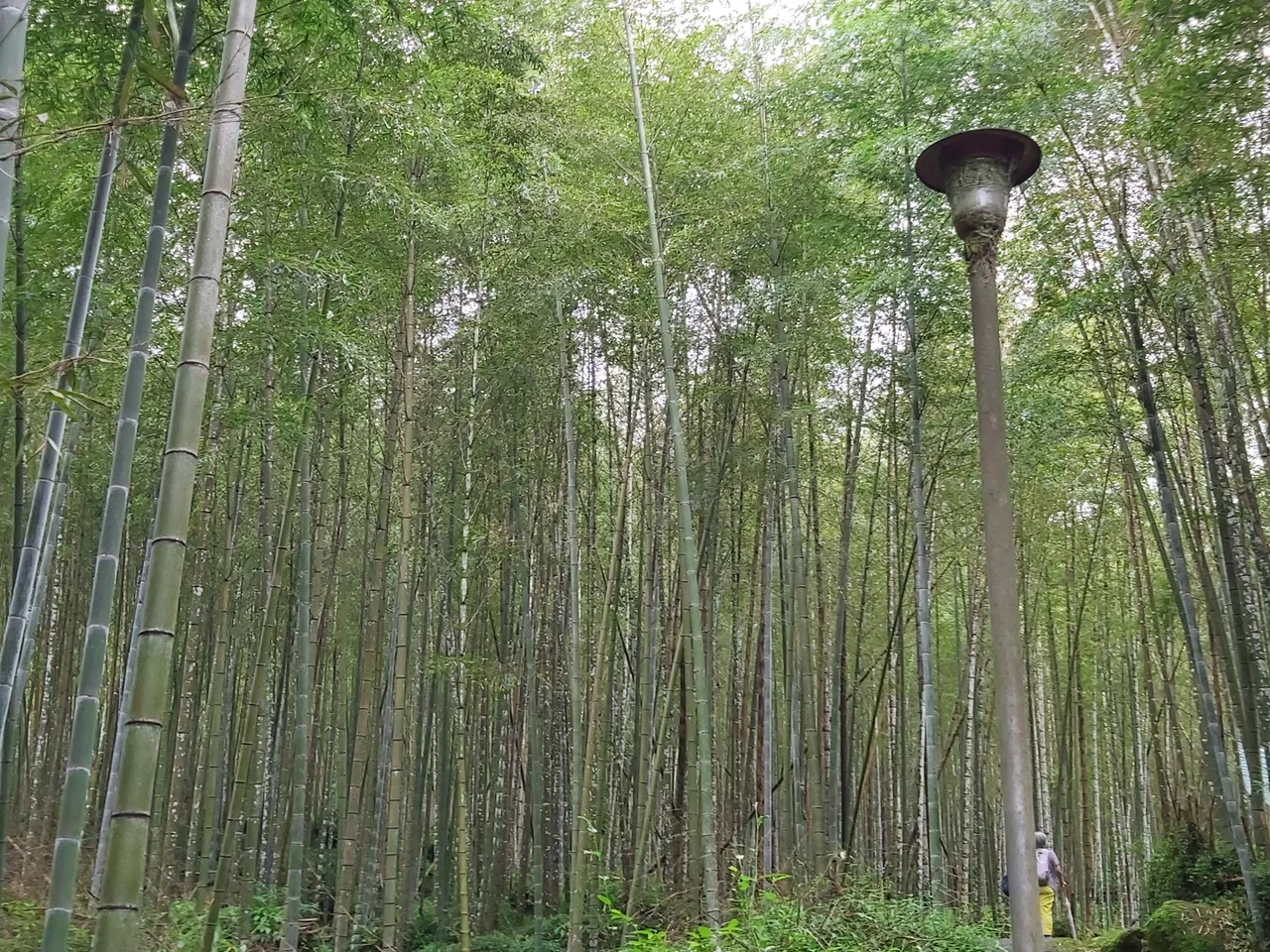

Xitou Nature Education Area
On September 11, 2016, a tree that had been alive for approximately 2,800 years fell in the forest at Xitou. Heavy rain had finally overcome it after nearly three millennia. Three visitors were injured. The tree's collapse drew attention not as a tragedy of nature — old trees fall — but as a reminder of what this forest holds: growth that began long before the forest had a name, before the Japanese colonial government sent University of Tokyo students here to study it, before it became a nature reserve, before the skywalk and the hotels and the tour buses arrived. Xitou is ancient. The forest management is modern. That tension is what makes it interesting.
Where the River Begins
The name Xitou translates roughly as 'the origin of the river' — a name that describes what you feel when you arrive at a valley enclosed by mountains on three sides. The forest sits in Lugu Township in Nantou County, the mountainous interior of Taiwan, at an average altitude of 1,150 meters above sea level. The highest point within the reserve is Mount Lingtou at 2,025 meters. Rain is abundant here: the average annual rainfall is 2,635 millimeters, and the cool, moist microclimate it produces is part of what shaped a forest so dense and diverse. Temperatures are mild through the year — monthly averages range from 11 to 28 degrees Celsius — making Xitou a popular escape for lowland Taiwanese, especially in the hot summer months.
From Imperial Experiment to National Treasure
During the Japanese colonial period, the forest served as an experimental station for University of Tokyo students — a place to study tropical and subtropical forestry in a setting that offered both scientific variety and logistical access. After the handover of Taiwan to the Republic of China in 1945, the forest's management passed to National Taiwan University, which continues to administer it today as part of its experimental forest system. In 1970, the reserve received its current name and formal status as a nature education area. The continuity of academic stewardship — from Tokyo to Taipei, across the discontinuity of colonial transition — has meant unusually consistent management over more than a century.
What Grows Here
The 2,500 hectares of Xitou hold an extraordinary range of species. Moso bamboo (Phyllostachys edulis) forms the most visually distinctive groves — tall, close-planted, filtering the light into shifting columns of green and gold. Cryptomeria and Taiwania rise among conifers planted and self-seeded across the slopes. A Ginkgo biloba garden offers a different visual register, its fan-shaped leaves turning brilliant yellow in autumn. More than 70 species of bird have been recorded in the reserve, and the forest's layers — from bamboo understory to tall-canopy cedar — create the conditions for that density of life. The overall effect, especially in mist, is of a forest that seems to extend indefinitely in all directions.
Walking Above the Canopy
The most striking of Xitou's constructed features is its canopy skywalk: 180 meters long and 22.6 meters high, the walkway suspends visitors above the treetops at a height that makes the scale of the forest suddenly legible. Looking out from that elevation, the bamboo and cedar stretch away toward the surrounding peaks, and the sky overhead — often partly cloud — seems more immediate. An observatory sits at an elevation above 2,000 meters, and the forest's trail network extends through different habitat zones. Electric car rentals, a visitor center, restaurants, and hotel accommodation make Xitou accessible for longer stays, though the forest's character rewards those who walk its quieter trails in the early morning, when the mist is still sitting in the valley and the birds are loudest.
From the Air
Xitou Nature Education Area lies at approximately 23.67°N, 120.80°E in the mountain interior of Nantou County, well east of the Taiwanese coastal plain. The terrain here is dramatically different from the flatlands around Taichung — valleys and peaks at significant elevation, with Mount Lingtou reaching 2,025 meters within the reserve itself. Approaching from the air at 5,000 to 8,000 feet, the dense forest cover distinguishes Xitou from the surrounding agricultural and residential areas. The nearest major airport is RCMQ (Taichung International Airport), approximately 50 kilometers to the northwest. Road access is winding mountain highway; visibility in the forest area is frequently reduced by cloud and mist, particularly in the mornings and after rain.
Nearby Stories
- Taiwan Historica 7.1 km away
- Taixi, Yunlin 7.3 km away
- High-Heel Wedding Church 8.7 km away
- Eastern Taiwan 10 km away
- Namasia District 13 km away
- Dongli Story House 13 km away
- Liyu Lake 23 km away
- China Airlines Flight 611 57 km away