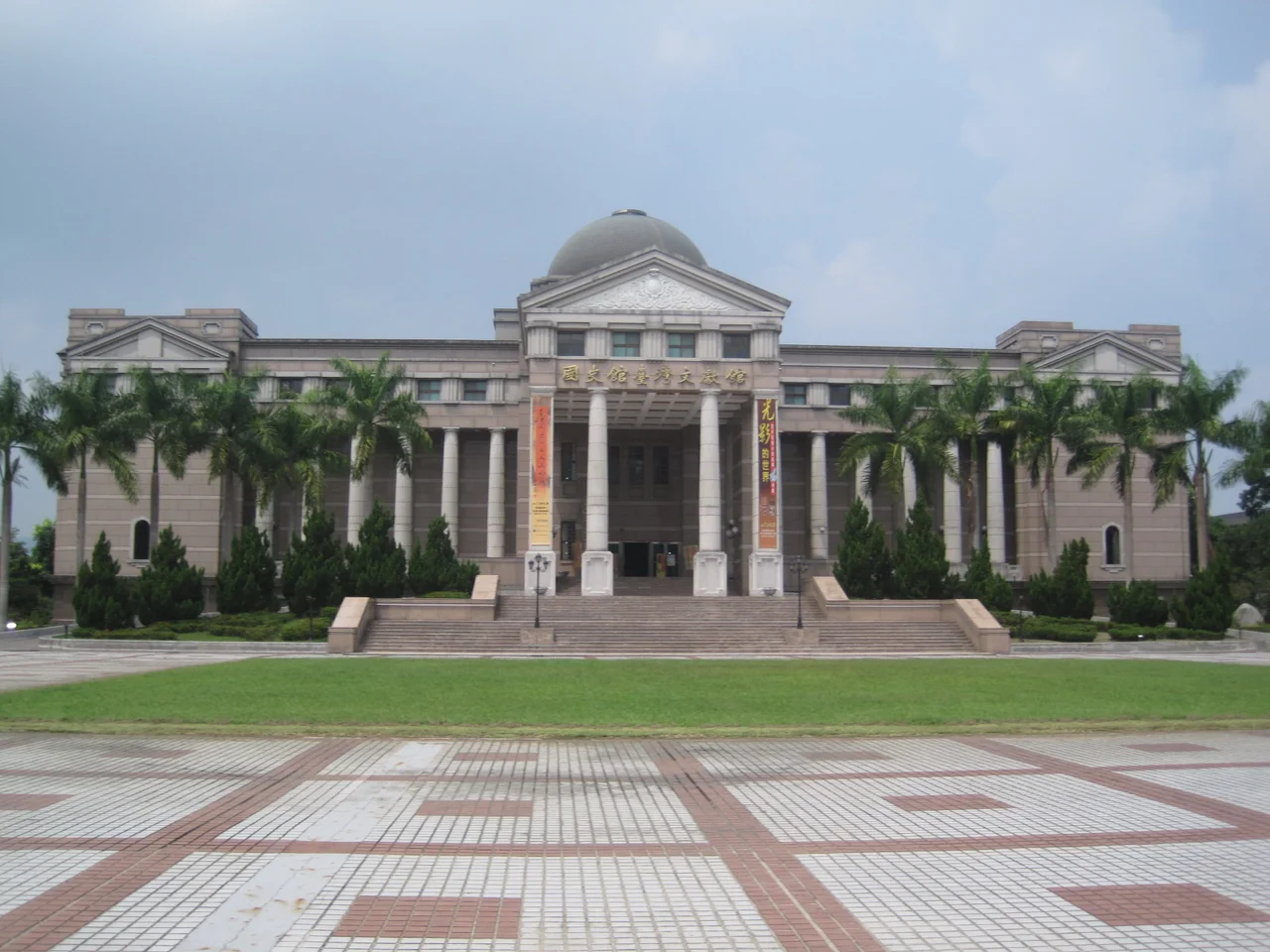

Taiwan Historica
The institution has changed its name four times and its parent ministry twice, but its core purpose has remained steady since 1948: to gather, preserve, and compile the historical record of Taiwan Province. Taiwan Historica occupies a quiet corner of Zhongxing New Village, a planned administrative town in Nantou City that was itself built to serve a provincial government that no longer exists. The archive is, in a sense, the memory of a system that history has reorganized — a fitting place for an institution devoted to the past.
Founded in the Shadow of Transition
Taiwan Historica was established on June 1, 1948, under the name Taiwan Provincial Common History Historica. It was the beginning of a particularly turbulent period: the Republic of China government was still fighting the Chinese Civil War on the mainland, and Taiwan's provincial status was anything but settled. Within a year the institution was reorganized as the Historical Research Committee of Taiwan Province. In the decades that followed, it moved through successive administrative affiliations — the Civil Affairs Department in 1958, the Cultural Affairs Department in 1997, the Taiwan Provincial Government in 1999, and finally Academia Historica on January 1, 2002, when it took its current name. Each transfer reflected a broader reshuffling of Taiwan's governmental structure, particularly the gradual winding down of the Taiwan Provincial Government itself.
Three Halls, One Archive
The physical campus of Taiwan Historica includes three principal facilities. The Folklore Artifacts Hall houses material culture from Taiwan's various communities — objects that trace daily life, ceremony, and craft across generations. The Records and Archives Hall holds the documentary spine of the collection: official papers, administrative records, and primary sources relating to the governance of Taiwan Province. The Historical Documents Exhibition Hall presents curated materials for public engagement, making the archive legible to visitors beyond the research community. Together, the three halls span the spectrum from object to document to interpretation — the standard architecture of a serious historical institution, done with the particular weight of an archive that covers an unusually complex political history.
The Village That Holds It
Zhongxing New Village is not a typical location for a national archive. It was built in the mid-1950s as a planned administrative capital, designed to house the Taiwan Provincial Government when it relocated from Taipei. The village was conceived along garden-city lines, with government offices, employee housing, and green space integrated into a single planned environment. All buildings remain government property, and development has stayed tightly controlled. By the time Taiwan Historica formally joined Academia Historica in 2002, the provincial government it originally served had already been substantially dissolved. The archive outlasted its patron, and the village that surrounds it now serves partly as a historical artifact in its own right — a well-preserved specimen of mid-20th-century administrative planning.
Memory Work in Nantou
For researchers, Taiwan Historica represents a primary point of access to the documentary history of the province that covers the entire island. Taiwan's history is layered and contested — indigenous peoples, Dutch and Spanish colonial periods, the Zheng dynasty, Qing rule, half a century of Japanese colonization, and then the Republic of China's postwar governance all left records and gaps. The institution's mission to compile the 'common history of Taiwan Province' is both straightforward as an archival mandate and complex in its implications. What counts as common? Whose record is kept? These questions run through the work of any serious historical institution, and Taiwan Historica operates in a context where they carry particular political and cultural weight. The collections here are a starting point for anyone who wants to understand how the island's past has been documented — and how it is still being understood.
From the Air
Taiwan Historica sits at approximately 23.937°N, 120.701°E within Zhongxing New Village, Nantou City. From altitude, look for the planned grid of the village — its organized road network distinguishes it from the more organic town fabric of surrounding Nantou City. The site lies in the lowland basin east of the Bagua Plateau, roughly 20 km southwest of the foothills that lead toward Ren'ai Township's mountain terrain. The nearest major airport is RCMQ (Taichung International), approximately 30 km to the north-northwest. Best approached from the west at 3,000–5,000 feet for a clear view of the Nantou basin and the Central Mountain Range rising to the east.
Nearby Stories
- Shigang Dam 2.7 km away
- Taixi, Yunlin 4.9 km away
- Xitou Nature Education Area 7.2 km away
- Lintianshan Forestry Culture Park 11 km away
- Taroko National Park 20 km away
- Smangus 36 km away
- China Airlines Flight 611 56 km away
- Taiwan Strait 69 km away