
Lintianshan Forestry Culture Park
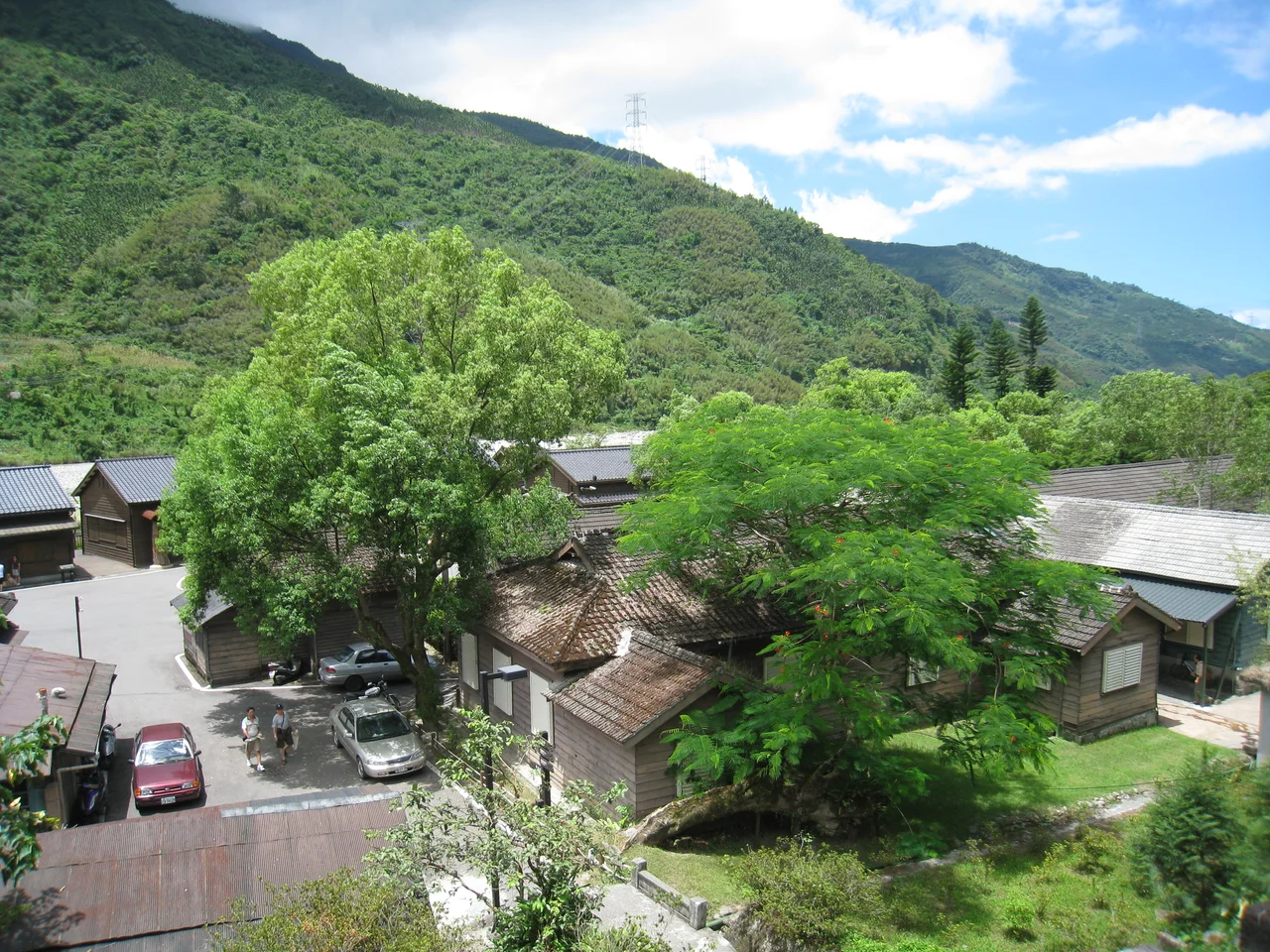
The rail tracks end in the forest. Rusted and overgrown, they curve through a settlement of Japanese-era wooden dormitories, a shuttered elementary school, and a small church, all nestled in the mountains of Hualien County. Lintianshan Forestry Culture Park is what remains of a logging town that once echoed with the sound of saws and the groan of timber being hauled down from Mount Da'an. For seven decades, trees came down. Then the logging stopped, the workers left, and the forest began its slow reclamation. In 2006, Hualien County declared what remained a historical village -- not restoring it to some imagined perfection, but preserving it exactly as the loggers left it, a place where industry and abandonment exist side by side.
Morisaka
Forestry began here in 1918, during the Japanese colonial period, when the settlement was known as Morisaka. The mountainsides around Fenglin Township were thick with valuable timber, and the Japanese government wasted no time exploiting them. Hualien Harbor Timber handled the felling operations, processing logs hauled down from the slopes of Mount Da'an. By 1925, the area had been formally designated as the Lintianshan logging zone. In 1939, the operation was reorganized under the Taiwan Xingye Company, which established the Lintianshan Logging Office and built the infrastructure that still defines the site -- narrow-gauge railways for moving timber, wooden dormitories for workers and their families, an elementary school for their children, administrative buildings, and the small church that served the community. What grew here was not just an industry but a town, complete and self-contained, sustained entirely by the forest surrounding it.
Fire, Decline, and Silence
After Japan's surrender in 1945, the Republic of China took control of the site and renamed it Senrong. Management passed through a series of government agencies and state-owned companies -- the Resource Management Committee, Taiwan Paper Company, and eventually Zhongxing Paper Company. Through it all, the logging continued. Production peaked in 1960, the same year a fire destroyed the log mill, water pipes, and hydrants. Twelve years later, in 1972, a month-long wildfire consumed 1.2 square kilometers of the surrounding forest, a devastating blow to an industry already in decline. By 1973, logging across Taiwan was contracting, and the Forestry Bureau assumed control of what remained. In 1988, the saws fell silent for good. The workers drifted away to cities and coastal towns, leaving behind their homes, their school, their church, and the rail tracks that had carried their livelihood down the mountain.
What the Forest Remembers
Walking through Lintianshan today is an exercise in reading layers of time. The park is divided into zones: a forestry exhibition area displaying the tools and machines that once processed timber, the early settlement buildings from the Japanese colonial era, the remains of Kangle New Village from the postwar period, an administrative area, and hiking trails that wind into the recovering forest. The wooden dormitories still stand, their sliding doors and tatami proportions unmistakably Japanese. Logging equipment rusts in place, left where it was last used decades ago. The elementary school is empty but intact. Rail tracks emerge from undergrowth and disappear again. What makes Lintianshan compelling is not polish or restoration but honesty -- the site presents itself without pretense, a place where you can feel both the ambition that built it and the exhaustion that ended it. The forest, meanwhile, is coming back, slowly filling the spaces that industry carved out.
From the Air
Coordinates: 23.718°N, 121.399°E, in Fenglin Township, Hualien County, eastern Taiwan. The park is situated in mountainous terrain in the East Rift Valley foothills. The former rail infrastructure and settlement clearings may be visible from lower altitudes against the surrounding forest. Nearest airport: Hualien (RCYU), approximately 30 km to the northeast. The site is inland from the coast in a narrow valley between the Central and Coastal Mountain Ranges.
Nearby Stories
- Paper Dome 4 km away
- Liyu Lake 5.2 km away
- Hai'an Range 11 km away
- Xitou Nature Education Area 15 km away
- Namasia District 25 km away
- Twin Forts of Romblon 1201 km away
- Sinking of MV Sewol 1209 km away
- Sibuyan Island 1250 km away