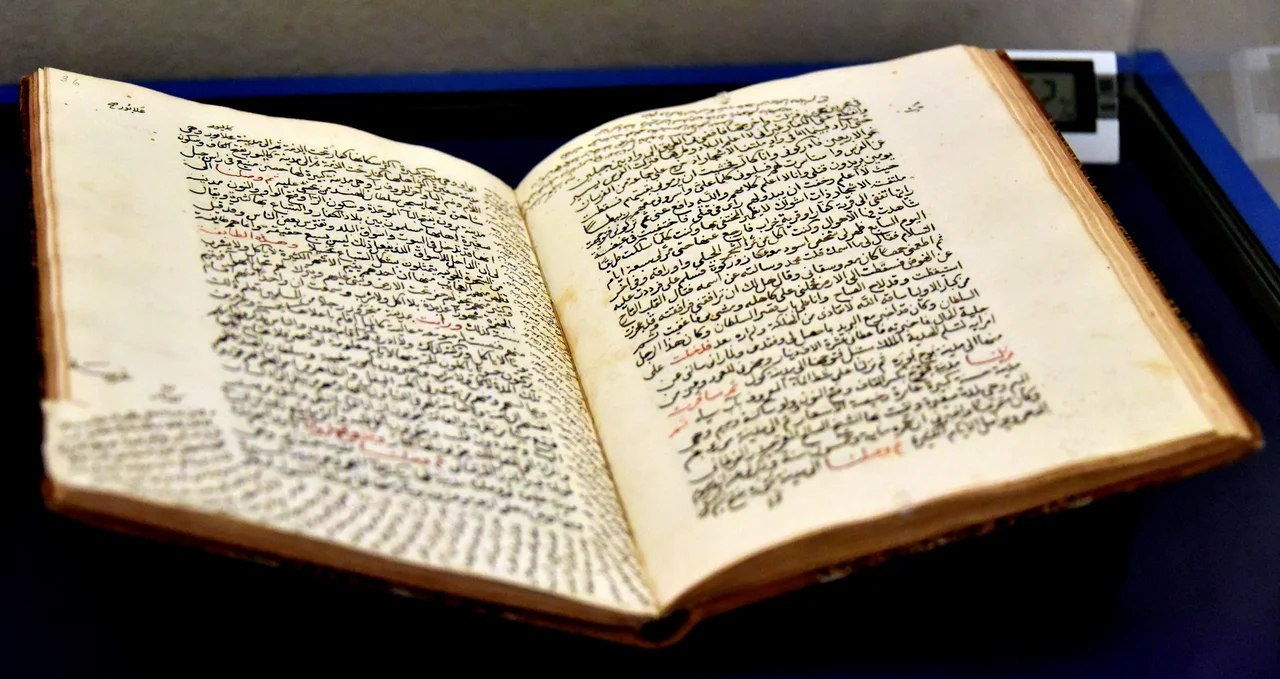

Ibn Battuta
He was 21 years old and he missed his parents' goodbyes. On the 2nd of Rajab 725 AH - 14 June 1325 in the Christian calendar - Ibn Battuta set out from Tangier alone, bound for Mecca on a journey that should have taken him sixteen months. He did not see Morocco again for 24 years. By the time he dictated his Rihla, The Journey, to a court scribe in 1355, he had walked, ridden, and sailed more of the pre-modern world than any human being whose records survive - across North Africa, through Arabia and Persia, up through Anatolia and into the Mongol khanates, down the Swahili coast, into India, the Maldives, Sri Lanka, Bangladesh, and at least to the edges of China. Marco Polo, by comparison, covered about a third of the distance.
A Family of Judges in Tangier
Ibn Battuta - full name Abu Abdullah Muhammad ibn Battuta - was born on 24 February 1304 in Tangier, a Mediterranean port on the Moroccan coast, into a family of Islamic legal scholars. The family was of Arabised Berber descent, belonging to the Lawata tribe. Under the Marinid dynasty, Tangier was a lively intersection of Andalusian, African, and Mediterranean trade. Young Muhammad studied at a Sunni Maliki school - the dominant legal tradition in the Maghreb - and was trained to be what his father and grandfathers had been: a qadi, a judge. His patronymic, Ibn Battuta, literally means "son of a duckling," a family nickname whose origin he never quite explained. At 21 he took his religious training seriously enough to make the hajj. He also, as he later admitted plainly, "craved adventure." Both motivations were real. One fed the other for a quarter century.
The Pilgrim Who Kept Going
The classic Hajj route from Morocco ran east along the North African coast through Tlemcen, Bejaia, and Tunis. Ibn Battuta joined caravans for safety, married a bride in Sfax and promptly separated from her over a dispute with her father - the first in a pattern of short, practical marriages that would feature throughout his travels. He arrived in Alexandria in spring 1326 and, from Cairo, took the less-traveled route up the Nile and east to the Red Sea port of Aydhab, turning back after a local rebellion blocked it. He detoured to Damascus, spent Ramadan there, then traveled south with the great caravan that Mamluk troops escorted to Mecca. He completed his first Hajj in November 1326 and took the honorific El-Hajji. Any reasonable pilgrim would have turned around. Ibn Battuta decided instead to go to the Mongol Ilkhanate. He went to Najaf to visit Ali's tomb, detoured through Iran - Isfahan, Shiraz, back across the Zagros to Baghdad, whose ruins from Hulagu Khan's 1258 sack still marked the cityscape.
The Swahili Coast and the Sultan of Delhi
After another Hajj, he headed south. From Yemen he sailed to Zeila and Mogadishu on the Horn of Africa, describing Mogadishu at the zenith of its prosperity - rich merchants, high-quality exported fabric, a sultan fluent in both Somali and Arabic. Then down the coast to Mombasa and Kilwa in modern Tanzania, which he called "one of the finest and most beautifully built towns." He noted the coral-stone architecture, the extension of the Great Mosque of Kilwa, the reach of the Sultanate's authority from Malindi to Inhambane. Riding the monsoon back north, he eventually crossed Anatolia, the Black Sea, and the Central Asian steppe to reach India in September 1333. There he served as a qadi in Delhi under Muhammad bin Tughluq, "the wealthiest man in the Muslim world at that time" - and one of the most erratic. For six years Ibn Battuta oscillated between favor and suspicion of treason. He finally escaped on a diplomatic mission to the Yuan dynasty of China, was ambushed and robbed by bandits, and after a ship sank and another was seized by a Sumatran king, spent nine months as chief judge of the Maldives, where he married into the royal family of Sultana Khadija.
What One Traveler Saw
He reached Sri Lanka, Bengal, and - by his own account - southern China, though modern scholars debate whether he actually got as far as he claims in the Chinese interior. He returned to Morocco in 1349, traveled to al-Andalus, and then, in 1351-1354, crossed the Sahara to the Mali Empire - a final great journey that took him to Timbuktu and up the Niger River. The Rihla, dictated to Ibn Juzayy al-Kalbi at the court of the Marinid sultan Abu Inan Faris, records this all: the hospitality of the fityan craft associations in Anatolia, the humility of Sultan al-Hasan of Kilwa, the pearl-diving at Hormuz, the pirates of the Indian coast, the curious customs of the Maldives where marriages were treated casually and small dowries made unions "a convenient temporary arrangement for visiting male travellers," as he noted with an anthropologist's matter-of-factness. He was not always a fair observer - he criticized Maldivian women's traditional toplessness and forced changes when he was qadi - but he was a rigorous one. His descriptions of place are the finest we have from the 14th-century Islamic world.
The Library the Traveler Left
Ibn Battuta died in 1368 or 1369, probably in Morocco. The Rihla circulated in Arab scholarly circles for centuries before European orientalists rediscovered it in the 19th century. For modern readers, the book is an astonishing index of an interconnected medieval Muslim world - a world where a Moroccan could find hospitality from Turks in Anatolia, serve a Sultan in Delhi, mediate trade disputes in the Maldives, preach at a Persian court, and always find a mosque to pray in and a qadi to share a meal with. The linguistic, legal, and scholarly networks of Islam were, in Ibn Battuta's time, genuinely global. His total distance of roughly 75,000 miles exceeds what Zheng He traveled by sea and what Marco Polo traveled on the Silk Road. He was not a soldier or a merchant. He was a judge who kept saying yes to the next road, and the record of what he saw is one of the great gifts the 14th century left to ours.
From the Air
Ibn Battuta was born at Tangier (35.76°N, 5.83°W) on Morocco's Mediterranean coast - the starting point of his journey. His travels span from Morocco to Mali, through Cairo, Mecca, Baghdad, Delhi, the Maldives, and arguably to coastal China. The default geohash for this article centers on one of his Red Sea passages near Aydhab at approximately 19.84°N, 37.21°E, on the Sudanese coast he traveled en route between Egypt and the Arabian Peninsula. Nearest modern airports: Port Sudan New International (HSPN) for Aydhab route; Tangier Ibn Battuta Airport (GMTT) is named for him.
Nearby Stories
- Suakin 52 km away
- First and second battles of El Teb 100 km away
- Red Sea State 109 km away
- Red Sea Rift 114 km away
- Red Sea 238 km away
- Nasseef House 251 km away
- The Travels of Ibn Battuta 255 km away
- Halaib Triangle 318 km away