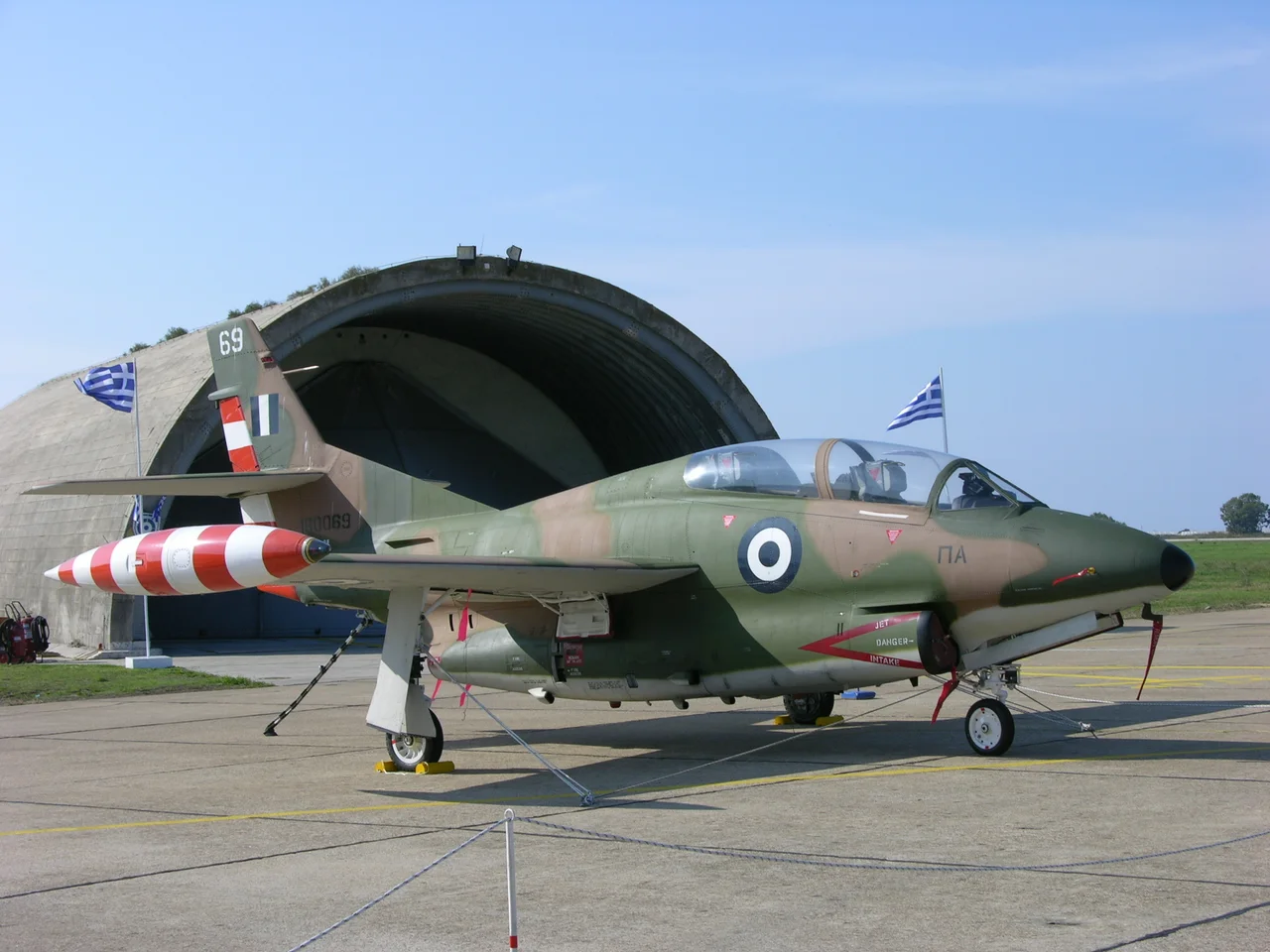

International Flight Training Center, Kalamata
Greece had wanted a modern pilot training center since the early 2000s. For roughly twenty years, the project stalled — procedural delays, competing proposals, diplomatic pressure from Canada and the United States, questions about procurement process. Then, in January 2021, Greece approved a €1.375 billion, 22-year agreement with Elbit Systems of Israel, and the International Flight Training Center at Kalamata Air Base became real.
A 22-Year Partnership Takes Shape
The contract Greece signed with Elbit Systems is not simply a purchase order for aircraft. It is a long-term public-private partnership structured to modernize the entire Hellenic Air Force pilot training pipeline over two decades. The deal includes ten M-346 Block 5+ advanced jet trainers — replacing the older T-2E Buckeyes that the 120th Air Training Wing had been flying — plus upgrades to 25 T-6 Texan II aircraft already in service, and the installation of fifth-generation flight simulators and fleet control systems. Elbit manages the center's operations and training services while the base itself remains under Hellenic Air Force jurisdiction. The distinction matters: Greek sovereignty over the airfield is maintained; what Elbit provides is expertise and infrastructure.
What Happens Inside
The physical center comprises a 2,000-square-meter ground-based training facility and a 1,300-square-meter logistics center, both purpose-built at the air base. Pilot training proceeds in two stages. Basic training uses the T-6 Texan II, a turboprop trainer that has become the standard entry-level military aircraft for dozens of air forces worldwide. Advanced training moves to the M-346, a twin-engine jet capable of simulating the flight envelope of fourth- and fifth-generation fighters. Together, according to Associated Press reporting from late 2022, the two aircraft are expected to generate 7,000 and 3,500 flight training hours annually, respectively. The center's graduates go on to fly Rafales, F-16 Vipers, and — eventually — F-35s.
NATO's Training Network Expands South
The center does not train only Greek pilots. Germany has initiated a two-year program at Kalamata, planning to enroll 16 pilots annually starting in 2025. Croatia is in discussions to begin training there as well. The 120th Air Training Wing's inclusion in the NATO Flight Training Europe initiative in 2023 formalized this international role: the NFTE program, which reached full operational capability in 2024, brings together training facilities in Greece, Hungary, and North Macedonia to enhance Allied pilot readiness. Kalamata's IFTC sits at the southern anchor of that network, in a corner of Europe where air-power dynamics — particularly in relation to the eastern Mediterranean — carry strategic weight.
Controversy and Context
The choice of Elbit Systems over the Canadian firm CAE was not without friction. Greek media outlets raised questions about whether a proper international tender had been conducted. The ambassadors of both Canada and the United States reportedly expressed concerns about the selection — Canadian officials visited Kalamata specifically to promote CAE's competing bid. Supporters of the Elbit deal pointed to the deepening of Greek-Israeli defense ties and the strategic value of access to Israeli training technology. The Greek Ministry of National Defense defended the decision on technical and operational grounds. Whatever the procurement debate, the center opened, the aircraft arrived, and pilots are flying.
From the Air
The International Flight Training Center occupies Kalamata Air Base (LGKL) at approximately 37.068°N, 22.025°E, about 8 km southwest of central Kalamata on the coastal plain. The airport's parallel runway layout is clearly visible from approach altitudes. The Messenian Gulf lies immediately to the south; Mount Taygetos rises steeply to the northeast. T-6 Texan IIs and M-346 jets operate from the base's runways. For visiting aircraft, LGKL is the primary airport serving the Messenia region, with ILS approaches available. The training traffic, particularly the M-346s, may be visible on overflights at 3,000–6,000 ft.
Nearby Stories
- Las (Greece) 1.3 km away
- Karyes 3 km away
- Psari, Messenia 10 km away
- Diocese of Amyclae 11 km away
- 2023 Messenia Migrant Boat Disaster 20 km away
- Kalamakia Cave Site 36 km away
- Agios Andreas, Katakolo 46 km away
- El-Kouf National Park 445 km away