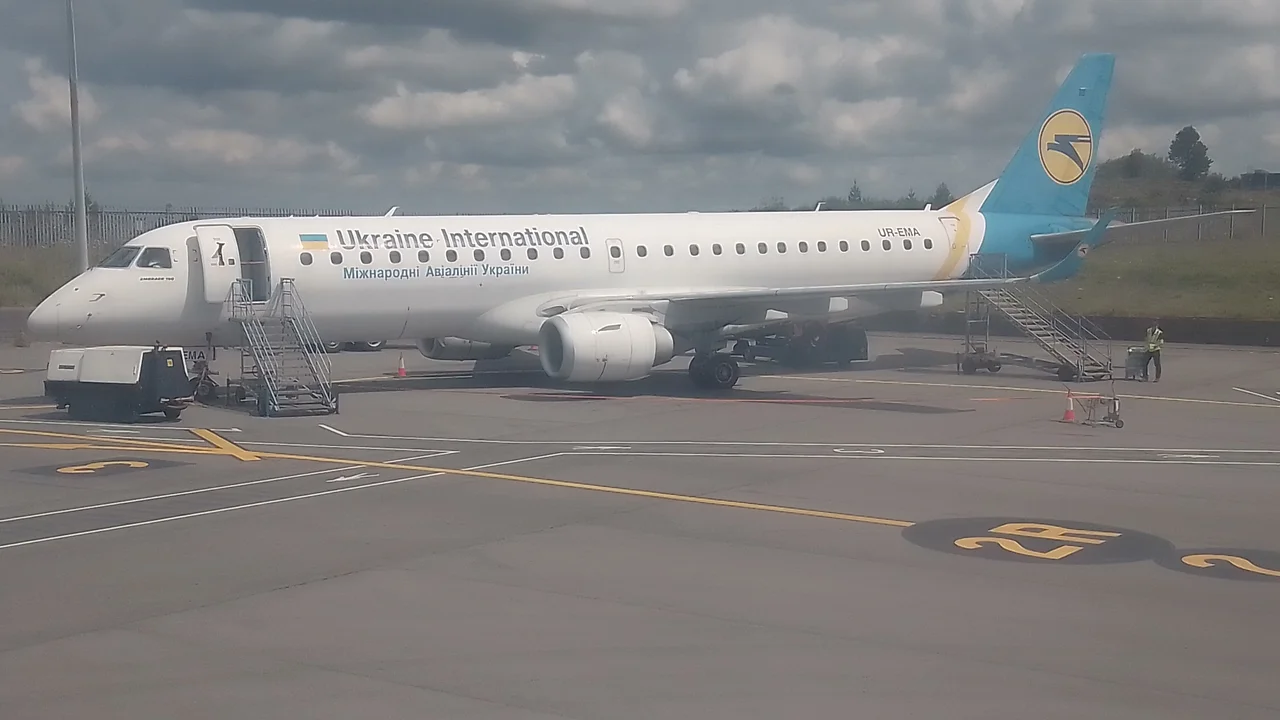

Ireland West Airport
The site, the experts said, was too boggy and too foggy. The fog was real - the airport sits at over 200 metres on rolling moorland 5.6 kilometres south-west of Charlestown, where the western Atlantic weather rolls in and settles. The bog was real too. But Monsignor James Horan, parish priest of Knock, did not particularly care. He wanted an airport that would land pilgrims within easy bus-distance of the Knock Shrine, and he had a saint's confidence that one would be built. Five years after he secured the first government grant, on 25 October 1985, three Aer Lingus charter flights for Rome left a runway in the County Mayo bogland. Horan, then seventy-four, was on the ground watching. He died less than a year later. His funeral was held inside the terminal of the airport that the Irish government renamed in his honour: Horan International.
The Priest with a Runway
Horan became parish priest of Knock in 1963 and inherited a shrine that was attracting pilgrims faster than the local roads could deliver them. He oversaw the construction of the Basilica of Our Lady, Queen of Ireland - a circular church designed to hold ten thousand worshipers, consecrated in 1976. Then he turned his attention to the access problem. Most pilgrims came from the diaspora abroad, but the nearest airports were Shannon and Dublin, hours of bus travel away. Horan lobbied, fundraised, charmed Taoisigh, and outlasted critics. The Government of Ireland eventually committed 9.8 million Irish pounds in grants. The European Union added 1.3 million more on condition the project matched it. Construction crews drained the bog, levelled the moor, and laid a runway long enough for international jets. The whole story inspired a musical - On a Wing and a Prayer - which premiered in Castlebar in 2010.
From Pilgrimage to Package Holiday
By 1988, more than 100,000 passengers had passed through the terminal. Pilgrims from the United States, Britain and the Irish diaspora came first; tourists and emigrants followed. Aer Lingus opened a Birmingham route in 1995. Ryanair arrived, then Lufthansa, then Flybe. The airport that no one believed could exist became, by 2008, a 629,000-passenger operation. In 2011, it cracked 654,000 and was running flights to Lanzarote, Tenerife, Gran Canaria, Düsseldorf, Bergamo, Girona and a dozen other destinations. The runway that had been built for Knock pilgrims was now sending Mayo grandparents on Spanish beach holidays. In 2005 the airport rebranded as Ireland West Airport Knock, a name that nodded both to the founding mission and the wider region it now served.
Sometimes Foggy, Still There
The early critics were right about the fog. The Atlantic mist rolls in often enough that Ireland West installed a Category II Instrument Landing System on runway 27 in 2009 specifically to keep operations open in low visibility. They were right about the bog too - the drainage and ground engineering needed were extensive. They were just wrong about the conclusion. By 2023, Ireland West handled 818,000 passengers, making it the fourth-busiest airport in the Republic of Ireland after Dublin, Cork and Shannon. The terminal has been extended; the runway has been resurfaced; a 15 million euro upgrade was announced in 2017. A bronze statue of Monsignor Horan now stands in the terminal he willed into existence.
The Wing and the Prayer
Christy Moore wrote a folk song about the airport's construction - he called it Knock Song, and it captures the bemused affection many Irish people feel for the whole improbable project. A documentary called On a Wing and a Prayer followed the story. The musical of the same name dramatised Horan's struggle for the stage. The airport itself has shown up in the films Wild Mountain Thyme in 2019 and Irish Wish in 2022, an unobtrusive cameo in the rolling Mayo countryside. None of it is the legacy Horan was reaching for - he wanted easier travel for the faithful. But the airport he built has done that and considerably more, threading the bogland of east Mayo into the network of European aviation.
Final Approach Over the Moor
From the air, the airport reveals exactly what its critics warned of. The runway runs east-west across an upland of bog and rough pasture. Lakes and small loughs scatter the landscape on every side. To the north lies Charlestown; to the south, twenty kilometres away, the village of Knock and the great circular basilica that started it all. On a clear day, the runway shines white against the dark moor. On a foggy day - and there are many - the Cat II landing system does the work that pilots used to do by faith. Either way, the planes keep coming. Horan would, presumably, have considered that a satisfactory answer.
From the Air
ICAO EIKN, IATA NOC. Located at 53.91 degrees north, 8.82 degrees west, 5.6 km south-west of Charlestown in County Mayo. Single runway 09/27, with CAT II ILS on runway 27 for low-visibility operations - frequent Atlantic fog makes this essential. Elevation roughly 203 metres (665 feet). Best viewed on approach from the east at lower altitudes; the runway stands out clearly against the surrounding bog and moor. Knock village and the basilica lie 20 km to the south.
Nearby Stories
- Newport, County Mayo 3.7 km away
- Bellanagare Bog 5.5 km away
- Ballygar 13 km away
- Leenane 13 km away
- Creevelea Abbey 13 km away
- St Mary's Cathedral, Tuam 13 km away
- Bangor Erris 16 km away
- Easky 17 km away