
Jamaica Inn
Daphne du Maurier stayed here in 1930. She slept in a room that the inn still preserves, with her typewriter and writing desk on display. Six years later, she published Jamaica Inn - a novel about smuggling and wrecking on Bodmin Moor that turned this granite coaching house into one of the most famous fictional addresses in English literature. The book sold. Alfred Hitchcock made a film of it in 1939. Tourists arrived and have not stopped arriving since. But the inn itself was not built for the trade that made it famous in fiction. It went up in 1750 as a staging post on the road across the moor, where coach horses could be changed in the long crossing from Launceston to Bodmin, and it was named not for rum or contraband but for the Trelawney family of nearby landowners, two of whose members served as Governors of Jamaica in the eighteenth century. The novel borrowed the name. The name had a quieter origin.
A Halfway House on the A30
An inn has stood at this spot since 1547 - on the main road across Bodmin Moor, before the modern A30 was bypassed around the building - but the current granite structure dates from 1750. In 1778 it was extended with a coach house, stables, and a tack room arranged in an L-shape around a courtyard. By the 1840s, Francis Rodd of Trebartha Hall, who had served as High Sheriff of Cornwall in 1845, was building a chapel at the nearby hamlet of Bolventor to serve the few people who lived in this remote stretch of moor. A guidebook from 1859 describes the inn as "the hitherto solitary halfway house," frequented by sportsmen in winter and offering "comfortable, though somewhat rude, accommodation" to those who could find no closer shelter. The 1122-foot "Tuber" or Two Barrows hill rises a short distance away. Brown Willy stands four miles to the north, and Rough Tor is closer still. The inn is, simply, the only building of any size in the middle of one of the loneliest landscapes in England.
Smuggling, Wrecking, and the Difficulty of Proof
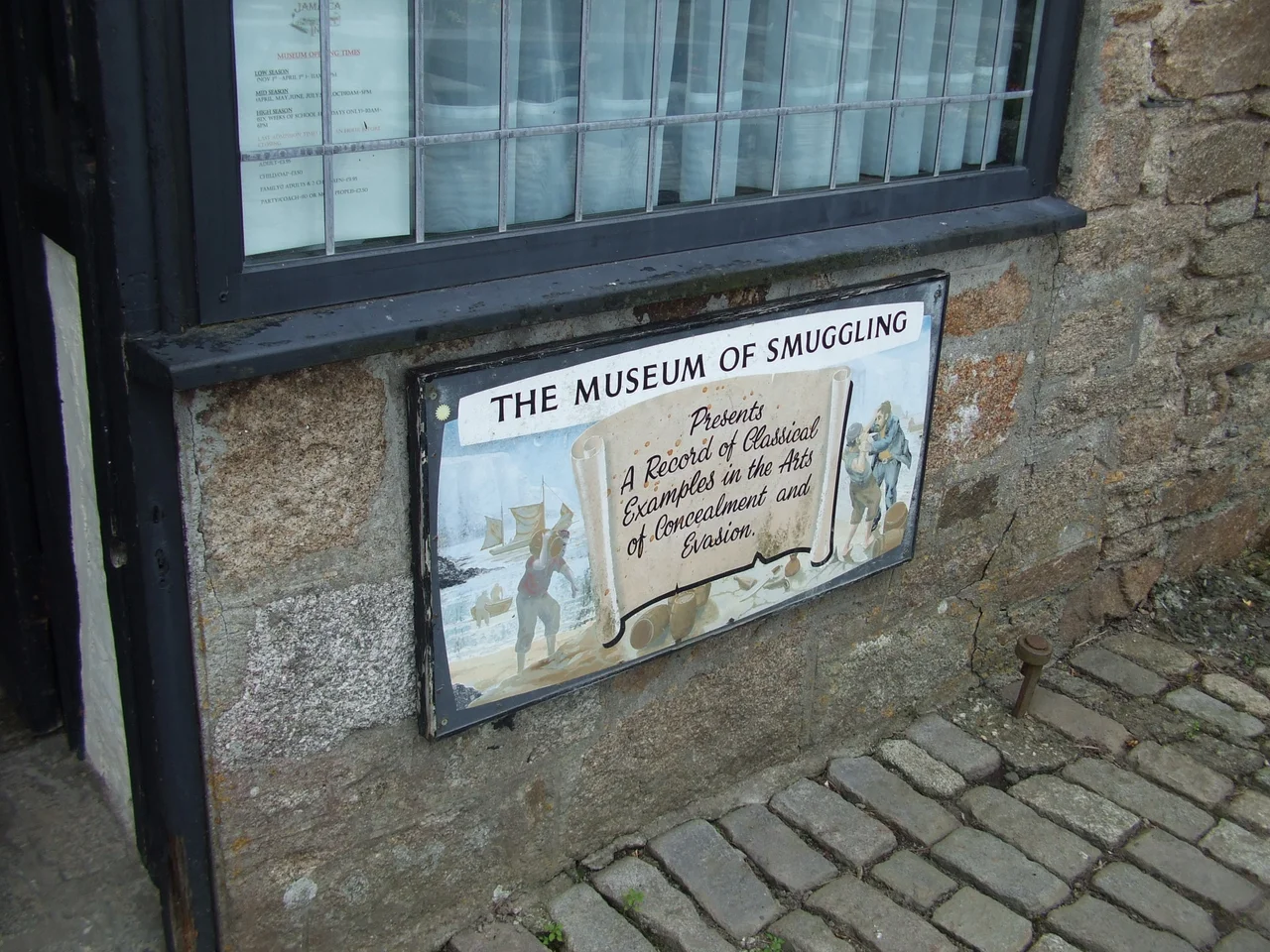
Cornwall has been described, perhaps too neatly, as the "haven of smugglers" - all rocky coves, sheltered bays, tumultuous waves, and wild untenanted landscapes. The eighteenth and early nineteenth centuries did see substantial smuggling along the coast, with networks bringing silks, tea, tobacco, and brandy ashore on dozens of beaches and working the goods inland through inland villages and isolated buildings like the Jamaica Inn. The moor was an obvious stop. Stories also tell of wreckers - people who lured ships onto the rocks with false lights to plunder their cargoes - but the historical evidence for organised wrecking is much thinner than the legend suggests. Many supposed wrecker accounts come from later popular fiction, including du Maurier's own. What is certain is that Cornish judges, sometimes themselves recipients of smuggled goods, were notoriously lenient toward smugglers, and that the moor's remoteness made it useful for moving contraband out of sight of authority. The Museum of Smuggling now operates within the inn, on its western side. A plaque outside reads: "Presents a record of classical examples in the arts of concealment and evasion."
Du Maurier's Bodmin
Daphne du Maurier arrived at the inn in November 1930, riding across the moor on horseback with her friend Foy Quiller-Couch, daughter of the Cornish writer Sir Arthur Quiller-Couch. They got lost in dense fog. They eventually found the inn by following the moor ponies. She wrote later that the experience - the dark moor, the isolated stone building, the fog closing in - lodged itself in her imagination and refused to leave. Six years later she had built a novel around it, transforming the working coaching inn into a fictional smuggling stronghold run by a violent landlord and his terrified wife, where wreckers gathered and ships were murdered. The book is gothic, atmospheric, and has very little to do with the actual operation of the actual inn. But fiction is more durable than fact in places like this. The room where du Maurier stayed is preserved within the building. Her typewriter and writing desk are on display. The Smuggler's Bar carries a plaque at its entrance: "Through these portals passed smugglers, wreckers, villains and murderers, but rest easy... 'twas many years ago."
The Building Itself
It is a two-storey granite structure with a bitumen-coated slate roof and hipped ends. The symmetrical front windows of the original eighteenth-century facade were replaced in the twentieth century, along with the central door and gabled porch, flanked by two light casements. The courtyard was once gravel; it is now paved. Inside, the floors slope - a hallmark of any Cornish building that has settled across two and a half centuries onto granite footings - and many of the original ceiling beams remain. Internal partitions have been removed to make space for the bar, the restaurant, and the museum. The fireplaces have roughly cut granite lintels. The building has been Grade II listed since 23 November 1988. For a period it was owned by the novelist Alistair MacLean, who lived and wrote here. In August 2022 it was acquired by The Coaching Inn Group, a national chain that operates historic inns as destination venues.
What the Museum Shows
The Museum of Smuggling is small but specific. Its core collection traces the smuggling trade as it operated along the Cornish coast - silks landed at Polperro on the south side, Boscastle and Trebarwith and Tintagel on the north, with goods routed inland through hidden caves, false-floored fishermen's cellars, and isolated buildings like this one. Among the display cases: "Wanted" posters, one dated 1798; a poster celebrating Lord Nelson's victory at Trafalgar; pottery figures of stock smugglers and villains in eighteenth-century dress; old books; a bag labelled "10 pounds of Jamaican ganja," which is more recent. A separate room is given to Daphne du Maurier - her writing desk, her typewriter, photographs, and material from her career - kept in the chamber where she stayed during that 1930 visit. The inn that her novel made famous is, in its own quiet way, also a museum of how a writer's imagination can rewrite a building's actual past. The moor outside is still the moor outside. The wind hasn't changed.
From the Air
Located at 50.562°N, 4.567°W on Bodmin Moor near the hamlet of Bolventor, central Cornwall. Recommended viewing altitude 2,000-3,500 ft AGL to see the inn in its full moorland context. Visual landmarks: Brown Willy 3.5 nm north (Cornwall's highest point); Rough Tor 3 nm north-north-west; Dozmary Pool 1.5 nm south-west; the A30 dual carriageway curves immediately south of the inn. Camelford lies 6 nm north, Bodmin 8 nm south-west. Nearest civilian airports: Newquay (EGHQ) 22 nm west, Exeter (EGTE) 47 nm east. Bodmin Moor generates fast-changing weather - the same fog that disoriented du Maurier in 1930 still forms on the moor with very little warning. Check forecasts carefully before low-level operations.
Nearby Stories
- Padstow 1.1 km away
- Hope Cove Lifeboat Station 3.5 km away
- Holsworthy 3.6 km away
- The Great Thunderstorm 6 km away
- Prehistoric Cornwall 9.2 km away
- Eddystone Lighthouse 14 km away
- Tiverton Castle 29 km away
- HMHS Glenart Castle 36 km away