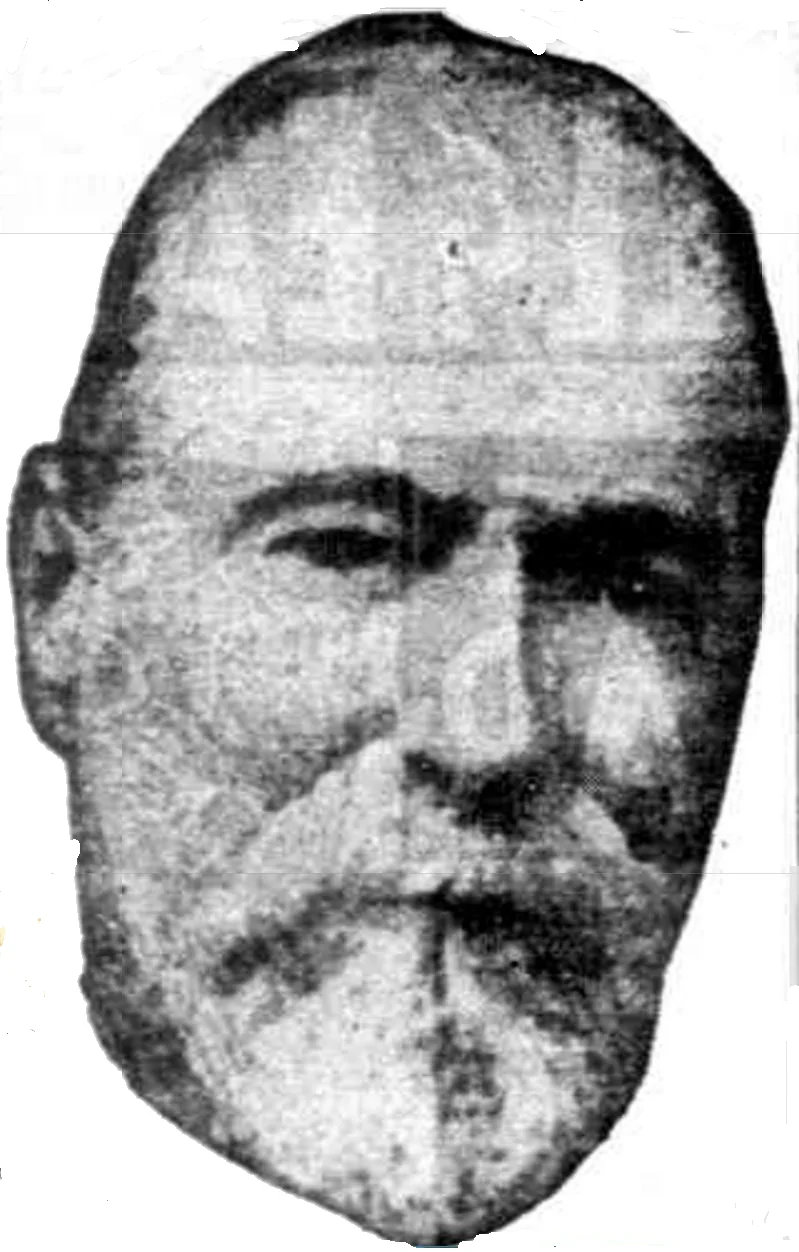

James Venture Mulligan's Grave
He found the gold that built a hundred towns, and he is buried beside a road most travellers never notice. James Venture Mulligan rests in the south-east corner of the Mount Molloy cemetery, under a marble headstone cut in Townsville and ringed by white quartz pebbles. It is a modest plot for a man whose discoveries redrew the map of the colony. On 30 June 1873, after Aboriginal people tried to burn his party's tents in the night, Mulligan walked out of the bush with 102 ounces of payable gold from the Palmer River - and set off a rush that drew tens of thousands north into country no European had mapped.
The Man Who Found the Rush
Mulligan was a bushman first and a prospector second, and the two skills kept him alive where others perished. Born in Ireland in 1837, he came to the Queensland goldfields and earned a reputation for reading country - for finding water, reading the lie of a ridge, and bringing his men home. His Palmer River strike in 1873 unleashed one of the wildest gold rushes in Australian history, and within a few years he had also opened the Hodgkinson field and pointed out a string of other mineral prospects across the north. He published accounts of his expeditions, careful and precise, and the colony rewarded him by stamping his name across the landscape: Mount Mulligan to the west, and the Mulligan Highway running north from Mareeba still carry it today.
Copper at Rifle Creek
Mount Molloy owes its existence to a different metal and a different man. In 1880 Patrick Molloy, a selector working land beside Rifle Creek on the rough track between Port Douglas and Herberton, struck rich copper. Mulligan recognised the prospect and took it up in partnership with James Forsyth, then helped promote it to investors in distant Melbourne - among them a future Victorian Premier. The Mount Molloy Copper Mining Company formed in 1899, passed to the mining magnate John Moffat's Irvinebank interests in 1901, and by 1903, after a rocky start, had become one of North Queensland's leading copper producers. Mulligan stayed bound to the place he had helped open, living out his final years in the small town that grew up around the mine.
A Quarrel and a Fall
Mulligan died as he seemed to have lived - trying to keep the peace. In late August 1907, near Mount Molloy, he intervened in a drunken quarrel. Accounts differ on the details: some say he stepped in to protect a woman, others that he made a swing at one of two young men, fell over a rail, and broke two ribs. What is certain is the result. The injuries turned to pneumonia, and on 24 August 1907 he died in the small hospital at Mount Molloy. He was seventy. The man who had survived hostile frontiers and trackless ranges was undone by a brawl in a bush pub, a quiet and almost ordinary end for an extraordinary life.
The Oldest Grave
Mulligan's is the earliest marked grave in the Mount Molloy cemetery, laid down in 1907; William James Cairn followed in 1908, James Laing in 1909. Around seventy marked burials now spread across the open, stony woodland, where acacia, melaleuca and grevillea grow at random and termite mounds rise between the headstones. The community has never forgotten the man in the corner plot. A bronze plaque sits below his headstone, surrounded by white quartz, and the white-painted iron fence around the grave is kept up by hands that still care. The cemetery, in use for well over a century, was added to the Queensland Heritage Register in 1992 - a quiet record of a region that boomed, faded, and endured.
From the Air
Mount Molloy cemetery sits at 16.69 degrees south, 145.33 degrees east, on Bakers Road about 2.6 km from the township, in open woodland on the inland side of the Great Dividing Range. The nearest airport is Mareeba (ICAO YMBA), roughly 35 km south down the Mulligan Highway; Cairns International (ICAO YBCS) lies about 70 km south-east beyond the ranges and offers helicopter charters. From the air the site reads as a small clearing in dry tropical woodland west of the densely forested coastal escarpment; visibility is best in the dry season, May through September, when haze and afternoon storms are least likely.
Nearby Stories
- Daintree River 11 km away
- Green Island (Queensland) 18 km away
- Ngarrabullgan 30 km away
- Xavier and Sadie Herbert's Cottage 35 km away
- Byerstown 38 km away
- Chillagoe Smelters 46 km away
- HMS Mermaid (1817) 55 km away
- Kapa Kapa Trail 749 km away