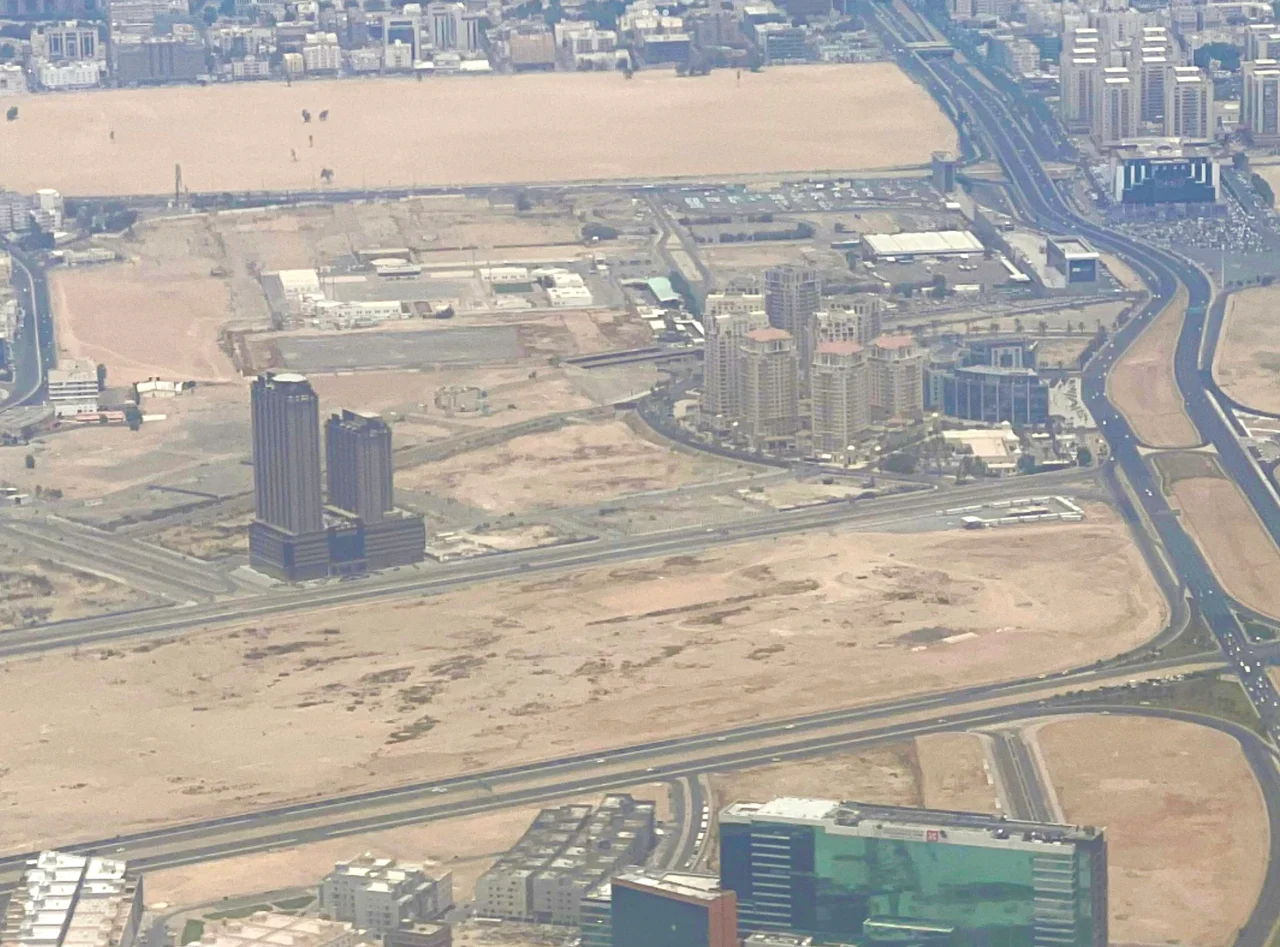

Jeddah International Airport (closed 1981)
Throughout the 1940s, there was no terminal. There was no passenger service. There was a sand-packed strip where camels sometimes wandered across the runway, and flights had to be arranged by hand when they happened at all. This was Jeddah Airport, also called Kandara Aerodrome, and it was the first airport in Saudi Arabia. By 1981, when it closed, it was handling 600 aircraft movements a day at the peak of Hajj and receiving a flight every three minutes on its best days. In the space of forty years, it had transformed from a muddy dirt field into the busiest pilgrim airport in the world, and then it had been outgrown.
From Six Aircraft in a Crate
On 6 August 1921, the steamship SS Tantah arrived at Jeddah carrying aircraft, the first ever delivered to what would become Saudi Arabia. Later that month, six more arrived from Italy: four Caudron G.3 biplanes with Le Rhône engines and two Maurice Farman trainers. By September, a Caudron had been assembled in Jeddah and flew three short local flights. In October it crashed on takeoff from Taif and was left where it fell for repairs. During the Saudi conquest of Hejaz, Russian pilot Shirokov flew daily reconnaissance from Jeddah in a de Havilland DH.9 until his aircraft exploded in flight over Nejd in January 1925. In February 1937, an Italian metal hangar 170 feet long was shipped in from the steamship Alberto Treves; some of its parts were lost when a dhow sank carrying them ashore. It was erected anyway, and the airfield slowly became an airport.
The Pilgrim City
By 1958, as the number of African hajj pilgrims flying in began to rise, Saudi Arabia built what was called the third city directly inside the airport. Five three-story buildings covered 9,652 square meters and housed 2,000 pilgrims at a time. Dormitory rooms slept anywhere from 10 to 36 people, with communal bathrooms and open-air latticework to let air and sound circulate. The buildings were plain, almost identical, deliberately designed to minimize social distinctions. The balconies were undivided. The architecture was repetitive. The goal was egalitarianism: rich pilgrims and poor pilgrims alike would sleep beside each other before climbing aboard buses to Mecca, 70 kilometers away. By 1979, upgrades allowed the complex to handle 30,000 pilgrims. Shops, banks, a mosque, and passport offices all operated inside the compound. For many pilgrims who had saved for years to make the Hajj, this plain dormitory beside the hangars was their first and last experience of the Kingdom of Saudi Arabia.
The Boom Years
In 1952, the airport was officially inaugurated under Prince Saud bin Abdulaziz, and the Royal Saudi Air Force raised its flag over the first hangar. In 1953, Aéroport de Paris oversaw construction upgrades and the first civilian air traffic control tower in the country. Saudia (then Saudi Arabian Airlines) was founded there in 1945. By 1976, the airport handled 361,891 Hajj pilgrims in a single season, with arrivals peaking at 400 flights a day during Hajj compared to 120 flights the rest of the year. Lockheed Martin won a 650-million-dollar contract for a new air traffic control system; International Aeradio built a flight operations training center; navigation aids came from ITT, landing systems from Standard Elektrik Lorenz, radios from Rockwell Collins. By 1978, the airport was handling 17 aircraft an hour, 78 an hour during Hajj. That is a movement every 46 seconds.
Too Small For Its Own Success
The problem was geography. Kandara sat pressed between the neighborhoods of Al-Kandara and Al-Sharafiya, close to downtown Jeddah. There was nowhere to expand. Cargo could not be handled properly: it had to be brought ashore by helicopter. In the ten days before Hajj, the airport absorbed approximately 50,000 passengers a day, many of them elderly, non-Arabic-speaking, and making their first flight. Immigration and customs staff could not keep up. In 1974, Saudi authorities began planning a new airport to the north. Construction began in 1975. When King Abdulaziz International Airport opened on 31 May 1981, Jeddah's old airport ceased commercial operations within weeks. The old IATA code, JED, went to the new airport. The old airport received a temporary code, XZF, which nobody used.
What the Runway Became
Shortly after closure, a highway was laid across the former runways, its tarmac running through what had been the aircraft boneyard. Google Earth imagery from 2000 still showed the faded markings of runway 15R/33L, 9,843 feet long. By 2008, the original hangars from the 1930s had been demolished. The Hajj dormitories, where millions of pilgrims had once slept, were torn down in 2014, along with the deportation center that had stood beside them. As of 2025, three hangars remain, plus smaller support buildings. Much of the eastern apron now serves as a cricket ground for the city's South Asian expatriate workers. The southern portions of the main apron still exist, cracked and weathered. King Khalid Road runs where pilgrims once waited for buses to Mecca, and if you know where to look from the air, you can still trace the shape of an airport that, in its time, was the front door to the holiest city in Islam.
From the Air
The closed Jeddah International Airport sat at 21.504°N, 39.201°E in Al-Kandara district, central Jeddah, about 20 km south of the current King Abdulaziz International Airport (OEJN), which replaced it. Total site was approximately 19.5 km². The former runways are now King Khalid Road and surrounding developments. Recommended approach altitude to OEJN is per ATIS; the old airport site is crossed by departures and approaches from OEJN. No operations possible at the historic site.
Nearby Stories
- Battle of Fakhkh 12 km away
- Siege of Ta'if 72 km away
- Red Sea 73 km away
- Red Sea Rift 76 km away
- Ghadir Khumm 115 km away
- Ta'if 126 km away
- Hejaz 223 km away
- Operation Moses 229 km away