
Jeddah
The old houses are built out of coral. Coral blocks, cut from ancient reefs along the Red Sea, stacked into walls several stories high and faced with wooden mashrabiya screens that filter the desert light. Jeddah's Al-Balad quarter has been building with coral for centuries, which is wonderful until you remember that coral is not, in fact, a particularly durable building material. Most of those houses are now in disrepair. Some are being painstakingly restored as part of Saudi Arabia's Vision 2030 push to reinvent its tourism. Walk through Al-Balad in January 2026 and you see scaffolding everywhere - a city trying to recover the architectural memory it nearly lost.
Gateway to the Holy Cities
Jeddah sits on the Red Sea in western Saudi Arabia. Its population is about 3.4 million, making it the kingdom's second-largest city after Riyadh, and its commercial capital. For most non-Muslim visitors, Jeddah is the first point of contact with the kingdom - because Mecca and Medina, the holiest cities of Islam, are closed to non-Muslims, and Jeddah is the gateway through which pilgrims enter the country for the Hajj. King Abdulaziz International Airport has special Hajj terminals, enormous fiberglass tents suspended from concrete poles and steel cables, that handle the annual surge. A high-speed rail line opened in 2018 connecting Jeddah with Mecca and Medina through King Abdullah Economic City. For those few hours between landing and onward travel, Jeddah is where millions of Muslims touch Saudi soil each year.
Al-Balad and the Corniche
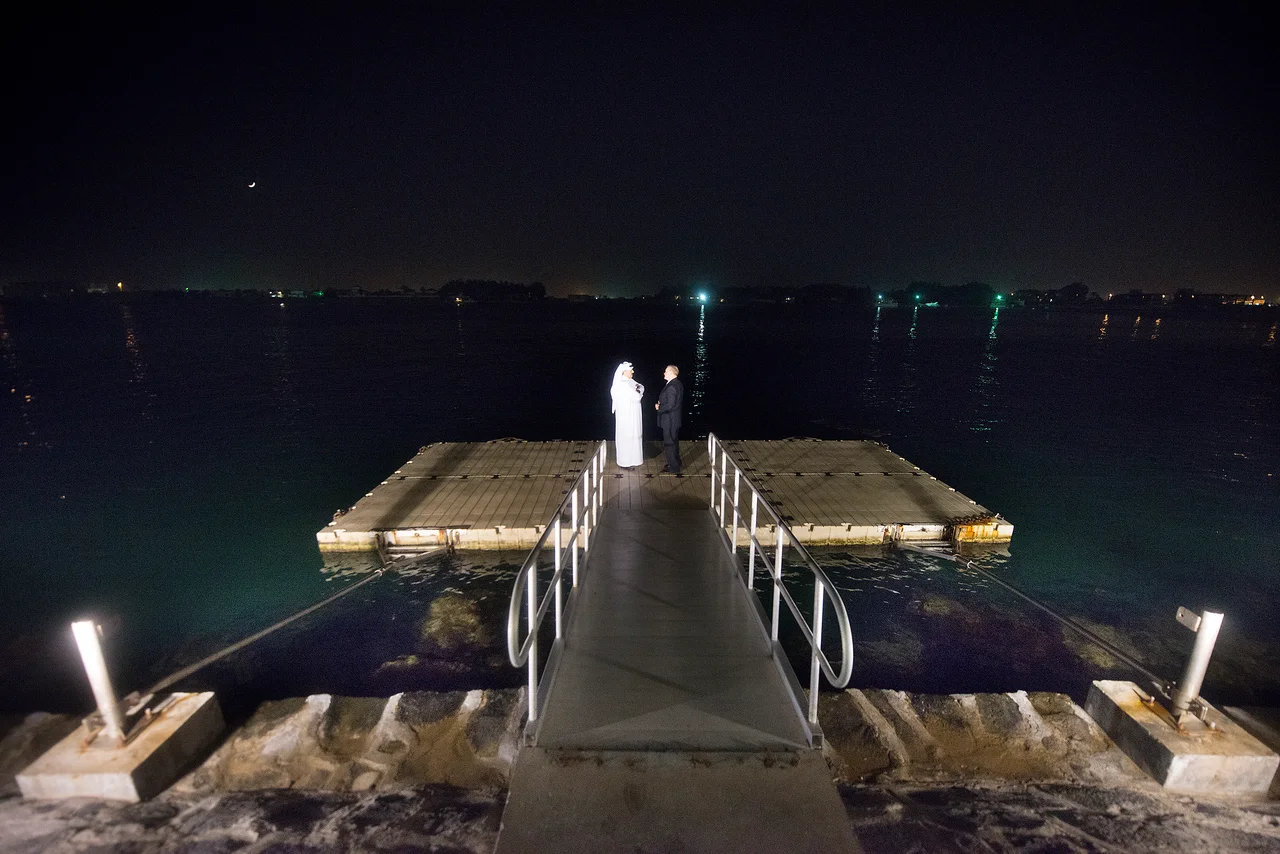
The old town, Al-Balad, is Jeddah's UNESCO World Heritage jewel - inscribed in 2014. Its city walls are gone, but the gates still mark where they stood, and within the old bounds is a warren of coral-block houses, traditional souqs, and prayer calls echoing off stone. Visitors get lost in the alleys almost as a matter of principle. The crowds in the market are from everywhere - Arabia, South Asia, West and East Africa. Eight kilometers of Corniche waterfront stretches along the Red Sea, dotted with sculpture, hotels, and the 312-meter King Fahd's Fountain - the tallest fountain in the world, shooting seawater skyward into the Gulf breeze. To the north, beach resorts function as compounds where some of the kingdom's stricter social rules relax, especially for wealthy, liberal Jeddah families.
Dive and Drive
Because no major port south of Suez rivals Jeddah, the Red Sea reefs here receive very few divers. The corals are virtually untouched. Visibility commonly runs 30 to 40 meters; water temperatures range from 22°C in winter to 29°C in summer. Wreck enthusiasts visit the Chicken Wreck, a cargo ship carrying tons of frozen chicken that hit a reef and sank at a depth of 10 to 18 meters. Most dive sites sit about an hour offshore by speedboat. On land, another kind of speed: the Ash Shati street circuit north of the city near the airport hosts the Saudi Arabian Grand Prix. At 6,175 meters, it is the longest street race on the Formula One calendar. The 2026 edition is scheduled for 17-19 April. Formula One arrived in Saudi Arabia in 2021 as part of the kingdom's larger push to open up to international sport and tourism.
Heat, Flood, and Change
The greatest natural hazard in Jeddah is heat. Summer temperatures climb into the mid-40s Celsius, and the humidity off the Red Sea turns the air into something you push through. The best time to visit is January and February, when it is merely warm. Flash floods are the other danger - Jeddah's drainage infrastructure lags the city's growth, and occasional cloudbursts can turn streets into rivers fast enough to strand cars and kill the unprepared. Culturally, the city is generally regarded as more liberal than Riyadh. Restaurants segregate by single men and families, but the rules are loose enough that couples routinely sit together in the family section. Vision 2030 is visibly remaking the cityscape: Saudi Airlines, Starbucks, and Costa Coffee sit alongside traditional shawarma stands and the Filipino Souk near Saudia City. From the air, Jeddah sprawls along the Red Sea coast, the Corniche tracing the water, King Fahd's Fountain visible as a white plume, and the old coral town clustered inland to the south - a small knot of brown against the city's concrete sprawl.
From the Air
Coordinates 21.54°N, 39.17°E on the Red Sea coast. King Abdulaziz International Airport (OEJN) is one of the largest in Saudi Arabia and the main Hajj gateway. Recommended viewing altitude 8,000-12,000 feet for views of the Corniche, King Fahd's Fountain, and the old coral quarter of Al-Balad.
Nearby Stories
- Battle of Fakhkh 12 km away
- Siege of Ta'if 72 km away
- Red Sea 73 km away
- Red Sea Rift 76 km away
- Ghadir Khumm 115 km away
- Ta'if 126 km away
- Hejaz 223 km away
- Operation Moses 229 km away