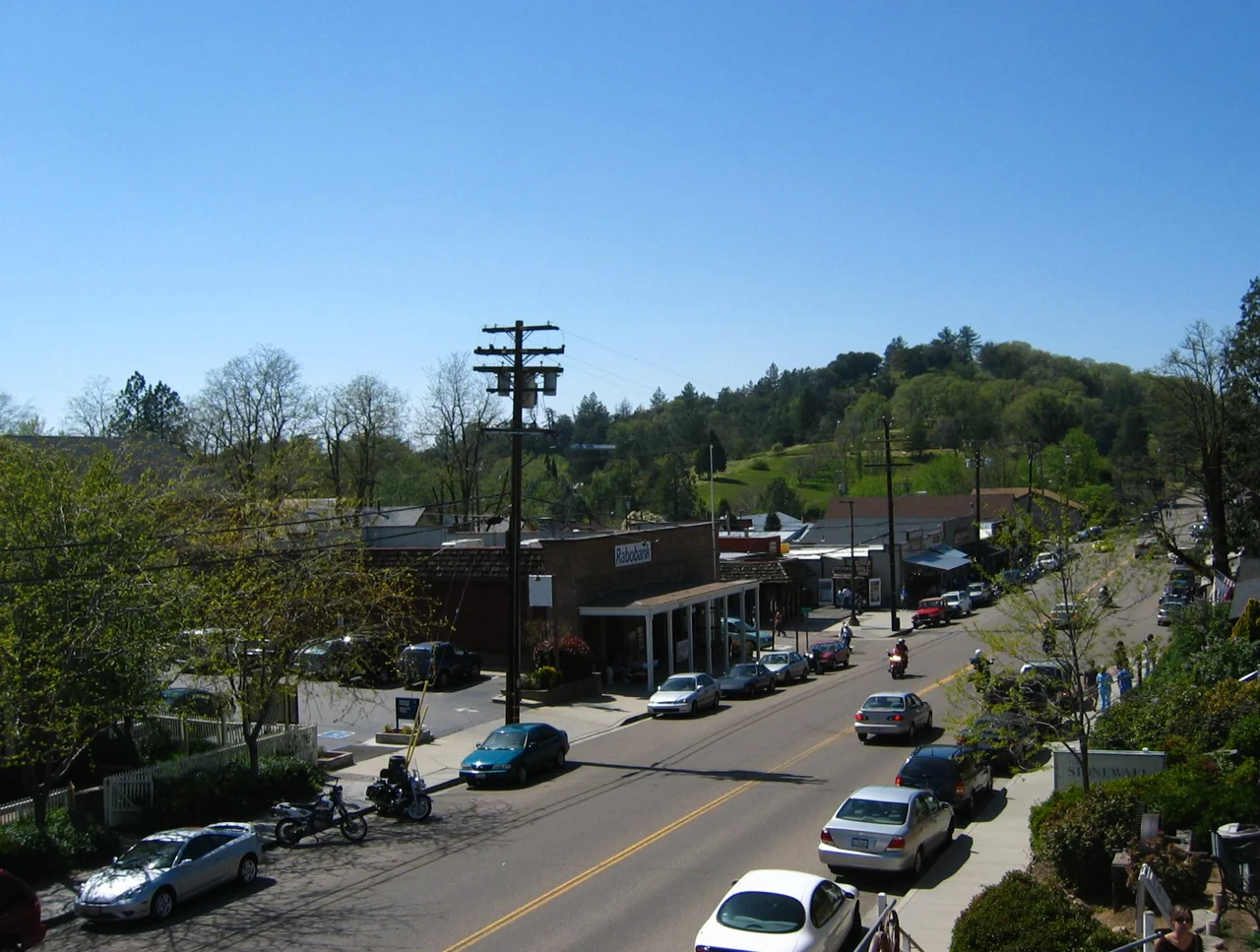

Julian, California
The town got its name because Mike Julian was better looking than the other candidate. That explanation — more or less the actual account — captures something essential about Julian's origins: it was a rough, egalitarian place that made decisions by the standards of men who had come to the mountains to find gold and didn't much care about formality. Fred Coleman discovered gold in Julian in the late 1860s, triggering a rush that turned a cattle ranching area into a mining camp. What followed was unusual in California's gold rush history: of the 55 Black San Diegans counted in the 1880 census, 33 of them lived in Julian.
Where Black Pioneers Built First
The disproportionate presence of Black residents in Julian during the gold rush era is not incidental. Albert and Margaret Robinson — both formerly enslaved people — arrived in Julian in the 1880s and established themselves as central figures in the community. They built the Hotel Robinson, which opened in 1897 and would become the Julian Gold Rush Hotel. Other Black families farmed, mined, and established businesses in the town during a period when California's promises of equal opportunity, however imperfectly realized, offered more than many parts of the country. Julian was marked California Historical Landmark No. 412 in recognition of its gold mining history, but the human history of who built the town and who thrived there in those early decades is equally significant.
Gold in the Mountains
The Julian gold rush lasted from the early 1870s into the 1880s, producing millions of dollars in ore and driving the establishment of the town, its schools, hotels, and civic institutions. The gold came from hard-rock mining rather than placer deposits — miners followed veins of quartz through granite rather than panning streams — which required investment in equipment and labor. Several mines operated in and around the Julian district, and the town grew to serve the miners with commerce, services, and community. When the gold ran out, Julian did what many former mining towns do: it reinvented itself, this time around agriculture, tourism, and the particular appeal of a mountain town close enough to San Diego for a day trip.
Apple Days and Dark Skies
The Apple Days Festival has run in Julian since 1949, celebrating the apple orchards that took root in the mountain soil after the gold rush faded. Each October, the population of this small community of a few thousand people swells dramatically as visitors arrive from San Diego and beyond for apple pies, cider, and the atmosphere of a nineteenth-century mountain town that has preserved enough of its historic character to be genuinely distinctive. In 2021, Julian received designation as an International Dark Sky Community — recognition that the mountain air and distance from urban light pollution make its skies among the clearest in San Diego County. On a clear night, the Milky Way is visible from Julian in a way it simply is not from the coastal cities 60 miles to the west.
Fire and Recovery
In October 2003, the Cedar Fire swept through the mountains east of San Diego in one of the most destructive wildfires in California history. The fire burned more than 280,000 acres and destroyed over 2,000 structures. Julian and its surrounding communities were in the fire's path, and the threat to the historic mountain town was real and immediate. Evacuation orders went out; some structures burned. The community survived, in part because of fire suppression efforts and in part because of the stone, brick, and adobe construction that characterizes much of the historic downtown. Recovery took years. The fire left its mark on the surrounding landscape — visible even now in the different-aged vegetation on the hillsides — but Julian itself endured, its identity intact.
From the Air
Julian sits at approximately 4,226 feet elevation at 33.071°N, 116.586°W in the Cuyamaca Mountains of San Diego County. From altitude, the mountain setting is clearly visible — the town nestles in a valley surrounded by peaks, with Cuyamaca Rancho State Park to the south. On clear days, the Pacific Ocean is visible to the west and the Salton Sea to the east. Ramona Airport (KRNM) is about 20 miles west; Montgomery-Gibbs Executive Airport (KMYF) in San Diego is about 50 miles southwest. Mountain weather can bring low clouds and fog in winter and spring; summer and fall offer the clearest conditions. The International Dark Sky designation means night-sky views from altitude over Julian are excellent on moonless nights.
Nearby Stories
- Escondido Public Library 1.8 km away
- American Airlines Flight 6-103 5 km away
- 700,000 People Looking Up 6.7 km away
- The International Banana Museum 14 km away
- Santa Rosa Mountains 18 km away
- Fish Creek Mountains Wilderness 18 km away
- California State Prison, Centinela 22 km away
- Tenaja Fire 24 km away